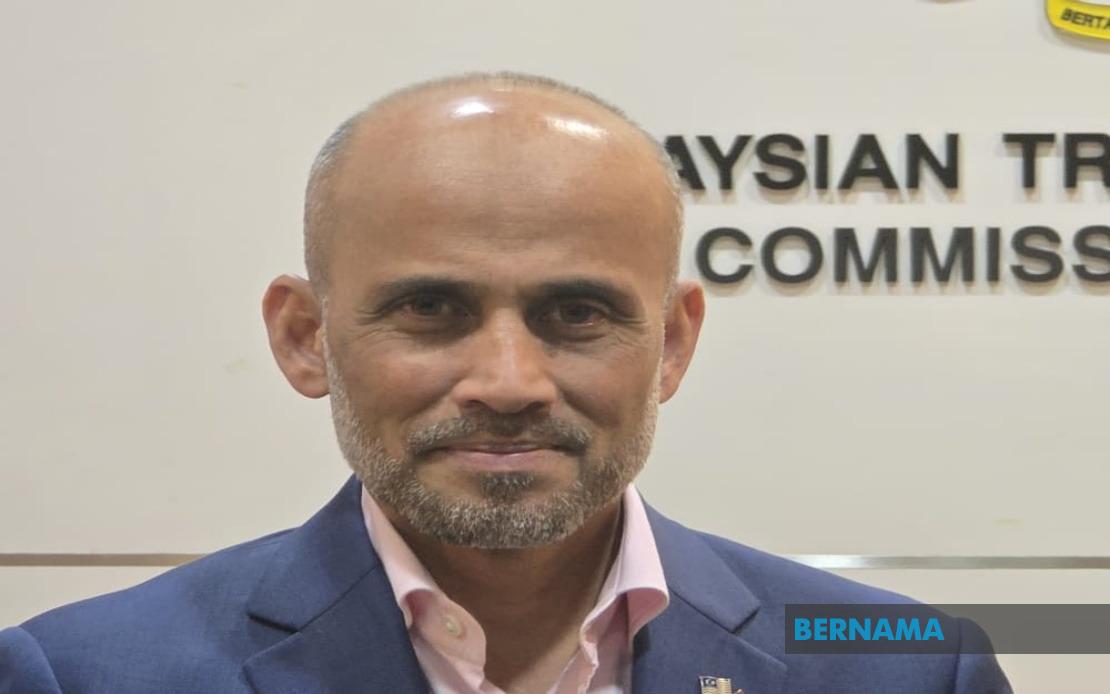
Bilateral relations between Malaysia and Singapore have consolidated considerably as both nations pursued a collaborative approach to overcoming successive regional and global headwinds, according to Datuk Dr Azfar Mohamad Mustafar, who is stepping down as Malaysia's High Commissioner to the city-state. Speaking ahead of his transition to assume the role of High Commissioner to the United Kingdom from July 1 this year, Azfar reflected on a tenure spanning five years that he characterised as pivotal in reinforcing the multifaceted dimensions of the Malaysia-Singapore partnership during a period marked by extraordinary disruption.
The diplomat took office in June 2021 at a juncture when the Asia-Pacific region remained in the grip of the COVID-19 pandemic, a crisis that presented unprecedented operational obstacles for both governments. The implementation of stringent containment measures, including the temporary closure of land borders, created significant practical difficulties for the large Malaysian workforce that relies on daily cross-border movement to Singapore for employment and business activities. Beyond the immediate logistical complications, the pandemic exposed vulnerabilities within consular frameworks, as the substantial volume of Malaysian citizens transiting through Singapore required rapid institutional adaptation and coordinated problem-solving between both governments. Azfar underscored that addressing these consular challenges with speed and efficiency became a defining feature of his ambassadorial engagement, demonstrating the necessity for bilateral mechanisms capable of responding nimbly to crisis situations.
From an economic perspective, the recovery trajectory has proven encouraging for both partners. Trade flows between Malaysia and Singapore have rebounded decisively and have now surpassed pre-pandemic levels, with Singapore maintaining its position among Malaysia's most significant trading partners. This resilience reflects the deep structural integration of the two economies and the diversified nature of their commercial relationship spanning manufacturing, services, finance, and energy sectors. The recovery in bilateral commerce has been complemented by Singapore's continued prominence as a source of foreign direct investment into Malaysia, a trend Azfar expects to accelerate given emerging economic opportunities in the southern Malaysian state of Johor.
The establishment of the Johor-Singapore Special Economic Zone represents a particularly significant development in this regard, creating a framework for intensified economic cooperation and investment activity across multiple sectors. By fostering coordinated development of this transnational economic corridor, both governments aim to unlock productivity gains and attract capital that might otherwise be allocated to competing regional destinations. For Malaysia, the implications are substantial: the special economic zone model offers a pathway to accelerate industrialisation in Johor, create employment opportunities for local workers, and position the state as a preferred investment destination within Southeast Asia. Azfar's emphasis on this initiative reflects recognition within Malaysia's diplomatic establishment that deepening integration with Singapore yields tangible benefits for Malaysian economic development, particularly at the subnational level.
Looking toward the medium term, Malaysia has committed to supporting Singapore as the city-state prepares to assume the ASEAN chairmanship in the following year. This support extends beyond ceremonial acknowledgment to substantive engagement across multiple policy domains that define ASEAN's collective agenda. Singapore has indicated that deepening economic integration among ASEAN member states constitutes a priority focus area for its tenure, a position that aligns closely with Malaysia's own strategic interests in regional economic architecture. The elevation of ASEAN economic cooperation carries particular relevance for Malaysia given its pivotal geographic and economic position within the association, its role as a major trading hub, and its capacity to influence consensus around trade liberalisation and investment facilitation frameworks.
A second pillar of anticipated Malaysia-Singapore collaboration concerns the ASEAN Power Grid initiative, an ambitious infrastructure project aimed at enhancing energy security and economic efficiency across the region through interconnected electricity networks. This initiative addresses a fundamental challenge confronting Southeast Asia: the need to balance rising energy demand driven by economic growth and urbanisation against the imperative to transition toward cleaner energy sources and reduce carbon intensity. The Power Grid initiative envisions coordinated investment in transmission infrastructure, regulatory harmonisation, and market mechanisms that would facilitate cross-border electricity trade. For Malaysia, participation in this framework offers multiple strategic advantages, including diversified energy sourcing options, enhanced grid stability, and positioning the nation as a central node within Southeast Asia's energy infrastructure. Singapore, as a densely populated city-state with limited indigenous energy resources, derives particular benefit from access to electricity generated regionally, making the Power Grid initiative a natural focal point for bilateral cooperation.
Azfar's diplomatic trajectory prior to assuming the Singapore posting provides contextual insight into the professional standing he brought to the role. Having initially entered the administrative and diplomatic service in 1996, he subsequently transitioned to the Foreign Ministry in 2001, accumulating experience across multiple postings that culminated in his appointment as Ambassador to France from 2018 until 2021. This background positioned him well to navigate the complexities of Malaysia-Singapore relations, which extend beyond conventional bilateral diplomacy to encompass intricate questions of sovereignty, shared infrastructure, and competing resource claims. The ambassador's diplomatic preparation at one of Europe's major capitals may have also informed his approach to engaging with Singapore's leadership on regional architecture and global governance frameworks.
The transition from a tenure focused substantially on crisis management and recovery toward a posting in the United Kingdom signals Malaysia's diplomatic priorities during an evolving geopolitical environment. The United Kingdom's strategic significance has increased in recent years as it recalibrates its foreign policy orientation following its departure from the European Union, with renewed emphasis on Indo-Pacific engagement and enhanced bilateral relationships with Commonwealth nations and regional partners. Malaysia's interest in deepening ties with the United Kingdom reflects similar recalibrations within Malaysian foreign policy, particularly concerning economic partnerships beyond Southeast Asia and engagement with established powers navigating the multipolar international system that has emerged over the past decade.
The accomplishments Azfar identifies from his tenure suggest that Malaysia-Singapore relations have attained a maturity enabling both governments to move beyond historical grievances and institutionalised tensions toward cooperative engagement around shared interests. This evolution did not occur automatically but rather reflected deliberate diplomatic effort and structural changes within both societies that have gradually eroded the salience of zero-sum competition. The COVID-19 pandemic, despite its devastating social and economic consequences, paradoxically reinforced the necessity for bilateral cooperation and demonstrated that unilateral approaches to transnational challenges prove inadequate. This shared learning experience appears to have created momentum extending beyond pandemic-related issues toward broader regional cooperation frameworks.
Among the factors contributing to improved bilateral relations stands the phenomenon of people-to-people connectivity, which has expanded considerably despite periodic tensions between governments. The substantial population of Malaysians working and studying in Singapore, combined with Singapore's investments and business operations throughout Malaysia, creates networks of interpersonal relationships that humanise abstract diplomatic concepts and generate constituencies in both societies with vested interests in continued cooperation. These grassroots connections serve as stabilising forces during periods of official tension and provide foundations for dialogue when governments encounter disagreement on specific issues. The high commissioner's attention to consular matters reflects understanding that effective diplomacy increasingly depends upon addressing the concrete needs of ordinary citizens whose daily lives traverse national boundaries.
The broader strategic context in which Malaysia-Singapore relations operate has shifted significantly since Azfar assumed office in 2021. Global geopolitical competition between major powers has intensified, with particular focus on Southeast Asia as a region of strategic consequence. China's assertiveness in the South China Sea, the United States' Indo-Pacific strategy, and the European Union's nascent engagement in the region have all increased pressure on Southeast Asian nations to navigate complex external relationships while maintaining intra-regional cohesion. Malaysia and Singapore, despite their different foreign policy orientations reflecting their distinct strategic positions and historical experiences, have recognised that ASEAN unity serves their mutual interests better than individual positioning alongside competing global powers. This realisation has encouraged the cooperative posture that Azfar describes as characterising the Malaysia-Singapore relationship during his tenure.
The reference to continuing work on economic integration initiatives and infrastructure projects indicates that both governments view the relationship as dynamic rather than settled, with ongoing opportunities for deepening cooperation across multiple sectors. This forward-looking orientation contrasts with the historical pattern in which Malaysia-Singapore relations consisted largely of managing disagreements over water supplies, maritime boundaries, and historical grievances. The ability to articulate positive regional cooperation frameworks suggests maturation in both nations' approaches to bilateral relations and greater confidence in the durability of peaceful coexistence. For other Southeast Asian nations observing Malaysia-Singapore relations, the trajectory offers potentially instructive lessons about the feasibility of transforming relationships characterised by historical tension into foundations for constructive regional cooperation.

