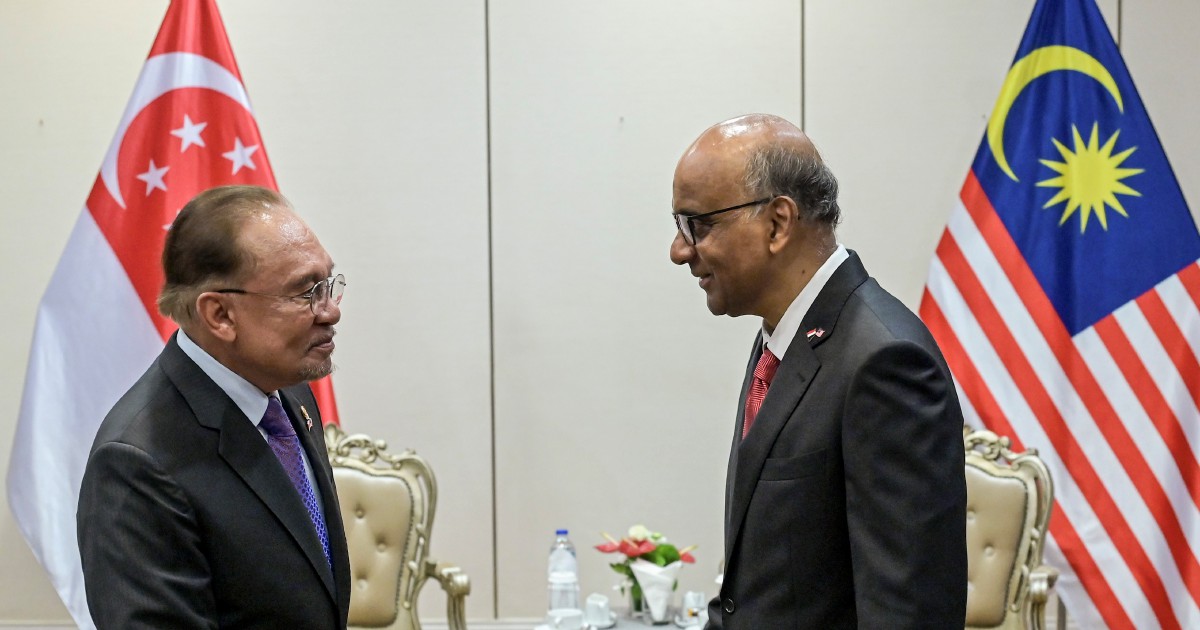
Prime Minister Datuk Seri Anwar Ibrahim has signalled that Malaysia and Singapore are moving closer to finalising the comprehensive master plan for the Johor-Singapore Special Economic Zone, with the detailed framework expected to be locked in shortly. The announcement underscores the two nations' determination to transform their shared border region into a thriving economic corridor that could reshape trade patterns and investment flows across Southeast Asia.
The JS-SEZ represents one of the most ambitious collaborative initiatives between Kuala Lumpur and Singapore in recent years, building on decades of economic interdependence and geographic proximity. For Malaysia, the project offers a rare opportunity to leverage Singapore's advanced financial systems, technological expertise, and global investment networks to stimulate growth in the southern border region. The special zone is positioned to become a gateway for companies seeking to establish operations that serve both domestic and regional markets while enjoying streamlined regulatory frameworks.
Singapore's involvement signals the island nation's confidence in deepening its economic integration with Malaysia beyond the existing network of bilateral trade relationships. The city-state has long served as a strategic conduit for foreign investment flowing into the broader Southeast Asian region, and a formalised special economic zone arrangement would institutionalise this role while creating new opportunities for cross-border commerce. For both nations, the framework promises to enhance competitiveness in attracting multinational corporations considering expansion into Asia-Pacific markets.
The master plan's completion will address critical infrastructure considerations, regulatory harmonisation, and investment incentive structures necessary for the zone to function effectively. These elements require meticulous coordination between federal Malaysian authorities, the Johor state government, and Singapore's economic development agencies. The plan will likely outline specific mechanisms for streamlined border procedures, coordinated taxation arrangements, and shared security protocols that would distinguish the JS-SEZ from conventional free trade zones operating elsewhere in the region.
From Malaysia's perspective, the JS-SEZ holds particular significance for Johor's economic trajectory. The state has positioned itself as an emerging technology and manufacturing hub, and integration with Singapore's established financial and services sectors could accelerate that transformation. Investors considering the zone would gain access to Johor's lower land and labour costs alongside Singapore's institutional quality and market access, a combination potentially attractive to both established multinationals and ambitious startups seeking regional headquarters.
The bilateral initiative also reflects the two governments' recognition that cross-border economic cooperation can generate substantial employment, particularly in high-value sectors such as finance, semiconductors, petrochemicals, and digital services. Workers in both countries could theoretically benefit from expanded job opportunities, though implementation details regarding labour mobility and wage competitiveness remain subjects for negotiation within the master plan framework.
Another dimension to the project involves supply chain resilience and regional integration in the post-pandemic economic landscape. Multinational corporations have increasingly sought to diversify manufacturing and operational bases away from concentration in single locations, and a JS-SEZ could provide companies with opportunities to establish interconnected operations that serve multiple markets while spreading operational risk. This aligns with broader regional ambitions to strengthen economic ties within the Association of Southeast Asian Nations framework.
The timing of the master plan finalisation comes amid broader geopolitical shifts affecting Southeast Asian economic strategies. Regional nations are carefully balancing relationships with major powers while seeking to maintain economic autonomy and attract investment from diverse sources. A Malaysia-Singapore special economic zone demonstrates the region's capacity for pragmatic, mutually beneficial collaboration independent of external pressure, strengthening ASEAN cohesion and setting an example for other bilateral initiatives.
Transportation and logistics infrastructure will likely feature prominently in the master plan, given Johor's position as a natural land bridge connecting Malaysia to Singapore. Enhanced connectivity through updated border crossings, improved shipping facilities, and digital customs platforms would facilitate seamless movement of goods and personnel. These infrastructure investments could extend benefits beyond the special zone itself, upgrading overall connectivity along the Malaysia-Singapore corridor.
Challenges ahead include aligning different legal frameworks, addressing environmental concerns, and managing social impacts in border communities. Local stakeholders in both jurisdictions will need reassurance that development benefits are fairly distributed and that environmental standards are maintained throughout the zone. The master plan must therefore balance commercial ambitions with broader sustainable development objectives to secure long-term legitimacy.
The project's success will depend partly on complementary policies at the national level, including streamlined foreign investment approval processes and coherent infrastructure spending. Both Malaysian and Singapore authorities will need to demonstrate sustained political commitment despite potential shifts in government or policy priorities over the coming years.
Once the master plan receives final approval, implementation will commence in phases, likely beginning with priority infrastructure projects and regulatory framework establishment. Initial projects could serve as proof-of-concept, demonstrating tangible benefits that build momentum for subsequent expansion. The entire process—from framework completion through operational maturity—will require sustained cooperation spanning multiple electoral cycles and requiring persistent political will from both sides.

