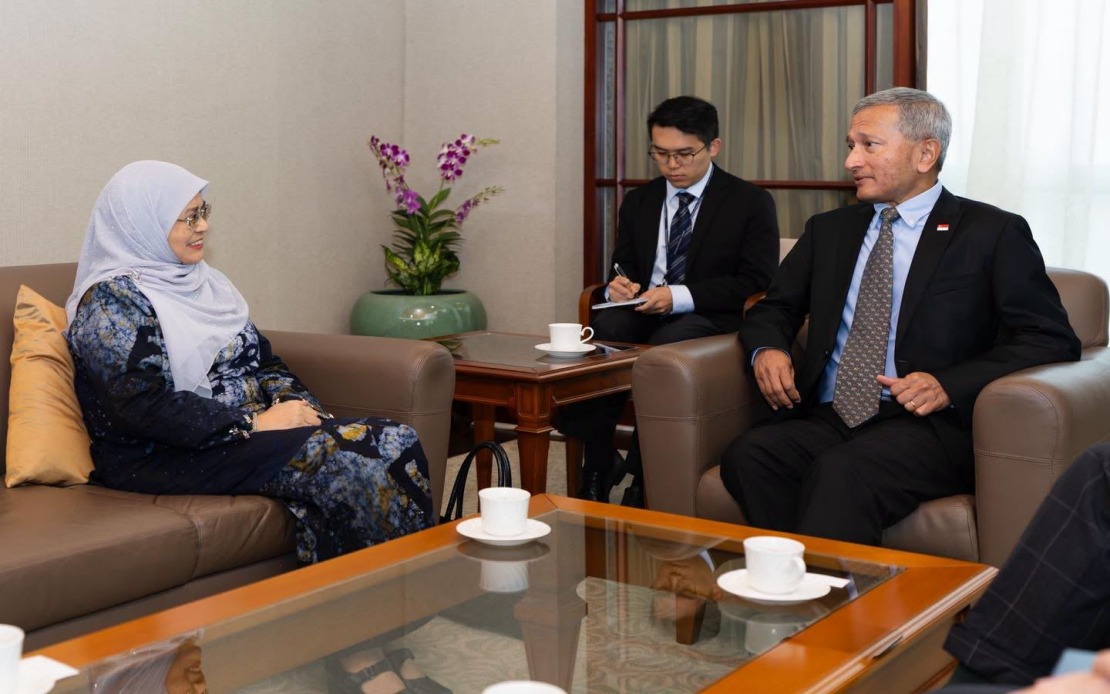
Malaysia and Singapore have renewed their dedication to maintaining the positive trajectory of their historically significant bilateral relationship, demonstrating continued commitment to expanding cooperation across a range of strategic sectors. This reaffirmation came during a formal courtesy call by the newly appointed Malaysian High Commissioner to Singapore, Datin Paduka Anizan Siti Hajjar Adnin, with Singapore's Foreign Minister Dr Vivian Balakrishnan, held on Wednesday in Singapore.
The meeting represents a significant diplomatic moment as Anizan officially commenced her tenure as High Commissioner on July 2, 2026, succeeding her predecessors in overseeing Malaysia's diplomatic mission in the city-state. Her appointment underscores Malaysia's emphasis on maintaining institutional continuity while bringing fresh diplomatic energy to the relationship. Balakrishnan expressed confidence in Anizan's ability to build upon the achievements of previous envoys, citing her extensive and distinguished career in diplomatic service as a foundation for further progress in strengthening ties between the two nations.
The discussions during the courtesy call centred on assessing current bilateral relations and identifying opportunities for enhanced cooperation that extend beyond traditional governmental channels. Officials on both sides recognised the need to pursue initiatives that would directly benefit ordinary citizens in both countries, particularly addressing the concerns and aspirations of those who maintain families, employment, and business interests across the Malaysia-Singapore border. This people-centric approach reflects a broader understanding that sustainable bilateral relations depend on tangible improvements to the lives of cross-border communities.
Singapore's Foreign Minister characterised the Malaysia-Singapore relationship as distinctly special, rooted in shared historical experiences and reinforced by the deep people-to-people connections that have developed over decades. These bonds form the bedrock upon which governmental cooperation is constructed, creating a natural foundation for expanding engagement across multiple dimensions. The emphasis on common history acknowledges the intricate intertwining of both nations' development paths and the mutual recognition of interdependence that continues to define their partnership.
The breadth of cooperative frameworks between Malaysia and Singapore spans economic integration, security coordination, environmental management, and cultural exchange, among numerous other areas. During Wednesday's meeting, both delegations were reportedly intent on exploring additional mechanisms through which these existing partnerships could be deepened and new avenues for collaboration developed. The focus on continuously finding fresh approaches to cooperation suggests that both governments view their relationship not as static but as an evolving partnership requiring ongoing attention and innovation.
For Malaysian readers and businesses, such high-level diplomatic affirmations carry practical implications. Cross-border commerce and labour mobility between the two countries form significant components of both economies, with tens of thousands of Malaysians employed in Singapore and substantial trade flowing between them daily. When senior officials underscore the importance of improving conditions for those with cross-border interests, they signal intent to address persistent issues affecting commuters, traders, and families separated by geography but united by economic necessity. This dialogue at the ministerial level suggests receptiveness to exploring solutions for logistical challenges, tax coordination, or regulatory harmonisation that plague cross-border participants.
The Malaysian High Commission's public statement highlighting these discussions serves multiple purposes within the diplomatic context. It formally documents for both governments' constituencies the state of bilateral relations and reaffirms that cooperation remains a priority despite any challenges that may arise from time to time. In Malaysia's domestic context, such statements reassure the public and business community that diplomatic channels remain functional and that official efforts continue toward advancing shared interests with Singapore, a crucial neighbouring economy and strategic partner.
Anizan's appointment and her early engagement with Singapore's senior leadership suggests Malaysia's intent to maintain momentum in bilateral ties during what could be a transitional period for regional geopolitics. Her background and experience position her to navigate complexities that may emerge in areas ranging from maritime boundary demarcation to environmental management and transnational crime prevention. The confidence expressed by Balakrishnan in her capabilities indicates Singapore's receptiveness to working collaboratively through established diplomatic channels under her stewardship.
The timing of this courtesy call, occurring relatively early in Anizan's tenure, demonstrates both nations' interest in establishing clear communication lines and setting a positive tone for her diplomatic mission. Such formalities may appear ceremonial, but they carry significance in establishing working relationships and conveying priorities that will guide bilateral engagement over the coming years. The explicit acknowledgement of areas requiring continued attention—particularly the welfare of cross-border residents and workers—indicates that both governments remain focused on practical, ground-level improvements alongside strategic governmental cooperation.
As Malaysia and Singapore navigate an increasingly complex regional environment marked by economic interdependence, security challenges, and shifting geopolitical dynamics, their commitment to strengthening bilateral relations takes on additional weight. The relationship serves as a model for how neighbouring nations can build mutually beneficial partnerships despite geographical proximity and occasional disputes. For regional observers, this reaffirmation of commitment by both governments signals stability in one of Southeast Asia's most important bilateral relationships and suggests that Malaysia and Singapore will continue prioritising dialogue and cooperation as mechanisms for addressing shared challenges and pursuing common prosperity.

