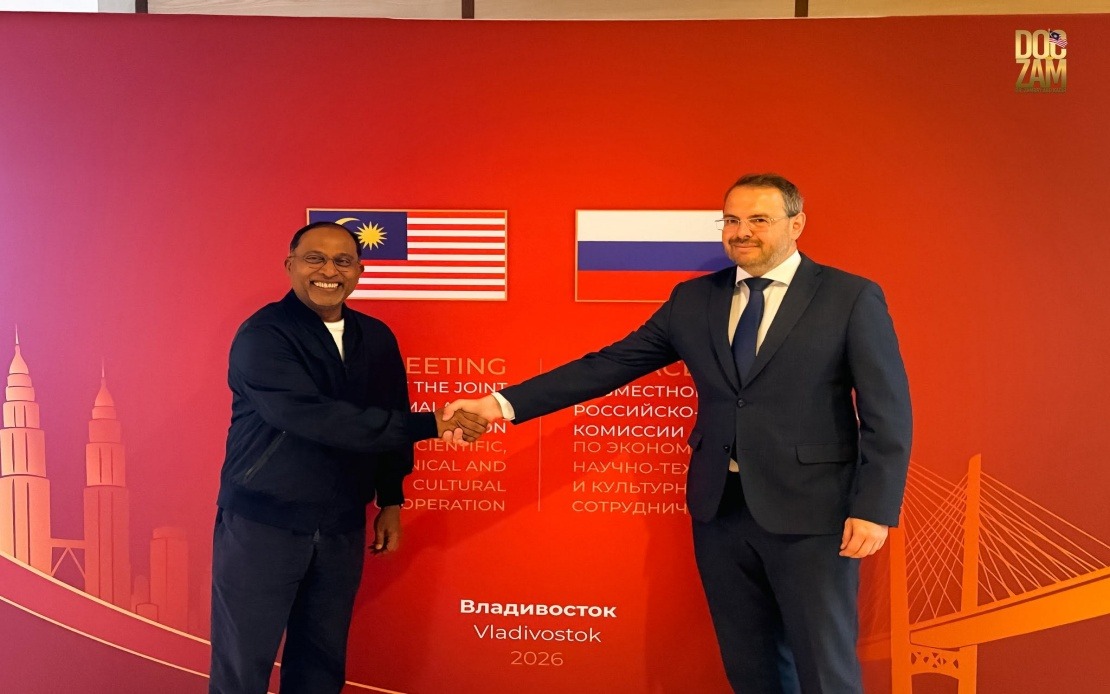
Malaysia and Russia are preparing to unlock fresh avenues for partnership spanning higher education, strategic technology sectors and economic development, with officials from both nations converging in Vladivostok for high-level discussions this week. The Fifth Malaysia-Russia JC-ESTC Meeting, scheduled from August 13 to 15, represents a significant moment to reassess the trajectory of bilateral relations and chart new collaborative pathways that extend beyond traditional frameworks. Higher Education Minister Datuk Seri Dr Zambry Abd Kadir, who is spearheading the Malaysian delegation, has signalled that the gathering will concentrate on translating diplomatic goodwill into tangible projects and measurable outcomes that benefit both populations and economic systems.
The scope of discussions promises to be remarkably broad, with representatives from 17 Malaysian ministries and agencies participating alongside their Russian counterparts. This institutional breadth underscores the multifaceted nature of Malaysia-Russia engagement, encompassing sectors as diverse as energy, agriculture, social affairs, and cultural exchange. However, the meeting's emphasis will rest particularly upon education and innovation ecosystems, areas where both nations perceive genuine complementarity. Zambry has outlined that Malaysia intends to position the Joint Committee on Education, Science and Technology Cooperation (JC-ESTC) as a pragmatic platform delivering concrete results rather than serving merely as a formal dialogue mechanism.
Within the education domain, Malaysia's priorities crystallise around several interconnected objectives. Expanding student mobility programmes would create pathways for Malaysian learners to access Russian expertise in specialised fields, whilst simultaneously introducing Russian academic institutions to Malaysian talent pools. Joint research initiatives represent another pillar, with universities from both countries potentially collaborating on challenges spanning renewable energy, advanced materials science, and biotechnology. University-to-university partnerships formalise these connections institutionally, ensuring sustainability beyond individual researcher relationships. The cultivation of human capital in emerging strategic domains—artificial intelligence, quantum computing, and space technology—reflects both nations' recognition that tomorrow's competitive advantages hinge upon today's investments in scientific personnel and capability.
Russian Deputy Minister of Science and Higher Education Konstantin Mogilevsky received Zambry upon arrival in Vladivostok, whilst the Malaysian minister will co-chair proceedings with Russian Minister of Science and Higher Education Valery Falkov. This architectural arrangement signals mutual investment in the dialogue's outcomes and provides structural assurance that decisions reached carry ministerial weight and commitment. The joint-chair mechanism ensures that neither delegation dominates discussion parameters, fostering genuine negotiation rather than one-sided presentations.
For Malaysia, the timing of this engagement carries particular significance within broader regional dynamics. Southeast Asia increasingly finds itself navigating geopolitical complexities, where diversifying international partnerships insulates economies from excessive dependency upon single-nation relationships. Russia, despite economic sanctions imposed by Western nations, maintains considerable technological prowess in sectors critical to future development—aerospace, nuclear science, mathematics and fundamental physics. Malaysian policymakers recognise that accessing such expertise, without the political complications that multilateral frameworks sometimes introduce, offers pragmatic value. Conversely, Russia discovers in Malaysia a gateway to Southeast Asian markets and a nation positioned at the intersection of Islamic-majority geopolitics and Western-oriented regional institutions.
The JC-ESTC itself was formalised in 2015, providing a decade-long foundation upon which to build institutional muscle memory and established working relationships. Zambry's characterisation of the platform as requiring action-orientation reflects a broader global trend whereby bilateral committees face pressure to justify their existence through deliverables. Rather than permit diplomatic forums to devolve into annual rehearsals of generalised friendship statements, Malaysia is explicitly demanding that cooperation yield investments, technology transfers, expertise migrations, and novel economic opportunities. This recalibration of expectations pressures both delegations to arrive prepared with specific proposals rather than aspirational abstractions.
Trade and investment expansion feature prominently within the meeting's agenda, with both nations recognising complementary economic structures. Malaysia's diversified manufacturing base and position as a critical minerals processor align with Russian resource endowments and technological capabilities. Energy cooperation presents another avenue, particularly as global energy transitions create demand for alternative fuels, uranium-based power generation, and renewable technology partnerships. Investment frameworks that facilitate Malaysian capital deployment in Russian sectors—and vice versa—could catalyse economic flows beyond current bilateral trade volumes.
Zambry's emphasis upon assessing progress on previously negotiated commitments suggests that some agreements remain incompletely executed. The meeting will consequently involve retrospective evaluation, identifying implementation bottlenecks and administrative obstacles that have prevented earlier accords from delivering anticipated benefits. This accountability dimension reflects institutional maturation, where merely signing agreements becomes insufficient absent rigorous follow-up mechanisms ensuring conversion of commitments into operational reality.
The identification of new priority areas constitutes the forward-looking component of the discussions. As technological landscapes transform and regional circumstances evolve, bilateral cooperation frameworks require periodic recalibration to remain relevant. Emerging priority areas might encompass artificial intelligence governance, space exploration collaboration, or pandemic preparedness systems—domains unimaginable when the JC-ESTC was originally established. This adaptive capacity distinguishes successful partnerships from those becoming progressively marginalised by irrelevance.
Zambry's articulation of complementary strengths provides the conceptual foundation justifying sustained engagement. Malaysia's strategic location, business-friendly regulatory frameworks, and multicultural society offer Russia opportunities to establish regional footholds and cultural connections. Russia's technological depth, scientific legacy, and natural resource wealth reciprocally serve Malaysian development aspirations. Neither nation dominates; rather, each possesses attributes the other strategically values. Such asymmetrical complementarity, when properly harnessed, generates dynamics more durable than relationships resting upon power imbalances or temporary convergence of interests.
The minister's expressed hope that the Vladivostok meeting inaugurates a fresh chapter whilst generating concrete agreements reflects both optimistic outlook and recognition of past limitations. Diplomatic rhetoric frequently promises transformation; substantive outcomes prove rarer. The fifth iteration of this particular committee provides an empirical record against which new pledges may be measured. For Malaysian stakeholders—industrialists seeking Russian partnerships, academics pursuing collaborative research, and technologists accessing scientific networks—the meeting's tangible outputs will determine whether bilateral relations represent genuine opportunity or ceremonial theatre.

