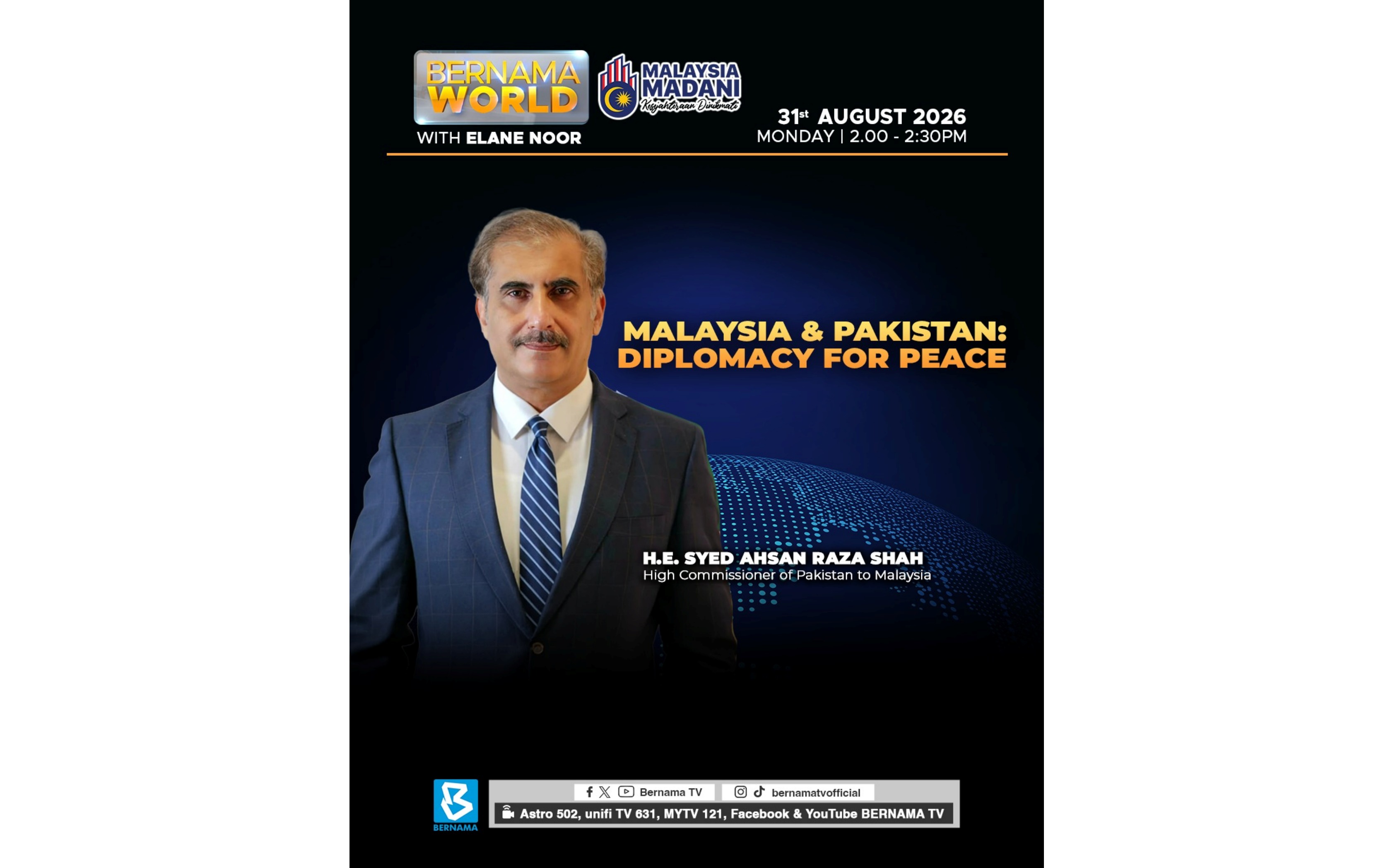
Pakistan High Commissioner to Malaysia Syed Ahsan Raza Shah has called for closer collaboration between Kuala Lumpur and Islamabad on managing international conflicts, positioning the exchange of mediation approaches as essential to maintaining stability amid escalating geopolitical friction. Speaking in an interview, he argued that both countries possess unique diplomatic advantages and have demonstrated capacity to help resolve disputes that threaten wider regional and global security architectures, making their partnership on such matters critical to contemporary statecraft.
The High Commissioner highlighted Malaysia's instrumental role in de-escalating tensions between Thailand and Cambodia when ASEAN's normal dispute-resolution mechanisms faced considerable strain. He noted that Prime Minister Datuk Seri Anwar Ibrahim's measured diplomacy proved decisive in facilitating a ceasefire and enabling the parties to conclude the Kuala Lumpur pact, demonstrating Malaysia's distinctive capability to navigate complex regional dynamics. Similarly, he pointed to Pakistan's particular positioning to mediate between Washington and Tehran, given its historical proximity to Iran and simultaneously its longstanding strategic partnership with the United States. These instances, he suggested, underscore why the two nations should systematize their knowledge and tactical approaches to conflict resolution.
Syed Ahsan underscored that Pakistan takes considerable pride in facilitating what he termed the Islamabad accord between the US and Iran, achieved at a moment when the two powers appeared locked in irreconcilable positions. He described the situation as having reached an impasse where the trajectory of escalation seemed inevitable, necessitating the intervention of a trusted intermediary with credibility spanning both camps. The successful conclusion of those talks, from his perspective, validates Pakistan's investment in diplomatic channels and demonstrates the value of nations willing to expend political capital on third-party mediation.
Central to the High Commissioner's argument is the proposition that contemporary international relations operate in what Anwar has characterized as "post-normal times", requiring fundamentally rethought diplomatic frameworks. Rather than applying inherited Cold War-era negotiation templates or traditional bilateral engagement protocols, nations must consciously adapt their methods to address unprecedented interconnections between geopolitical rivalries, economic dependencies, and technological disruption. Malaysia and Pakistan, in this framing, represent laboratories where new mediation models have been tested under real-world pressure, and documenting these experiments could generate insights applicable across the Global South.
The High Commissioner identified trust as the foundational element underpinning any successful mediation architecture. He stressed that protagonists in a conflict will not genuinely negotiate unless they perceive the mediator as operating from motives of genuine good faith rather than hidden national interest. This observation carries particular weight for Malaysia and Pakistan, both of which have navigated their own complex relationships with major powers and carry histories that inform their credibility with diverse international actors. The implication is that mediators from the Global South often possess inherent legitimacy advantages precisely because they lack the colonial legacies or structural hegemonic interests that major Western powers carry into negotiations.
Syed Ahsan also emphasized the necessity of pursuing incremental gains rather than attempting comprehensive conflict resolution in single negotiating sessions. This counsel reflects hard-won experience: breakthrough moments typically emerge only after foundational agreements on procedural matters, confidence-building measures, and limited substantive concessions have created sufficient momentum. Patience emerges as a strategic virtue, particularly when rhetoric intensifies during negotiation setbacks—maintaining composure and perspective becomes as important as mastering technical negotiating tactics. For Malaysia and Pakistan, institutionalizing these lessons could inform how Southeast Asian and South Asian nations approach their own intra-regional disputes.
The High Commissioner praised Anwar's capacity to develop personal working relationships with international counterparts, identifying this interpersonal dimension as often overlooked yet strategically consequential. Leadership qualities—the ability to listen, to signal respect across cultural and ideological divides, and to maintain personal credibility independently of bureaucratic positions—fundamentally shape whether mediators can access genuine negotiating space. This observation suggests that Malaysia's mediation successes reflect not merely institutional arrangements but also the personal diplomatic skills of its leadership, an insight that could inform succession planning and diplomatic personnel development across the region.
Beyond the immediate context of bilateral Malaysia-Pakistan cooperation, Syed Ahsan articulated a broader strategic warning about contemporary conflict dynamics. He cautioned that disputes originating in geographically distant theaters inevitably generate spillover effects—economic disruptions, refugee movements, security challenges, and strategic realignments that ultimately reach even countries not directly implicated in original hostilities. This logic applies directly to Malaysia, whose economic prosperity depends on stable transit corridors, predictable energy supplies, and functioning global financial systems. A conflict in the Middle East or South Asia that international mediators fail to contain risks gradually degrading the conditions upon which Malaysian prosperity rests.
The High Commissioner's intervention represents an effort to position Malaysia and Pakistan as serious mediating powers worthy of greater international recognition and authority in conflict resolution forums. Rather than treating mediation as peripheral to state interests or as a humanitarian sideline, he frames it as a core strategic capability reflecting geopolitical positioning and diplomatic sophistication. For Malaysian policymakers, this framing carries implications: investing in mediation infrastructure, cultivating diplomatic expertise in conflict resolution, and building institutional memory around successful interventions constitutes not soft power theater but hard strategic investment with concrete returns.
Looking forward, the prospect of Malaysia-Pakistan cooperation on mediation touches on fundamental questions about how the Global South approaches international order. As Western institutions face legitimacy challenges and traditional power brokers struggle with internal contradictions, nations occupying bridging positions between geopolitical blocs gain leverage. Malaysia's ASEAN membership, Islamic identity, and non-aligned tradition combine with Pakistan's regional influence, military capacity, and diverse international partnerships to create complementary advantages. Systematizing this cooperation could eventually position Southeast Asia and South Asia as serious centers of conflict resolution capacity, shifting diplomatic gravity away from historically dominant institutions.

