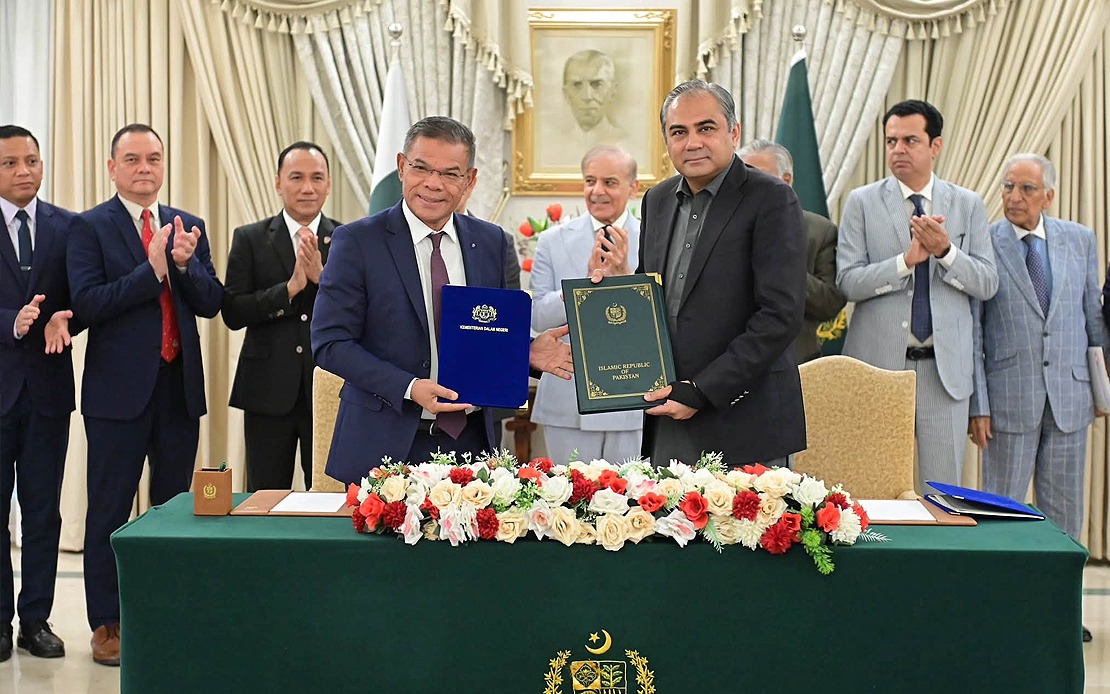
Malaysia and Pakistan have formalised a significant judicial cooperation agreement through the signing of the International Transfer of Prisoners Treaty, marking a substantive expansion of security and legal ties between the two nations. Home Minister Datuk Seri Saifuddin Nasution Ismail completed the agreement with Pakistan's Interior and Narcotics Control Minister Syed Mohsin Raza Naqvi during an official visit to Pakistan, with Pakistani Prime Minister Muhammad Shehbaz Sharif witnessing the ceremony at the Prime Minister's Office in Islamabad.
The treaty represents the culmination of sustained diplomatic negotiation, with both governments conducting five separate rounds of talks commencing in September 2025. The Malaysian delegation engaged multiple government agencies in the negotiation process, including representatives from the Home Ministry, Foreign Ministry, Attorney General's Chambers, Malaysian Prisons Department, and Royal Malaysia Police, reflecting the complexity and interagency coordination required for such arrangements. Malaysia's Cabinet had already granted formal approval for the instrument on 13 May, clearing the path for the international signing ceremony.
Under the terms of this bilateral agreement, Malaysian nationals currently incarcerated within Pakistan's prison system will be eligible for repatriation to Malaysia to serve their remaining sentence duration. Conversely, Pakistani prisoners held within Malaysian facilities may request transfer back to Pakistan to complete their terms of imprisonment. This reciprocal framework creates a balanced arrangement that respects the sovereignty of both states while facilitating prisoner movement across borders through formal legal channels.
The humanitarian dimension of this arrangement extends beyond mere administrative convenience. Saifuddin Nasution emphasised that the treaty enables incarcerated individuals to pursue rehabilitation and reformation programmes specifically designed to suit their cultural contexts and societal reintegration needs. A Malaysian prisoner returning to Malaysia can access rehabilitation services tailored to Malaysian social conditions and family circumstances, potentially improving outcomes for eventual release and community reintegration. Similarly, Pakistani prisoners completing their sentences in Pakistan-based facilities can benefit from programmes aligned with Pakistani institutional frameworks and cultural norms.
For Malaysia, this agreement holds particular significance within the context of its broader foreign policy architecture in South Asia. Pakistan remains a strategically important partner for Malaysia, sharing Islamic heritage, defence cooperation mechanisms, and significant bilateral trade relationships. The treaty demonstrates Malaysia's commitment to deepening institutional cooperation beyond traditional security and economic domains, extending into the humanitarian and judicial spheres that increasingly characterise modern bilateral relations.
The agreement also reflects evolving international standards regarding prisoner welfare and rights. Contemporary international law increasingly recognises that allowing prisoners to serve sentences in their home countries, where they have existing family and social support networks, can enhance rehabilitation prospects and reduce recidivism. This philosophical approach has gained traction among developing nations seeking to modernise their criminal justice systems while maintaining security standards.
From a practical standpoint, the treaty will likely alleviate pressure on both nations' prison systems by allowing countries to manage their own nationals' incarceration domestically. For Malaysia's rapidly growing prison population, such agreements can provide relief, though the immediate impact may remain modest given that prisoner transfers typically constitute a small fraction of total incarcerated populations. The agreement simultaneously demonstrates Malaysia's willingness to accommodate foreign prisoners' humanitarian needs, enhancing the country's international standing on criminal justice and human rights matters.
The signing carries implications for regional security cooperation architecture. As maritime security threats, transnational criminal networks, and terrorism concerns intensify across South and Southeast Asia, countries increasingly require mechanisms to manage the aftermath of cross-border law enforcement operations. This treaty ensures that when Malaysian and Pakistani law enforcement apprehend each other's nationals in criminal investigations, a formal legal framework exists for managing prosecutions and imprisonment, reducing jurisdictional ambiguities that might otherwise create diplomatic friction.
Saifuddin Nasution characterised the treaty as embodying both nations' strategic commitment to expanding mutually beneficial cooperation, describing it as an addition to the expanding legal architecture underpinning Malaysia-Pakistan relations. This language suggests that both governments view prisoner transfer arrangements not as isolated procedural matters but as components of comprehensive bilateral relationship development. The treaty joins existing agreements covering defence, trade, education, and cultural exchanges, creating an increasingly dense web of institutional connections.
The agreement becomes particularly relevant given the regional context of transnational crime and enforcement cooperation. Malaysia's strategic location as a regional financial and trading hub, coupled with its dense international connections, means Malaysian nationals face criminal prosecution in multiple jurisdictions. Similarly, Pakistan's complex security environment and substantial international diaspora mean Pakistani prisoners in foreign countries remain a demographic consideration. Formalising transfer mechanisms reduces diplomatic incidents and creates predictability for all stakeholders involved in international criminal justice proceedings.
Looking forward, this treaty may serve as a template for similar arrangements with other significant bilateral partners. Other Southeast Asian nations including Thailand, Vietnam, and Singapore have established comparable prisoner transfer frameworks with various countries, suggesting Malaysia's move aligns with regional best practices. As these agreements proliferate across Asia-Pacific jurisdictions, they collectively reshape how the region manages international criminal justice challenges, shifting from ad hoc arrangements to systematic, treaty-based frameworks.
The timing of this agreement coincides with broader efforts by both Malaysia and Pakistan to strengthen institutional cooperation mechanisms. For Malaysia, such initiatives form part of a comprehensive engagement strategy with major South Asian partners. For Pakistan, pursuing such agreements with significant trading partners and fellow Organisation of Islamic Cooperation members reinforces its integration within regional and international governance structures, particularly following periods of political and economic transition.

