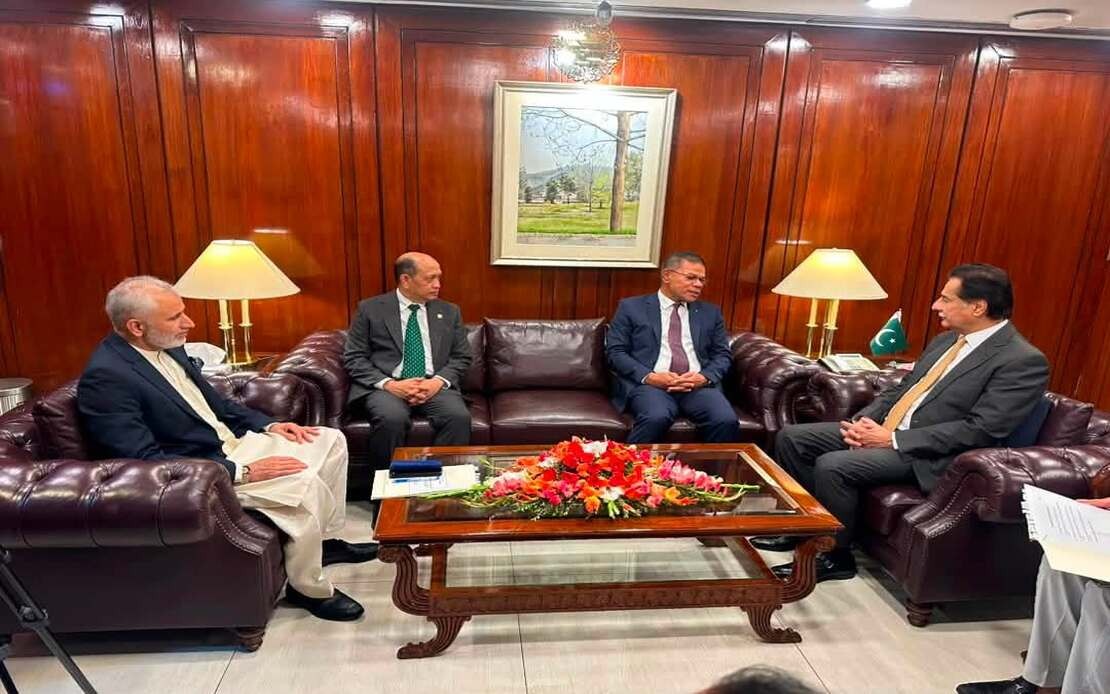
Malaysia and Pakistan have reaffirmed their mutual commitment to resolving contemporary geopolitical tensions through dialogue, diplomacy and peaceful engagement rather than confrontation. Home Minister Datuk Seri Saifuddin Nasution Ismail conveyed this position following a series of high-level discussions in Islamabad with Pakistan's parliamentary leadership, underscoring both nations' shared philosophy on conflict prevention and regional cooperation.
During the second day of his official visit to the Pakistani capital, Saifuddin Nasution engaged with Sardar Ayaz Sadiq, Speaker of the National Assembly of Pakistan, and held a courtesy meeting with Syed Yousaf Raza Gilan, chairman of the Senate of Pakistan. The discussions centred on how both countries can leverage constructive engagement and sustained dialogue to navigate the increasingly complex security landscape affecting South Asia and beyond.
A key theme emerging from the ministerial conversations was Malaysia's distinctive approach to maintaining regional peace through its membership and leadership within ASEAN. Saifuddin Nasution articulated how Malaysia has consistently prioritised multilateral dialogue frameworks and institutional mechanisms to prevent disputes from escalating into conflicts, a model he suggested holds relevance for Pakistan's own regional engagement strategy. This reference to ASEAN's experience is particularly significant given the bloc's non-interference doctrine and emphasis on consensus-based decision-making, which contrasts sharply with more adversarial approaches to international relations.
The bilateral relationship between Malaysia and Pakistan carries considerable historical weight, built upon shared Islamic heritage, people-to-people connections, and decades of cordial diplomatic relations. Saifuddin Nasution emphasised that these foundations of trust and mutual respect remain robust and capable of supporting deeper collaboration. The Home Minister stressed that such personal and institutional relationships serve as crucial stabilising forces in an era when geopolitical alignments are shifting and regional security architectures are under strain.
Parliamentary diplomacy emerged as a particular focus of the discussions, with both officials recognising the vital role that legislative exchanges can play in strengthening bilateral ties beyond traditional government-to-government channels. The Malaysian minister highlighted the potential for expanded institutional cooperation between the Malaysian Parliament and Pakistan's bicameral legislature, suggesting that such engagement creates additional layers of communication and understanding between nations. Parliamentary exchanges allow legislators and parliamentary staff to build personal relationships that transcend narrow political interests and facilitate the kind of trust necessary for long-term cooperation.
Saifuddin Nasution took the opportunity to visit the Parliament Museum during his stay in Islamabad, a visit that provided him with insights into Pakistan's parliamentary evolution and constitutional development. This tour underscored the importance Malaysia places on understanding institutional frameworks that underpin democratic governance in partner nations. The museum visit also served a diplomatic purpose, demonstrating Malaysian interest in Pakistan's domestic political institutions and the legislative traditions that have shaped Pakistani democracy.
For Malaysia, which faces its own array of regional security challenges including maritime disputes and transnational security threats, Pakistan's experience managing complex geopolitical relationships offers valuable lessons. Pakistan sits at the intersection of South Asian, Middle Eastern and Central Asian spheres of influence, requiring sophisticated diplomatic balancing. The exchanges during Saifuddin Nasution's visit suggest both nations see merit in sharing approaches to crisis management and conflict prevention.
The timing of such high-level dialogue is noteworthy given current global tensions. With great power competition intensifying in the Indo-Pacific region and traditional alliances being recalibrated, countries like Malaysia and Pakistan occupy important positions as non-aligned or strategic autonomous nations seeking to maintain beneficial relationships across multiple international alignments. By emphasising dialogue and diplomacy, both nations signal their desire to remain stabilising influences rather than pawns in larger geopolitical contests.
The discussions also implicitly address concerns within ASEAN about maintaining unity and avoiding the bloc becoming fractured along great power lines. Malaysia, as a significant ASEAN member and former chair, has invested considerable diplomatic capital in preserving ASEAN's centrality in regional architecture. Pakistan, meanwhile, has sought closer ties with various Asian nations as it navigates its own regional relationships, particularly within South Asia and increasingly with Southeast Asian countries.
Moving forward, the commitment articulated during these meetings suggests Malaysia and Pakistan intend to deepen institutional connections and possibly expand cooperation in areas ranging from security to economic partnership. The emphasis on parliamentary diplomacy indicates both nations recognise that formal governmental relations require complementary people-to-people and legislative exchanges to achieve sustainability and depth.
Saifuddin Nasution's characterisation of the Malaysia-Pakistan relationship as one based on longstanding friendship and mutual respect, strengthened through regular high-level exchanges, reflects a deliberate strategy by both nations to maintain their partnership as a stabilising force in their respective regions. Such friendships, nurtured through consistent engagement and genuine understanding, become increasingly valuable as the international environment grows more volatile and unpredictable.

