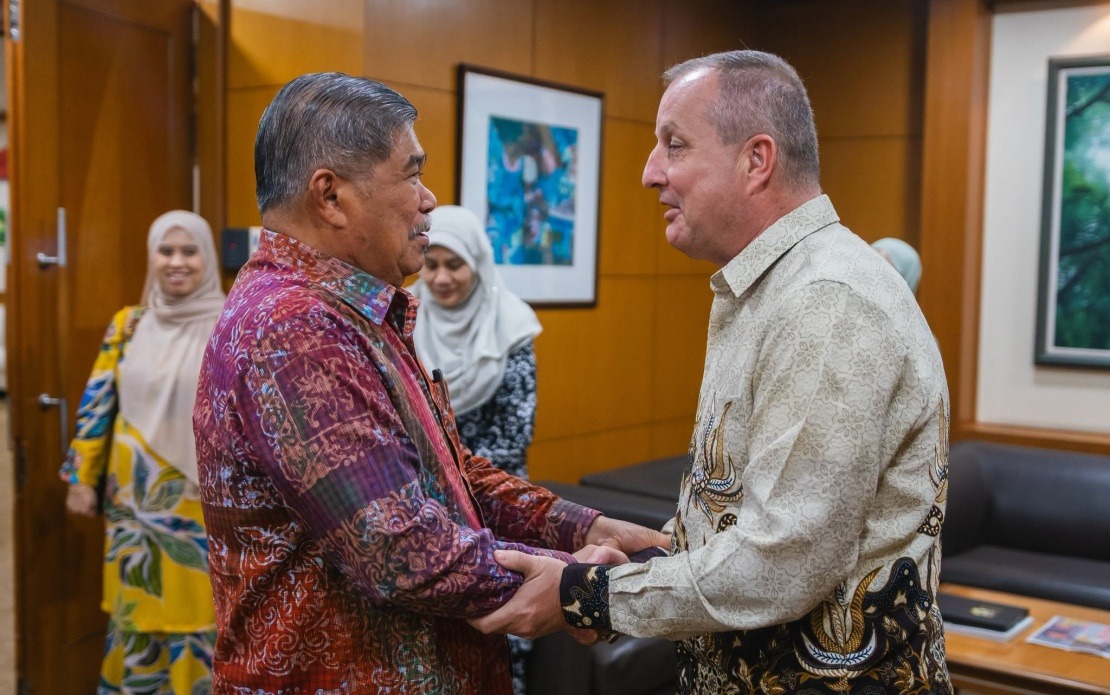
Malaysia and Hungary are intensifying their partnership in agriculture and food security, marking a strategic pivot toward knowledge-sharing and technological advancement in the agri-food sector. The commitment came into focus during a recent courtesy visit by Hungarian Ambassador to Malaysia Dr. Sándor Sipos to Agriculture and Food Security Minister Datuk Seri Mohamad Sabu, where both nations outlined an ambitious agenda encompassing research collaboration, trade expansion, and capacity-building across farming communities.
The strengthening of ties between Kuala Lumpur and Budapest reflects a broader regional strategy to harness expertise from established agricultural players within Central Europe. Hungary brings considerable technical prowess in livestock breeding, genetic research, and sustainable farming practices—areas where Malaysian farmers and researchers stand to gain significantly. The diplomatic engagement signals recognition that food security challenges transcend borders, and that collaborative approaches yield more resilient outcomes than isolated efforts.
A cornerstone of this emerging partnership is Hungary's confirmed participation in the Malaysian Agriculture, Horticulture and Agrotourism Exhibition (MAHA) 2026, which will serve as a high-profile platform for showcasing innovations and establishing commercial connections. MAHA, already the region's premier agricultural showcase, will benefit from Hungarian exhibitors presenting cutting-edge techniques and products to Southeast Asian audiences. For Malaysian stakeholders, this presence opens avenues to evaluate international best practices and explore potential partnerships with Hungarian enterprises.
Central to the bilateral arrangement is the inaugural Malaysia-Hungary Joint Working Group (JWG) meeting, which provides institutional scaffolding for coordinated action. This mechanism ensures that cooperation moves beyond ceremonial gestures toward tangible outcomes, with clear accountability and measurable progress. The JWG framework allows both governments to align policies, identify priority sectors, and resolve implementation challenges systematically.
Research collaboration between Malaysia's Agricultural Research and Development Institute (MARDI) and Hungary's University of Agriculture and Life Sciences (MATE) represents the technical backbone of this partnership. Both institutions bring complementary strengths: MARDI possesses tropical agriculture expertise and understanding of Southeast Asian growing conditions, while MATE contributes decades of accumulated knowledge in temperate-zone farming systems and advanced breeding methodologies. Their joint initiatives span genetics, breeding technology, and premium livestock product development—domains where cross-pollination of ideas yields commercially viable innovations.
The Erasmus+ Researcher exchange programme underpins this academic collaboration, enabling scientists and agricultural specialists from both countries to spend extended periods in partner institutions. Such direct immersion facilitates knowledge transfer that formal conferences and publications cannot adequately capture. Malaysian researchers gain exposure to European laboratory standards and research protocols, while Hungarian academics develop understanding of tropical pest management, crop diversification, and sustainable intensification techniques applicable to emerging markets.
For Malaysian farmers and agri-food entrepreneurs, this cooperation creates tangible pathways to upgrade productivity and market competitiveness. Access to Hungarian breeding stock, improved seed varieties, and animal husbandry techniques can enhance product quality and reduce production costs. Small and medium-sized enterprises in the agri-food value chain stand to benefit from technology transfer, potentially positioning Malaysian agricultural products more favorably in regional and international markets where quality premiums command higher prices.
Expanding bilateral trade and investment flows constitutes another pillar of the partnership. Malaysia, as a growing market for specialty agricultural products and agri-processing technology, presents investment opportunities for Hungarian firms. Conversely, Malaysian agricultural exports and processed food items could find new markets through Hungary's European Union networks. The cooperation creates a basis for exploring joint ventures in value-added processing, organic certification schemes, and premium product development.
Food security imperatives across the Indo-Pacific region provide strategic context for this engagement. As global supply chain vulnerabilities become apparent and climate-related disruptions threaten agricultural outputs, diversifying sourcing relationships and deepening technical capacity becomes increasingly important. The Malaysia-Hungary initiative contributes to regional resilience by building institutional memory of best practices and fostering human networks that persist across political cycles.
For Malaysia specifically, this partnership complements existing agricultural development strategies while positioning the nation as an international hub for agri-food innovation in Southeast Asia. By facilitating technology transfers and hosting regional conferences, Malaysia can strengthen its role in coordinating regional food security efforts—an objective aligned with ASEAN aspirations and the government's broader vision of sustainable agricultural transformation.
The cooperation also reflects Hungary's strategic interest in Southeast Asian markets and its positioning as a bridge between European expertise and Asian opportunity. For a Central European nation, building diplomatic and commercial ties with major Southeast Asian players like Malaysia enhances Hungary's global footprint and creates export markets for its specialized agricultural knowledge and products.
As implementation of these initiatives proceeds, success will depend on consistent funding, institutional commitment from both sides, and genuine capacity of researchers and entrepreneurs to translate technical knowledge into practical applications. The next phase involves operationalizing the JWG mechanisms, expanding researcher exchanges, and ensuring that MAHA 2026 delivers substantive business outcomes rather than symbolic gestures. Monitoring these developments will reveal whether this partnership matures into a durable model for international agricultural cooperation or remains largely ceremonial in character.

