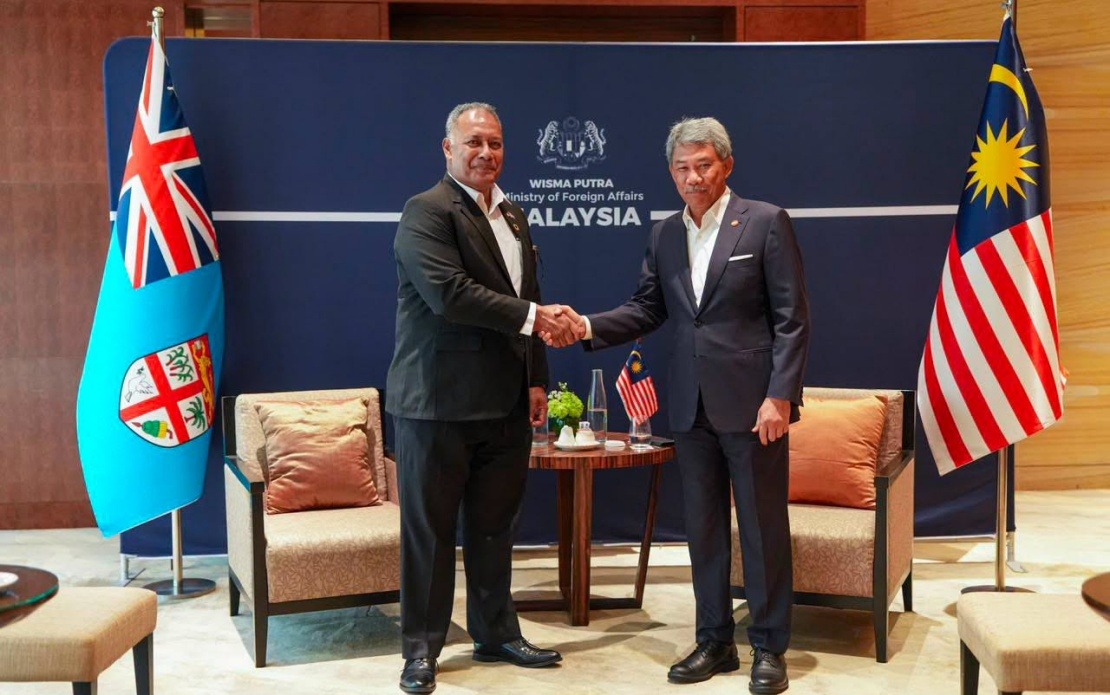
Malaysia and Fiji are set to intensify their bilateral engagement across a broad spectrum of economic and social domains, following high-level discussions between Foreign Minister Datuk Seri Mohamad Hasan and his Fijian counterpart Sakiasi Raisevu Ditoka this week. The two ministers, meeting during Ditoka's working visit to Kuala Lumpur from August 9 to 12, identified several priority areas for deepening cooperation between the two nations, signalling renewed momentum in their diplomatic relationship.
The scope of planned collaboration extends across multiple strategic sectors, reflecting both nations' commitment to diversifying their partnership beyond traditional trade channels. Among the identified areas for expanded cooperation are trade and investment frameworks, human capital development initiatives, forestry management, renewable energy projects, and cultural exchanges. This comprehensive approach underscores a shared recognition that effective bilateral relations require engagement across complementary economic and social spheres, rather than concentration in a single domain.
The timing of this strengthened engagement holds particular significance given regional dynamics in the Indo-Pacific. Malaysia's outreach to Pacific island nations like Fiji reflects a broader strategic pivot towards maintaining influence and partnerships across diverse geographies. For Fiji, which has emerged as a significant player in Pacific regional affairs, the deepening of ties with Malaysia—a major Southeast Asian economy—offers opportunities to access new markets and investment sources while strengthening multilateral networks.
Trade statistics paint a picture of a relationship with considerable asymmetry but untapped potential. In 2025, bilateral trade between the two countries totalled RM880.01 million (US$206.2 million), with Malaysian exports dominating at RM867.92 million (US$203.41 million) against Fijian imports of merely RM12.09 million (US$2.80 million). This imbalance suggests limited reciprocal trade flows, presenting an opportunity for structural rebalancing through targeted investment in Fijian productive capacity and the development of complementary export industries. The figures indicate that Malaysia's relationship with Fiji remains primarily an export-oriented one, with considerable room for creating more integrated value chains.
The reopening of Fiji's High Commission in Kuala Lumpur, which Ditoka officially inaugurated on Monday, symbolises renewed institutional commitment to bilateral engagement. The establishment of permanent diplomatic presence at the senior level facilitates more regular and substantive dialogue between government agencies, creating formal channels for pursuing the cooperation objectives identified during this visit. The reopening itself represents a practical demonstration of Fiji's commitment to strengthening ties with key Asia-Pacific partners.
Renewable energy has emerged as a particularly promising avenue for cooperation, reflecting global energy transition imperatives affecting both nations. Malaysia, as a Southeast Asian manufacturing and technology hub, possesses technical expertise and industrial capacity that could support Fiji's transition towards cleaner energy systems. Conversely, Fiji's geographic location and natural resources position it as a potential renewable energy innovator within the Pacific region. Collaboration in this sphere could yield tangible environmental benefits while creating opportunities for Malaysian companies to participate in Pacific renewable infrastructure projects.
Forestry cooperation similarly addresses mutual interests in sustainable resource management and conservation. Both Malaysia and Fiji maintain significant forest resources, and collaborative frameworks for responsible forestry practices, sustainable timber production, and reforestation initiatives could establish benchmarks for responsible resource stewardship within their respective regions. Such cooperation might also facilitate knowledge transfer regarding environmental protection and climate adaptation strategies relevant to tropical and island contexts.
Human capital development programmes represent another avenue through which the two nations can build long-term institutional relationships. Educational exchanges, technical training initiatives, and professional development programmes create lasting personal and institutional networks that underpin effective diplomatic cooperation. Malaysian universities and training institutions could expand scholarship opportunities for Fijian students, while professional exchange programmes might facilitate knowledge transfer in sectors ranging from public administration to manufacturing and technology.
The cultural dimension of this enhanced partnership should not be underestimated in the broader context of regional diplomacy. Cultural exchanges, artistic collaborations, and people-to-people engagement generate public understanding and goodwill that support government-level cooperation. Given Malaysia's multicultural character and Fiji's diverse population, cultural initiatives could reflect shared experiences and foster mutual appreciation beyond official channels.
From a regional perspective, Malaysia's engagement with Pacific nations like Fiji reflects strategic calculations about maintaining influence and relevance in an increasingly multipolar Indo-Pacific environment. As larger powers compete for influence across the region, mid-sized powers like Malaysia recognise the value of cultivating partnerships with island nations that possess seats in international forums and represent collective interests in global governance structures. This visit demonstrates Malaysia's commitment to positioning itself as a credible development and trade partner for Pacific island states.
The discussions regarding regional and global issues, referenced by Foreign Minister Mohamad, indicate that bilateral engagement encompasses broader strategic conversations about international affairs. Both nations likely exchanged perspectives on issues ranging from climate change and sustainable development to regional security concerns and international governance reforms. Such exchanges position both countries as thoughtful participants in global policy debates rather than passive recipients of international developments.
Looking forward, the commitments articulated during this visit will require sustained institutional effort to translate into tangible outcomes. Follow-up mechanisms, working groups focused on specific sectors, and regular ministerial consultations will be necessary to ensure that the ambitious agenda discussed this week translates into practical cooperation. The successful implementation of these initiatives will likely depend on both nations' ability to identify specific projects that deliver mutual benefits and align with broader development objectives.
Ultimately, the Malaysia-Fiji engagement exemplifies how bilateral relationships in the contemporary international system extend far beyond traditional diplomatic courtesy. The identification of concrete cooperation areas in trade, energy, education, and culture reflects both nations' understanding that sustained partnership requires creating economic stakes and institutional linkages that survive changes in political leadership or international circumstances. For Malaysia, deepening ties with Pacific partners strengthens its position as a bridge between Southeast Asia and the broader Indo-Pacific region, while for Fiji, partnership with Malaysian expertise and markets contributes to its development aspirations and regional positioning.

