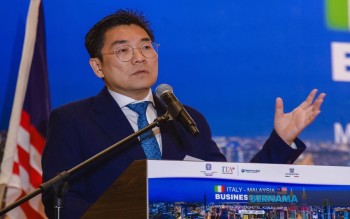
Malaysia and the European Union are making steady progress towards a landmark trade partnership that could reshape the country's commercial ties with Europe's largest trading bloc. The two sides have now completed talks on five chapters of the Malaysia-European Union Free Trade Agreement (MEUFTA), with negotiators setting their sights on finalising the entire accord by 2027. Deputy Minister Sim Tze Tzin confirmed that the fourth negotiation round, conducted in Kuala Lumpur from June 8 to 12, yielded three significant chapter conclusions covering Customs and Trade Facilitation, Trade Remedies, and Good Regulatory Practices. Combined with earlier progress on the transparency chapter and small and medium enterprises provisions, the agreement is advancing through its technical phases with notable momentum.
The bilateral trade negotiations reflect growing economic interdependence between Malaysia and the EU, a relationship that extends beyond merchandise commerce into services and investment flows. As the talks unfold, they underscore both parties' commitment to deeper integration across multiple regulatory and commercial domains. The fifth round of discussions is scheduled for late September in Brussels, Belgium, suggesting the negotiators have mapped out a demanding but achievable timeline to reach their 2027 target. This schedule reflects the complexity involved in harmonising standards, rules of origin, tariff schedules, and regulatory frameworks between two economically diverse partners operating under different trade governance systems.
The proposed agreement carries transformative potential for Malaysia's economy. Deputy Minister Sim characterised MEUFTA as a "game-changer" that would position Malaysia more centrally within the world's largest single market whilst simultaneously opening avenues in high-technology services, renewable energy, and digital commerce. These sectors represent the future of global trade, and Malaysian firms currently operate at varying levels of competitiveness within them. Access to the EU's 450-million-person market, governed by strict quality and environmental standards, would incentivise Malaysian companies to upgrade their technological capabilities and production methods. The agreement could catalyse industrial modernisation across the nation, particularly in electronics manufacturing, chemicals, and precision engineering where Malaysia already possesses comparative advantages.
Malaysia's relationship with Italy, one of Europe's major economies, serves as a microcosm of the broader Malaysia-EU opportunity. Trade between the two countries surged 14.2 percent year-on-year to approximately RM17 billion in 2025, establishing Italy as Malaysia's fifth-largest European trading partner. Malaysian exports to Italy, valued at RM7.6 billion last year, are dominated by palm oil products alongside iron, steel, and electrical equipment—sectors that reflect the country's current export structure. However, Deputy Minister Sim emphasised that Malaysian imports from Italy consist predominantly of high-value machinery, optical instruments, chemicals, and electronics, indicating a complementary trade relationship where both nations occupy different rungs of global value chains. This imbalance suggests significant scope for Malaysian firms to climb towards higher-value manufacturing, precisely the goal that MEUFTA aims to facilitate.
Italian investment in Malaysia has already established meaningful industrial footprints. Over 80 Italian manufacturing projects worth US$442 million have taken root across food processing, chemicals, machinery, and aerospace sectors. These investments demonstrate that Italian companies view Malaysia as a strategically valuable location for production, distribution, and supply-chain management serving Southeast Asia. The presence of this established Italian industrial base provides MEUFTA negotiators with real-world evidence of mutual economic benefit, grounding their discussions in concrete commercial realities rather than theoretical advantages. Both countries recognise that improved trade terms, reduced tariffs, and harmonised standards would unlock further collaboration between their industrial ecosystems.
Deputy Minister Sim highlighted a particularly significant synergy between Italian and Malaysian manufacturing capabilities in machinery and electronics. Italy's renowned expertise in precision engineering and machine manufacturing complements Malaysia's electronics and semiconductor manufacturing infrastructure. The prospect of integrated regional value chains, where Italian components are processed through Malaysian plants before distribution across Southeast Asia, represents a tangible benefit that MEUFTA negotiations address. By reducing friction in cross-border commerce, the agreement would allow both nations to specialise further according to comparative advantage whilst sharing in the gains from enhanced regional integration. This industrial logic transcends mere tariff reduction; it involves regulatory harmonisation and supply-chain transparency that facilitate the deep trade relationships increasingly demanded by multinational manufacturing networks.
Semiconductor advancement emerges as a particularly critical dimension of Malaysia's economic strategy, and trade agreements with developed economies play supporting roles in this ambition. The government's New Investment Incentive Framework, effective since March this year, signals commitment to attracting capital and expertise in advanced semiconductor manufacturing. This policy framework extends tax incentives across front-end semiconductor production, integrated circuit design, and high-value manufacturing generally. Deputy Minister Sim stressed that incentives apply equally to domestic and foreign investors, countering perceptions that Malaysia reserves preferential treatment exclusively for multinational corporations. The framework's inclusivity reflects a strategic pivot towards helping Malaysian companies progress up the value chain, transforming the nation from an assembly hub into a centre for sophisticated production and design.
The timing of MEUFTA negotiations coincides with Malaysia's broader push to diversify its economic partnerships and reduce dependence on traditional trading partners. As geopolitical tensions reshape global commerce, bilateral and regional trade agreements provide economic resilience through market diversification. The EU represents a wealthy, stable, and technologically advanced market where Malaysian goods face strong demand, particularly in sectors aligned with European sustainability and digitalisation priorities. Green energy, environmental products, and digital services are emerging trade frontiers where Malaysia possesses growing competitive capabilities. MEUFTA would lock Malaysia into these growing market segments through preferential access, whilst simultaneously subjecting Malaysian industries to high EU standards that drive continuous improvement and innovation.
The negotiation of a comprehensive free trade agreement with the EU represents a significant undertaking involving dozens of technical working groups addressing everything from intellectual property protection to food safety standards. Malaysian negotiators must balance competing domestic interests—protecting sensitive sectors whilst opening markets where national champions can thrive internationally. Agricultural interests, particularly the palm oil industry, require careful navigation given European environmental sensitivities. Similarly, Malaysian small and medium enterprises must receive sufficient support to adapt to EU regulatory requirements and competition. The inclusion of dedicated SME chapters reflects recognition that trade agreements create both winners and losers within national economies, and institutional support mechanisms help distribute benefits more broadly.
The pathway to 2027 completion demands sustained political commitment and technical capacity from both negotiating teams. Trade agreements of this scope typically require legislative approval from EU member states and the Malaysian Parliament, making domestic political considerations as important as bilateral negotiations. Deputy Minister Sim's public remarks, delivered at the Italy-Malaysia Business Mission, serve the diplomatic function of building stakeholder support for the emerging agreement. By demonstrating concrete benefits flowing from trade deepening with Italy specifically, Malaysian officials can build constituency backing for the broader EU arrangement. This approach recognises that abstract promises of economic gains lack persuasive power compared to documented examples of successful commercial partnerships already enriching both nations.
Looking forward, the successful completion of MEUFTA would position Malaysia as a central node within multiple overlapping trade networks spanning Asia, Europe, and beyond. The country already participates in the Comprehensive and Progressive Agreement for Trans-Pacific Partnership (CPTPP), the ASEAN-led Regional Comprehensive Economic Partnership (RCEP), and numerous bilateral arrangements. An EU agreement would complement these existing frameworks, creating a dense network of preferential trading relationships that enhance Malaysia's attractiveness as an investment location and manufacturing base. Companies seeking to serve multiple major markets could establish Malaysian operations as hubs serving Asian growth markets whilst leveraging EU market access. This strategic positioning could catalyse sustained foreign direct investment and support Malaysia's longer-term development aspirations as a high-income nation with sophisticated manufacturing and services sectors.

