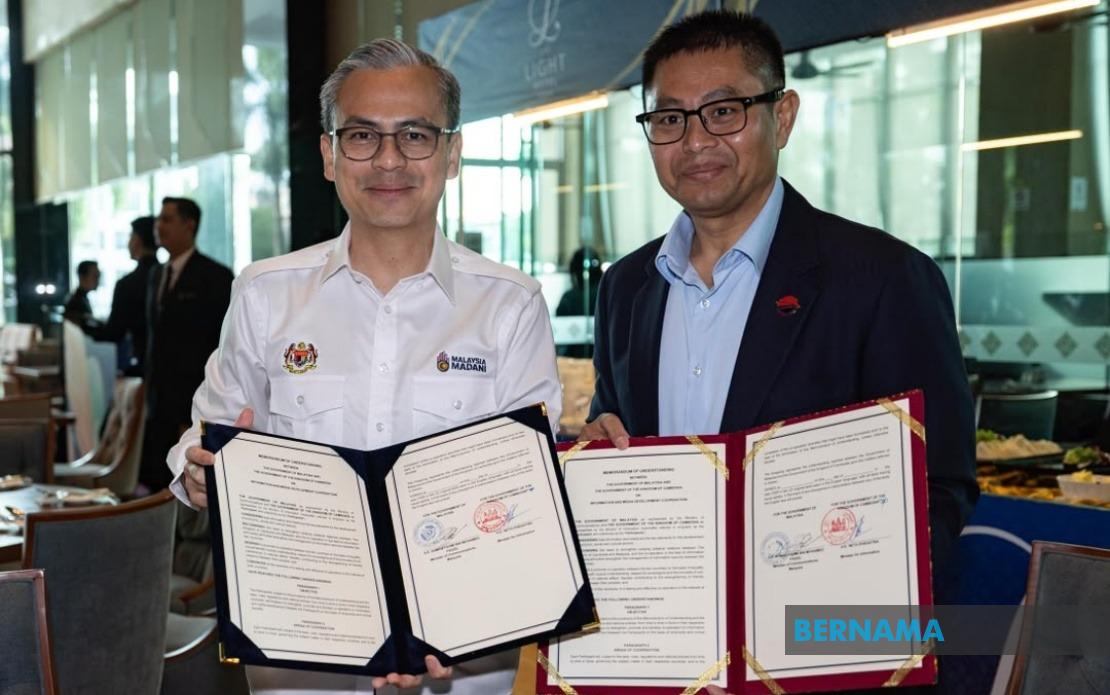
Malaysia and Cambodia have taken another significant step in strengthening their bilateral relationship through the signing of a comprehensive memorandum of understanding focused on information and media sector development. The agreement, signed at the Light Hotel in Butterworth on June 20, was executed ad referendum by Communications Minister Datuk Fahmi Fadzil and presented by Cambodian Information Ministry Under Secretary of State Prak Thaveak Amida, who acted as a representative for Information Minister Neth Pheaktra. This development underscores the growing recognition between the two Southeast Asian neighbours that collaboration in the media landscape is essential for broader regional cooperation.
The scope of the MoU is deliberately expansive, covering multiple dimensions of modern media operations and communications infrastructure. The agreement establishes formal channels for exchanging news and information between the two countries, facilitating traditional broadcasting partnerships in radio and television, and addressing the increasingly important area of publishing and print media. Importantly, the accord extends to human capital development, acknowledging that sustainable progress in the media sector depends on investing in skilled professionals who can navigate both established and emerging platforms. The inclusion of film and documentary production reflects the cultural dimensions of media cooperation, while provisions for media cybersecurity address contemporary threats to information integrity that affect both nations.
Beyond operational frameworks, the MoU explicitly addresses the governance side of media development. Both countries have committed to sharing information policy approaches and regulatory best practices, creating opportunities for learning from each other's experiences in managing media environments. The agreement also explicitly incorporates innovation in media and broadcasting, signalling that both Malaysia and Cambodia recognise the need to stay ahead of technological change and evolving audience preferences. This forward-looking approach is particularly relevant in Southeast Asia, where digital penetration continues expanding rapidly and traditional media consumption patterns are shifting fundamentally.
The underlying motivation for this cooperation reflects a shared strategic understanding that the modern communications landscape presents opportunities and challenges that transcend individual borders. Both countries recognise that knowledge exchange, expertise sharing, and adoption of best practices can accelerate the development and transformation of their respective media sectors more effectively than isolated efforts. This collaborative approach aligns with broader trends in ASEAN, where multilateral engagement increasingly extends beyond trade and security matters into softer domains like culture and communications that shape public discourse and national narratives.
For Malaysian stakeholders in the media industry, this agreement opens avenues for co-production opportunities, training exchanges, and knowledge transfer that could enhance competitiveness in an increasingly regionalised media market. The emphasis on cybersecurity cooperation is particularly timely, given the rising prevalence of disinformation campaigns and cyber threats targeting news organisations across Southeast Asia. Cameraman, producers, journalists, and media management from both countries may benefit from joint initiatives addressing these shared vulnerabilities.
The Cambodia partnership also reflects Malaysia's broader diplomatic strategy of deepening engagement with immediate neighbours and strengthening ASEAN cohesion. For Cambodia, the agreement provides access to Malaysia's more developed media infrastructure and regulatory frameworks, while Malaysia gains exposure to different approaches to information management and emerging practices in the Cambodian media landscape. This reciprocal nature of the arrangement ensures both parties view it as mutually beneficial rather than a transfer of expertise in a single direction.
Prak Thaveak Amida's presence in Malaysia during this period served a dual purpose, as the Cambodian official was simultaneously representing Minister Neth Pheaktra at the National Journalists' Day celebrations—HAWANA 2026—being held at the PICCA convention centre. The sixth iteration of this gathering, themed around media integrity and credibility, attracted approximately one thousand media professionals from Malaysia and abroad, providing an ideal platform for announcing bilateral cooperation initiatives. The timing reflected deliberate coordination, ensuring the MoU announcement reached maximum audience among practitioners directly involved in implementing such partnerships.
Prime Minister Datuk Seri Anwar Ibrahim was scheduled to officially launch HAWANA 2026, lending prime ministerial weight to celebrations of journalism and media professionalism. This high-level political endorsement demonstrated government commitment to supporting the media sector even as it faces sustained pressure from technological disruption and audience fragmentation. The presence of Penang Chief Minister Chow Kon Yeow highlighted the regional dimensions of media development initiatives, while participation from Bernama leadership and representatives from major Malaysian media organisations signalled broad-based stakeholder engagement.
The involvement of Communications Ministry Secretary-General Datuk Abdul Halim Hamzah and Bernama leadership—Chairman Datuk Seri Wong Chun Wai and Chief Executive Officer Datin Paduka Nur-ul Afida Kamaludin—ensured that government media institutions would be positioned to operationalise the bilateral agreement. Bernama, as Malaysia's national news agency, would logically play a central coordinating role in implementing news and information exchange provisions, leveraging its established distribution networks and relationships with international newswire services. The attendance of representatives from other major local media organisations created opportunities for private sector engagement, ensuring the partnership extended beyond government institutions to encompass the broader ecosystem.
Looking forward, the practical implementation of this MoU will likely begin with working groups addressing specific cooperation areas, beginning with news exchange and potentially advancing toward co-production initiatives in documentary and broadcasting. Human capital development programmes may include secondments, training attachments, or joint workshops addressing emerging challenges like combating disinformation and navigating platform monetisation in the digital age. Media cybersecurity collaboration could involve intelligence sharing regarding threats and coordinated responses to attacks targeting journalists or news infrastructure in either country.
The broader significance of this agreement extends beyond bilateral media relations to encompass regional stability and information integrity. As Southeast Asia grapples with coordinated disinformation campaigns originating from state and non-state actors, stronger regional cooperation on media standards and information verification becomes increasingly important. Malaysia and Cambodia, by establishing formal mechanisms for collaboration, create models that other ASEAN members might emulate, gradually building a more resilient regional information ecosystem capable of resisting manipulation and supporting credible journalism.
This partnership also implicitly acknowledges that media development cannot be divorced from digital transformation. Both countries face similar pressures as audiences migrate to social media platforms, algorithmic news feeds, and subscription services, eroding traditional revenue models. Through cooperation, Malaysia and Cambodia can share strategies for supporting quality journalism in transitional media landscapes, potentially developing regional approaches to challenges like platform regulation and digital literacy that individual nations struggle to address alone.
Ultimately, the MoU represents a pragmatic recognition that in an interconnected regional environment, the health of one nation's media sector has spillover effects throughout Southeast Asia. By strengthening institutional relationships and creating formal frameworks for ongoing cooperation, Malaysia and Cambodia invest in a more robust regional information order—one better equipped to serve national interests while maintaining the professional standards and editorial independence that credible journalism requires.
%22%2F%3E%3C%2Fpattern%3E%3C%2Fdefs%3E%3Crect%20width%3D%22100%25%22%20height%3D%22100%25%22%20fill%3D%22url(%23ph27o3tg)%22%2F%3E%3Crect%20width%3D%22100%25%22%20height%3D%22100%25%22%20fill%3D%22url(%23ph27o3tp)%22%2F%3E%3Ctext%20x%3D%2250%25%22%20y%3D%2250%25%22%20text-anchor%3D%22middle%22%20dominant-baseline%3D%22central%22%20fill%3D%22rgba(255%2C255%2C255%2C0.95)%22%20font-family%3D%22Georgia%2C%20'Times%20New%20Roman'%2C%20serif%22%20font-weight%3D%22700%22%20font-size%3D%22151%22%20letter-spacing%3D%22-0.02em%22%3ESingapore%3C%2Ftext%3E%3C%2Fsvg%3E)