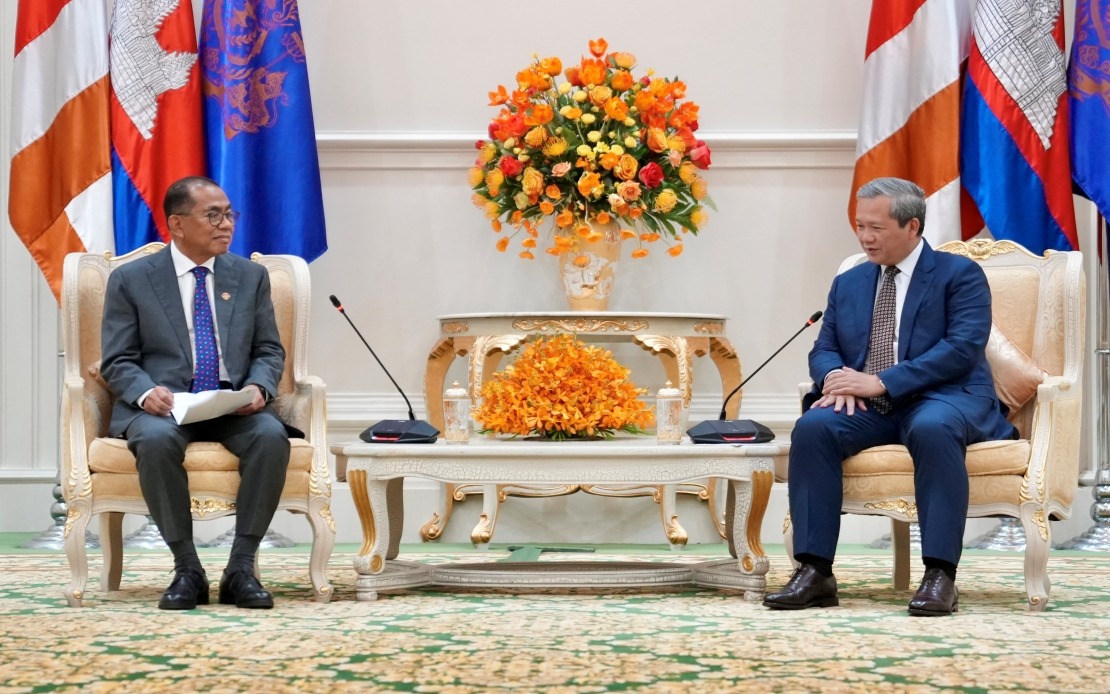
Malaysia and Cambodia are moving to solidify their defence partnership through a series of high-level engagements aimed at deepening security cooperation and contributing to broader regional stability. Defence Minister Datuk Seri Mohamed Khaled Nordin conducted a working visit to Cambodia where he met with Cambodian Prime Minister Samdech Thipadei Hun Manet and Defence Minister General Tea Seiha, underscoring the strategic importance both nations place on their bilateral military relationship.
Central to the discussions was progress on finalising the Malaysia-Cambodia Defence Cooperation Memorandum of Understanding, an agreement that has been in development and is now approaching completion. This framework is intended to serve as the institutional backbone for expanded defence collaboration, providing structure and clarity to joint activities between the two countries' armed forces. The timing of these negotiations reflects broader regional efforts to institutionalise defence relationships within Southeast Asia, particularly as security challenges become more complex and multifaceted.
During the meetings, both Malaysia and Cambodia reaffirmed their commitment to maintaining ASEAN centrality in addressing regional security matters. The two nations emphasised the importance of multilateral dialogue mechanisms and regional institutions in tackling transnational challenges. This stance carries particular significance given ongoing tensions along certain borders in Southeast Asia, and both countries expressed support for peaceful resolution through negotiation rather than confrontation, with Malaysia specifically backing the ASEAN Observer Team mechanism designed to monitor and support regional peace efforts.
The Malaysia-Cambodia discussions also touched on the Code of Conduct in the South China Sea, an agreement that has taken years to negotiate among ASEAN member states and China. Both nations indicated that finalising this code remains a priority, as it could establish clearer rules governing maritime activities and reduce the risk of miscalculation in one of the world's most strategically important waterways. For Malaysia, which has significant maritime interests and concerns regarding freedom of navigation, Cambodia's alignment on this issue strengthens ASEAN's collective negotiating position.
A particularly noteworthy aspect of the cooperation framework involves emerging defence technologies and specialised training. Malaysia and Cambodia have agreed to explore collaboration in jungle warfare training, an area where both nations possess relevant expertise given their geographic and climatic conditions. Beyond traditional military training, the two countries are also looking at partnerships in defence industry development, artificial intelligence applications, and drone technology—areas that reflect the modernisation trajectory of Southeast Asian militaries and the premium placed on technological advancement in contemporary security strategies.
Mohamed Khaled's Cambodia visit was part of a broader Southeast Asian defence diplomacy tour that also included Vietnam, where he met Prime Minister Le Minh Hung and Defence Minister General Phan Van Giang. These consecutive bilateral engagements demonstrate Malaysia's systematic approach to reinforcing defence relationships across the region, positioning the country as an active participant in shaping regional security architecture even outside of formal ASEAN leadership roles. The Defence Ministry characterised these visits as implementing the Third Pillar of Malaysia's National Defence Strategy, termed Credible Partnerships, which emphasises the role of international military relationships in enhancing national security.
The anticipated finalisation of the Malaysia-Cambodia Defence Cooperation MoU is expected to occur during the ASEAN Defence Ministers' Meeting in the Philippines, which would provide a multilateral setting for the bilateral agreement's launch. This timing allows both nations to signal their commitment within the broader ASEAN defence framework and potentially inspire similar formalisation among other member states. The agreement comes at a moment when ASEAN faces pressures to demonstrate unity and coherence in responding to regional security developments.
A noteworthy element of Mohamed Khaled's remarks concerns Cambodia-Thailand border stability. Malaysia expressed hope that the ceasefire along this border would be maintained, reflecting broader Southeast Asian concern about sub-regional conflicts destabilising the wider region. Malaysia's position as a committed observer and supporter of regional peace mechanisms—despite no longer holding the ASEAN Chair—underscores that regional defence diplomacy operates on longer timelines than annual chairmanships, requiring sustained commitment from member states.
The timing of this defence engagement is particularly significant given that Malaysia and Cambodia will commemorate the 70th anniversary of their diplomatic relations in 2027. This longer-term perspective suggests that current defence cooperation initiatives are not merely tactical responses to immediate security concerns but rather investments in deepening institutional relationships that will persist across political cycles and leadership transitions. By formalising defence cooperation now, both nations are creating durable structures that can weather political changes and continue supporting regional stability.
For Malaysian policymakers, the Cambodia engagement reflects a broader strategy of maintaining active defence diplomacy across ASEAN, particularly with nations that occupy important positions in regional security architecture. Cambodia's location, its role in border management issues, and its participation in multilateral security mechanisms make it a key partner for Malaysia's regional security objectives. The expansion into new areas like AI and drone technology also signals recognition that future defence challenges will increasingly involve technological dimensions, requiring partners who can share knowledge and development costs.

