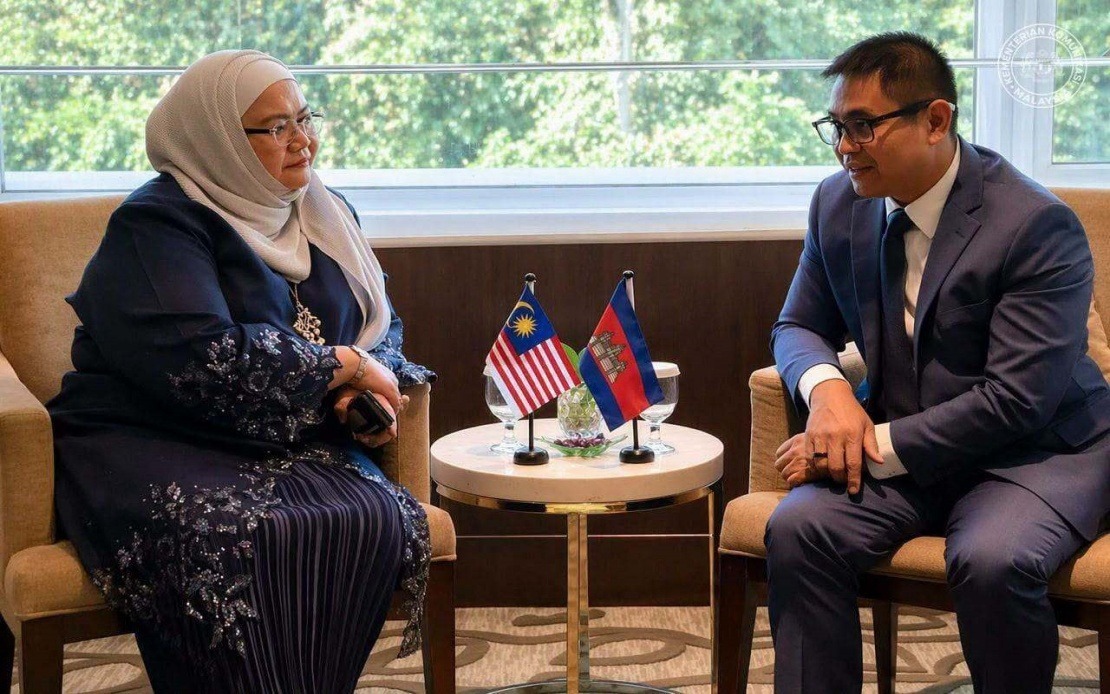
Malaysia and Cambodia have moved forward with implementing a bilateral cooperation agreement on information and media development, holding focused discussions at a senior officials' meeting in Brunei this week. The bilateral engagement, conducted on the sidelines of the 23rd ASEAN Senior Officials Responsible for Information meeting in Bandar Seri Begawan, represents a concrete step toward deepening media sector ties between the two Southeast Asian neighbours. The discussion centred on operationalising the Memorandum of Understanding signed just days earlier on June 20, which had been formalized during Malaysia's National Journalists' Day celebrations in Penang.
The Malaysian delegation was headed by Datuk Bahria Mohd Tamil, Deputy Secretary-General for Strategic Communications and Creative Industry under the Ministry of Communications, while the Cambodian side was represented by Secretary of State Prak Thaveak Amida from Cambodia's Ministry of Information. This pairing of mid-to-senior level officials suggests both governments view the agreement as a substantive initiative rather than mere ceremonial diplomacy. The choice of venue—a dedicated ASEAN forum on information matters—also indicates that the two countries are anchoring their bilateral work within the broader regional framework for media cooperation and information governance.
During the meeting, both delegations exchanged perspectives on multiple dimensions of potential collaboration, reflecting the breadth of the newly signed MoU. Discussions encompassed information exchange mechanisms, structured media development initiatives, and strategies for navigating digital transformation as both nations modernise their communications infrastructure. The agenda underscored growing regional attention to how media systems adapt to technological change while maintaining standards and serving public interest. For Malaysia, such dialogue aligns with its positioning as a regional leader in creative industries and digital communications, areas increasingly central to national competitiveness and soft power.
A significant focus of the bilateral talks was reinforcing information integrity and developing joint responses to emerging challenges in rapidly evolving media landscapes. This reflects a shared concern across Southeast Asia regarding misinformation, disinformation, and the role of media in democratic institutions. Both countries face ongoing pressures from digital platforms, changing consumption patterns, and the need to build public trust in news ecosystems. By establishing formal cooperation channels, Malaysia and Cambodia can exchange best practices, coordinate capacity-building efforts, and develop shared standards for responsible journalism and fact-checking in an increasingly interconnected region.
Communications Minister Datuk Fahmi Fadzil and his Cambodian counterpart Neth Pheaktra had signed the original MoU ad referendum earlier this month, with Amida representing the Cambodian Information Minister during the formal signing. The ad referendum procedure, which allows officials to sign on behalf of their principals, expedited the agreement's formalisation while both delegations were convened at the HAWANA celebration. This diplomatic efficiency demonstrates political will from both governments to move forward quickly, rather than allowing bureaucratic timelines to delay implementation planning.
The bilateral MoU operates across a comprehensive scope of media and communication-related fields, positioning it as a substantive framework rather than a narrow sectoral agreement. This breadth creates multiple entry points for collaboration, from capacity development programmes for journalists and media professionals to technology-sharing initiatives and joint research projects. Sectors such as public broadcasting, digital media regulation, and newsroom innovation could all potentially benefit from formal coordination mechanisms established through the agreement.
For Malaysia, deepening media ties with Cambodia fits within broader ASEAN solidarity objectives while strengthening bilateral relationships across Southeast Asia. Cambodia, as a fellow ASEAN member navigating its own media modernisation challenges, represents both a partner for knowledge exchange and a potential market for Malaysian media expertise and technologies. The emphasis on "deepening the friendship" between the two countries, as stated by the Malaysian Communications Ministry, reflects recognition that media cooperation carries diplomatic weight beyond purely technical considerations.
The regional context for this bilateral initiative matters considerably. ASEAN member states increasingly recognise that uncoordinated approaches to media regulation, digital governance, and information integrity can create friction and undermine regional cohesion. By establishing bilateral frameworks like the Malaysia-Cambodia MoU, individual nations contribute to a broader architecture of regional cooperation while maintaining sovereignty over domestic policy. The 23rd SOMRI meeting itself served as a platform where such bilateral initiatives could be discussed and refined, ensuring alignment with regional principles and standards.
Implementation of the MoU will likely involve establishing joint working groups, scheduling regular consultations between ministry officials, and potentially launching pilot projects in areas of mutual interest. Malaysian media organisations, technology companies, and training institutions may find opportunities to partner with Cambodian counterparts, while Cambodian media practitioners could benefit from exposure to Malaysian regulatory frameworks and journalistic standards. The agreement's success will ultimately depend on sustained commitment from both sides to translate these diplomatic undertakings into tangible programmes and measurable outcomes.
The timing of this cooperation initiative also reflects broader regional trends toward digital transformation and media modernisation across Southeast Asia. As artificial intelligence, algorithm-driven content distribution, and multimedia platforms reshape how information circulates, countries increasingly recognise the necessity for coordinated capacity building and regulatory harmonisation. Malaysia's experience with media regulation and digital governance can inform discussions with regional partners like Cambodia, while Cambodia's evolving media landscape may offer insights for Malaysian policymakers addressing their own digital transition challenges.

