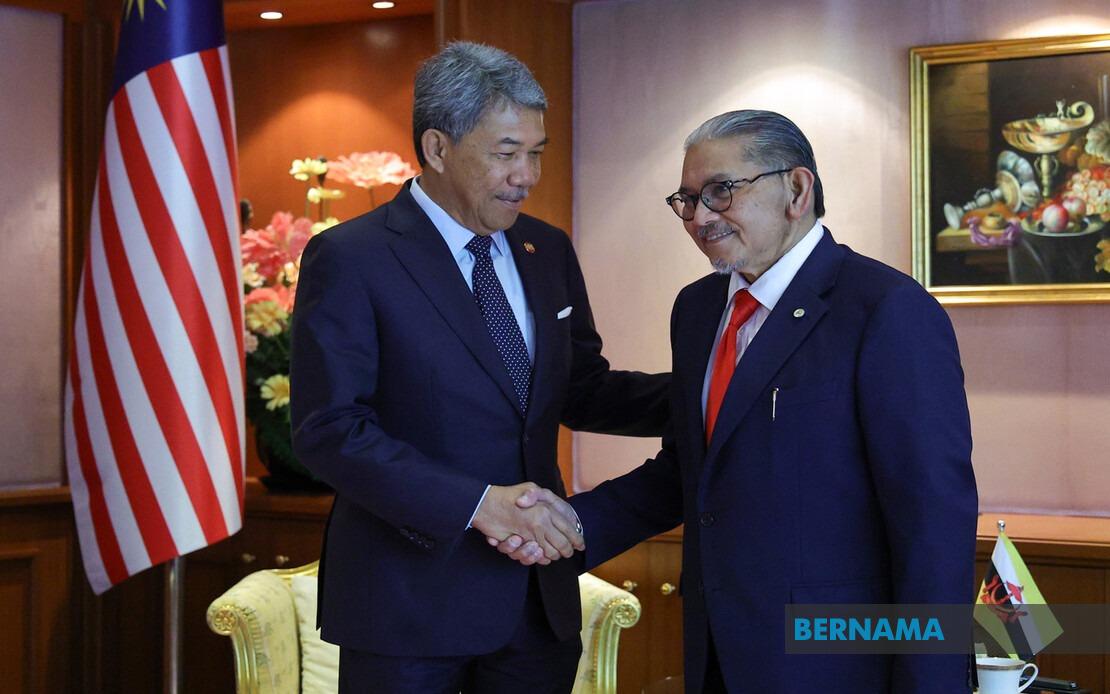
Malaysia and Brunei are deepening their bilateral partnership through intensive diplomatic engagement, with both nations marking progress on longstanding boundary issues and emerging security concerns. The 27th Meeting on the Implementation of the Exchange of Letters, held in Bandar Seri Begawan, underscores the commitment of both governments to resolving complex territorial matters whilst establishing new frameworks for regional cooperation.
Foreign Minister Datuk Seri Mohamad Hasan co-chaired the talks alongside Brunei Second Minister of Foreign Affairs Datuk Seri Setia Erywan Mohd Yusof, reflecting the senior-level attention devoted to Malaysia-Brunei relations. The meeting brought together senior officials responsible for managing one of Southeast Asia's most intricate bilateral relationships, covering everything from administrative boundaries to modern security challenges.
A major achievement announced during the discussions concerns progress on the land boundary demarcation process. Malaysia's Foreign Minister revealed that the two countries have completed approximately half of the boundary demarcation work, representing tangible progress towards a fully documented and agreed frontier. This initiative differs from merely accepting the existing historical boundary; instead, it involves a comprehensive field-based exercise that accounts for geographical, administrative, and practical factors on the ground.
The demarcation process follows the framework established in the 2009 Terms of Reference, which both countries agreed would guide their boundary work. Rather than imposing a solution from above, officials have deployed technical committees to conduct on-the-ground surveys and assessments. This methodical approach aims to produce documentation that reflects the actual landscape, settlement patterns, and administrative realities rather than relying solely on historical treaties or maps that may be imprecise or outdated.
Beyond territorial matters, the two nations have identified shared security interests that require coordinated action. Officials announced plans to sign a memorandum of understanding establishing a Search and Rescue mechanism, addressing the practical need for cooperation when maritime or aviation emergencies occur near their shared borders. Given the strategic importance of the waters and airspace in the region, formalising rescue protocols ensures that both nations can respond swiftly to emergencies affecting their citizens or vessels.
The discussions also encompassed measures aimed at facilitating cross-border movement for residents of Brunei, Sarawak, and Sabah. This focus reflects the reality that millions of people live in close proximity across the border, and streamlining procedures for legitimate travel enhances quality of life whilst maintaining security standards. Such facilitation measures often involve simplifying documentation requirements, reducing processing times, or establishing trusted traveller schemes that benefit regular border-crossers.
The bilateral relationship between Malaysia and Brunei carries particular significance for Southeast Asia given the strategic location of both nations. Brunei's position on the island of Borneo, adjacent to Sarawak and Sabah, makes border cooperation essential for regional stability and prosperity. Malaysia's presence in both peninsular and East Malaysian contexts means that strengthening ties with Brunei serves as a platform for broader integration across Borneo and the wider region.
The Exchange of Letters mechanism itself represents a structured diplomatic tool that has proven effective for managing Malaysia-Brunei relations. By holding regular implementation meetings, both countries maintain momentum on agreed projects and address emerging issues before they escalate into disputes. The 27th iteration of this meeting demonstrates sustained commitment, even as new challenges and opportunities emerge.
For Malaysian readers, particularly those in Sarawak and Sabah, enhanced cooperation with Brunei on border procedures and cross-border services has direct implications. Simplified movement, improved rescue services, and clearer boundary demarcation all contribute to regional stability and economic integration. Business communities on both sides of the border stand to benefit from more predictable and efficient cross-border protocols.
The boundary demarcation work, whilst technical in nature, carries long-term significance. Completed demarcation removes ambiguity that could otherwise fuel disputes and provides a solid foundation for cooperative agreements on resource management, environmental protection, and development projects that might span the border. This methodical approach, though requiring time and resources, ultimately protects both nations' interests by establishing clarity rather than leaving matters open to interpretation.
The announcement of a Search and Rescue agreement reflects evolving security thinking in Southeast Asia. As maritime traffic increases and environmental challenges grow, nations recognise that rescue operations frequently require cross-border cooperation. Formalising such arrangements through binding agreements ensures that rescue decisions proceed on humanitarian and practical grounds rather than becoming entangled in diplomatic considerations during emergencies.
These developments underscore Malaysia's broader regional strategy of building institutional frameworks that deepen ties with neighbouring countries. By transforming bilateral issues into structured mechanisms with regular review processes, Malaysia creates platforms for dialogue that can address both planned cooperation and unforeseen challenges. This approach has proved particularly effective with Brunei, where regular implementation meetings have maintained positive momentum across numerous policy areas.

