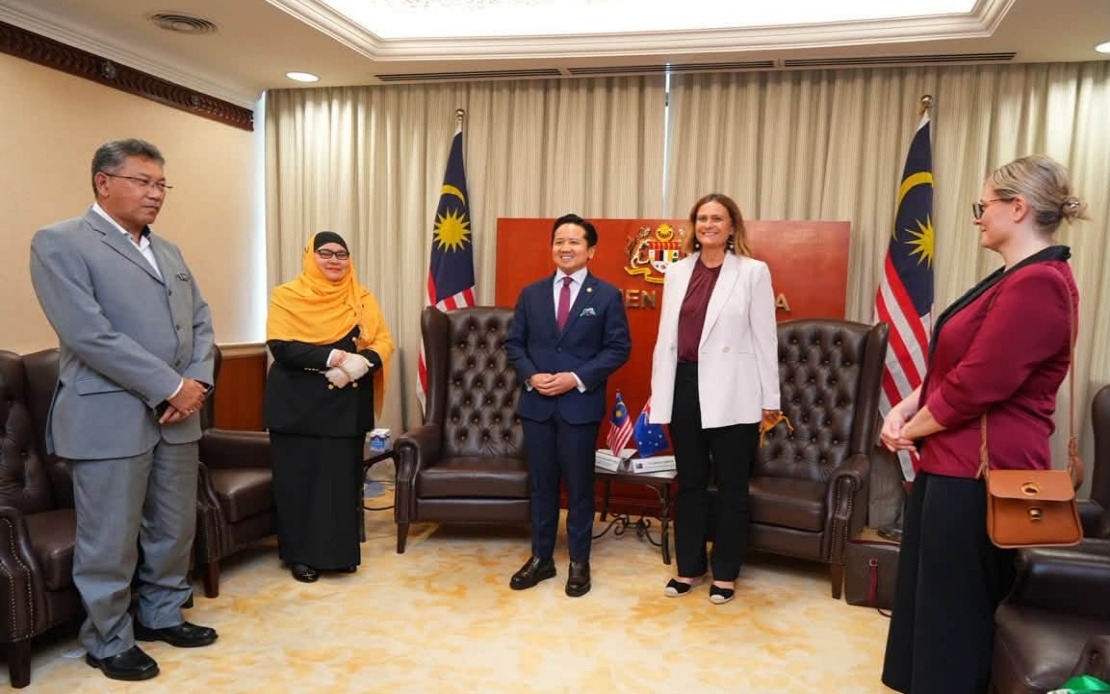
Malaysia and Australia have begun exploring enhanced cooperation in rare earth elements and critical minerals development, signalling a strategic shift toward building regional expertise in high-value mineral processing. During discussions at Parliament between Natural Resources and Environmental Sustainability Minister Datuk Seri Arthur Joseph Kurup and Australian High Commissioner Danielle Heinecke, both nations identified rare earth manufacturing as a priority area that could reshape the region's position in global supply chains.
The cooperation framework reflects Malaysia's ambition to establish a comprehensive domestic rare earth value chain that spans from midstream processing through to downstream manufacturing activities. This aligns directly with the government's National Mineral Policy 3, which seeks to position Malaysia as more than simply a resource extractor. Rather than exporting raw materials, the policy emphasises capturing greater economic value by developing local refining and manufacturing capabilities within Malaysian borders.
Australia brings substantial technical expertise and proven experience in managing the complex challenges inherent in critical minerals production and processing. For Malaysia, accessing this knowledge becomes particularly valuable as the country moves toward establishing neodymium magnet manufacturing facilities domestically. Neodymium magnets are essential components in renewable energy technology, electric vehicles, and defence applications, making them strategically important commodities in the global transition to sustainable energy.
One specific technical challenge both nations will address through their partnership involves managing rare earth processing residues, particularly neutralisation underflow residue, commonly referred to as NUF. This waste stream presents both environmental and economic considerations. Developing best practice protocols for handling NUF not only reduces environmental impact but can potentially recover valuable materials currently lost during processing, improving overall operational efficiency and sustainability metrics.
The domestic manufacture of neodymium magnets holds particular significance for Malaysia's economic diversification strategy. Currently, most neodymium magnet production occurs in China, creating supply chain vulnerabilities and dependency issues for countries seeking to reduce geopolitical risk. By developing local manufacturing capabilities, Malaysia could capture premium value-added processing, create high-skilled employment opportunities, and reduce exposure to supply disruptions or trade tensions affecting critical mineral flows.
These discussions represent concrete progress under the Malaysia-Australia Comprehensive Strategic Partnership, a bilateral framework established in 2021 to guide cooperation across multiple sectors. Rather than remaining a symbolic agreement, the partnership is now translating into practical initiatives with tangible economic implications. The rare earth and critical minerals cooperation complements existing areas of engagement while opening new channels for technological transfer and institutional learning between both nations' resource management agencies.
Beyond minerals, the ministerial meeting also covered environmental governance issues including hazardous waste management and marine ecosystem conservation. These broader discussions underscore recognition that modern resource development must integrate environmental stewardship with economic objectives. Malaysia's commitment to the upcoming United Nations Climate Change Conference, designated as COP31, featured prominently in discussions, reflecting the nexus between mineral development pathways and climate action targets.
Climate financing emerged as another substantive area of bilateral interest. As both nations work toward net-zero objectives, the transition to renewable energy requires massive mineral inputs—copper for electrical systems, lithium for batteries, rare earths for turbine magnets. Australia and Malaysia together can help ensure that developing economies in Southeast Asia access fair financing mechanisms for sustainable resource management projects rather than defaulting to cheaper, environmentally damaging alternatives.
The strategic calculus for Malaysia reflects broader Asian geopolitical considerations. Critical minerals have become central to technological competition between major powers. By strengthening regional partnerships in rare earth processing and magnet manufacturing, Malaysia reduces dependence on single-source suppliers and positions itself as a reliable, technically competent partner for nations seeking diversified supply chains. This resonates throughout Southeast Asia, where countries increasingly seek alternatives to overreliance on Chinese processing capacity.
For Australia, the partnership offers complementary advantages. While Australia possesses substantial rare earth deposits, the country has historically exported raw materials. Collaborating with Malaysia on downstream processing and magnet manufacturing extends Australian commercial value capture while leveraging complementary strengths—Australia's mining expertise combined with Malaysia's manufacturing base and regional connectivity.
The convergence of sustainability commitments with economic opportunity creates powerful momentum for advancing these initiatives. Green economic growth, as articulated in the official statement, acknowledges that competitive advantage increasingly attaches to producers demonstrating environmental responsibility alongside technical competence. Both nations view this cooperation as positioning themselves favourably for long-term market dynamics where sustainable supply chains command premium valuations.
Implementing these ambitions will require coordinated policy support, investment in research infrastructure, and technical training programs. The discussions represent the diplomatic foundation; subsequent phases will involve concrete project development, facility planning, and regulatory harmonisation between both nations' governance frameworks.
As global supply chains recalibrate away from singular dependencies, Malaysia's emerging role in rare earth value chains could yield substantial benefits for the broader Southeast Asian region. Enhanced manufacturing capabilities potentially attract downstream industries—magnet producers, motor manufacturers, renewable energy component makers—creating ecosystem effects that multiply economic impact beyond the minerals sector itself.

