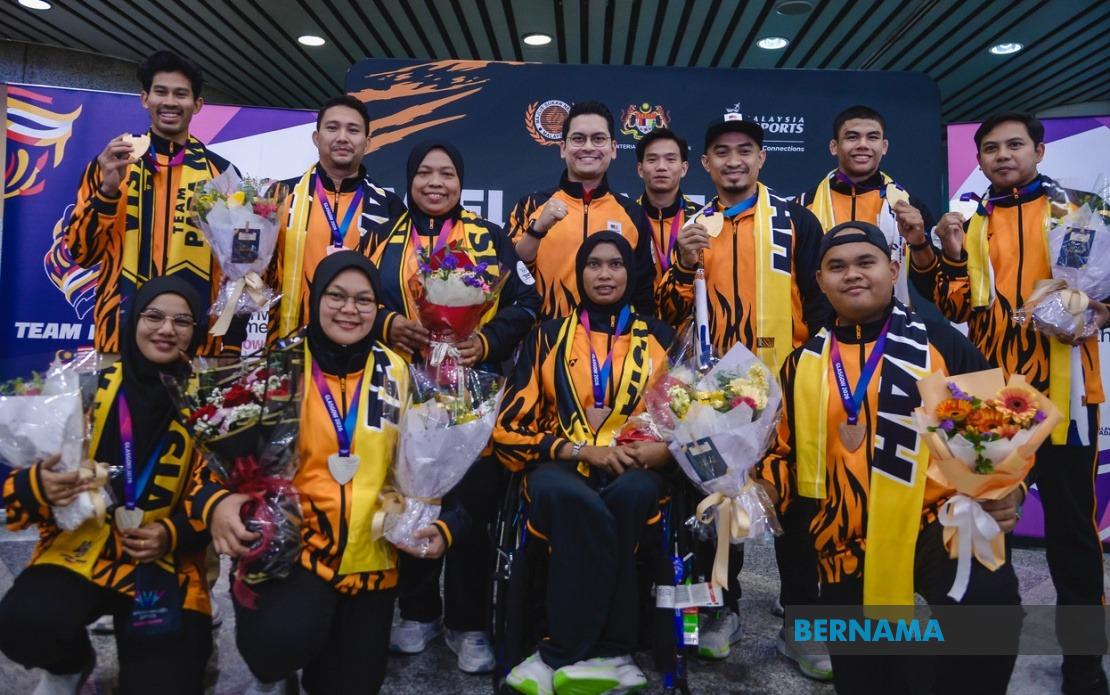
Malaysia is investing RM1.1 million to reward its athletes for their medal-winning performances at the 2026 Glasgow Commonwealth Games, Youth and Sports Minister Dr. Mohammed Taufiq Johari announced during a welcoming ceremony at Kuala Lumpur International Airport. The financial recognition forms part of the government's broader commitment to honouring the dedication and national pride displayed by competitors representing the country on the international stage.
The monetary rewards are structured to incentivise gold medal performances, with winners of the nation's top prize receiving RM80,000 each. Athletes who establish new games records alongside their gold medal victories will receive an additional RM10,000, bringing their total incentive to RM90,000. Silver medalists will be awarded RM40,000, while bronze medalists receive RM20,000, creating a tiered system that reflects achievement levels while maintaining support across all medal categories.
Dr. Mohammed Taufiq indicated that the reward structure is not yet finalised, with the National Sports Council actively engaging corporate partners to augment the funding pool. This approach signals government recognition that private sector involvement could substantially increase incentive amounts, potentially elevating Malaysia's competitive standing within the Commonwealth Games ecosystem. Several other nations have demonstrated how enhanced reward systems can motivate athlete performance and attract corporate sponsorship for sports development.
The Glasgow 2026 campaign saw Malaysia return with eight gold, three silver, and five bronze medals, exceeding the initial target of five gold medals and representing one of the nation's strongest performances since 2010. This outcome was not coincidental but resulted from a deliberate strategic recalibration by the youth and sports ministry. The government shifted from traditional medal-counting approaches to establishing specific colour-based targets, effectively concentrating athletic effort and coaching resources toward gold medal acquisition rather than pursuing medals across all categories indiscriminately.
The colour-based targeting strategy emerged from consultations involving sports associations, coaches, and athletes themselves, ensuring the framework reflected practical realities and athlete capabilities. Dr. Mohammed Taufiq acknowledged initial concerns that prioritising gold medals might burden competitors with excessive psychological pressure. However, the actual outcome demonstrated the opposite: the focused approach energised athletes and created a unifying purpose that transcended traditional performance metrics. This psychological dimension proves particularly significant for smaller nations competing against better-resourced Commonwealth members.
Looking ahead, the minister articulated an ambitious vision for Malaysia's sporting future, positioning the gold-focused strategy as a stepping stone toward securing the nation's first Olympic gold medal. This long-term thinking reflects growing recognition that Commonwealth Games success often precedes Olympic breakthroughs, particularly in developing sporting nations. By institutionalising gold-focused targeting, Malaysia's sports administration is building systematic infrastructure that could yield dividends across multiple international platforms.
Malaysia's Chef de Mission at Glasgow, Datuk Awalan Abdul Aziz, provided additional perspective on the campaign dynamics. Representing the lawn bowls contingent, which captured two silver and two bronze medals, Awalan noted that internally the team harboured gold aspirations but deliberately avoided formalising these as official targets. This nuanced approach prevented undue pressure on athletes while maintaining motivational undercurrents. The four medals in Glasgow substantially improved upon the lawn bowls team's previous Commonwealth Games showing at Birmingham 2022, when the sport secured only one silver and one bronze.
The Glasgow 2026 result carries particular weight given Malaysia sent a comparatively smaller contingent than in prior Commonwealth Games editions. Rather than interpreting limited team size as a constraint, Dr. Mohammed Taufiq framed the achievement as demonstrating quality over quantity, suggesting strategic team selection and intensive preparation yielded superior returns compared to historically larger delegations. This approach aligns with contemporary sports development philosophy emphasising targeted investment in medal-capable athletes rather than broad participation metrics.
The allocation and reward structure under the National Sports Incentive Scheme (SHAKAM) reflects government commitment to sustainable athlete support beyond competition venues. For Malaysian readers and stakeholders, the initiative signals that national success in international sports receives concrete financial recognition, potentially encouraging elite athlete development pathways. The scheme also demonstrates how government policy can align individual athletic achievement with broader national sporting ambitions, creating synergy between personal incentives and institutional goals.
The corporate partnership discussions mentioned by Dr. Mohammed Taufiq hint at emerging trends in Malaysian sports financing. As government budgets face competing pressures, private sector engagement becomes increasingly essential for maintaining competitive advantage. Successful models elsewhere show that transparent, results-based incentive structures attract corporate backing more readily than diffuse sporting expenditure. Malaysia's explicit commitment to gold medals provides corporations with clear benchmarks for sponsorship investment, potentially unlocking funding previously directed toward other sectors.
For Southeast Asia more broadly, Malaysia's strategic pivot toward gold-focused targets and corresponding reward structures may establish precedent for regional competitors. The Commonwealth Games serve as preparatory arena for smaller nations developing Olympic-quality athletic infrastructure and international competition experience. Malaysia's demonstrated success with targeted strategic approaches could influence how neighbouring countries design their own sports development programmes and incentive schemes, potentially elevating overall regional competitive performance.
The Glasgow 2026 campaign ultimately represents intersection of strategic planning, financial commitment, and athlete dedication producing measurable national success. The RM1.1 million allocation serves not merely as monetary reward but as tangible government acknowledgment that elite sporting achievement constitutes valuable national contribution. As Malaysia continues pursuing increasingly ambitious sporting objectives, sustaining this financial and philosophical commitment will prove critical to translating periodic Commonwealth Games success into sustained Olympic-level competitiveness.

