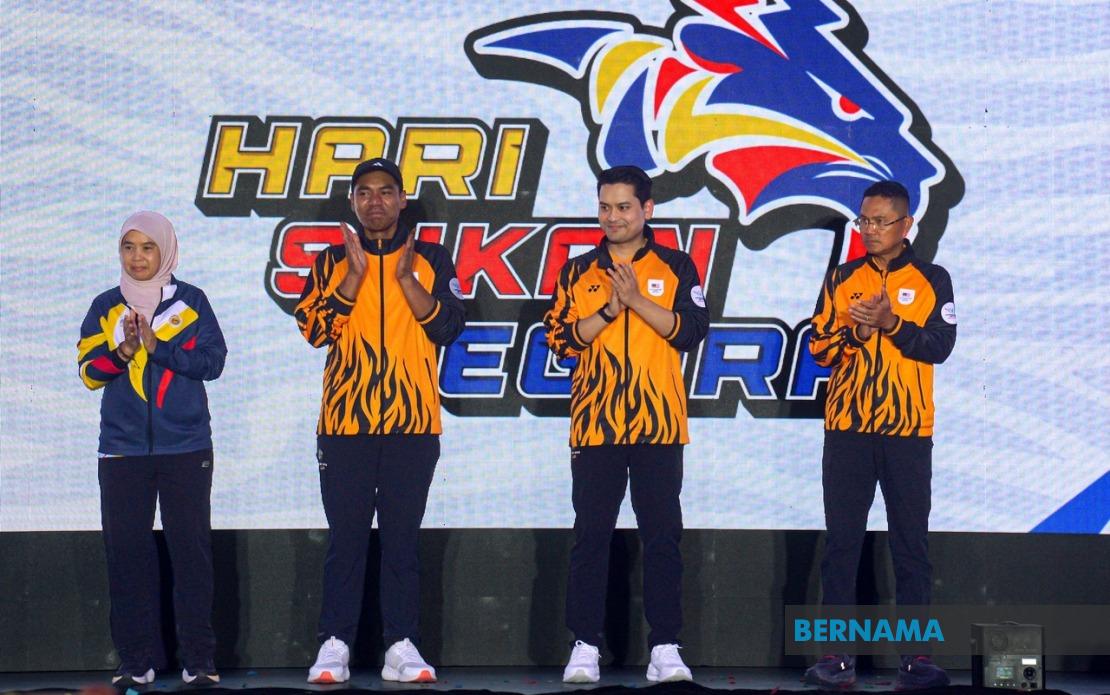
Malaysia's ambitions for the 2026 National Sports Day have expanded significantly, with organisers setting their sights on mobilising more than 5.3 million Malaysians across a comprehensive calendar of sporting activities spanning district, state and national levels. The three-day festival, scheduled to run from October 9 to 11, represents a substantial escalation in the country's commitment to encouraging mass participation in physical recreation and competitive sports, reflecting broader governmental priorities around public health and active lifestyles.
Youth and Sports Minister Dr Mohammed Taufiq Johari unveiled the centrepiece strategy during the pre-launch ceremony at Menara KBS in Putrajaya, positioning this year's iteration as a watershed moment for integrating cutting-edge technologies into Malaysia's sports ecosystem. The overarching theme, "Digital Technology and Artificial Intelligence", moves beyond mere marketing positioning to signal a fundamental recalibration of how the nation conceptualises athletic engagement in an increasingly connected world. Rather than treating technology and sports as separate domains, the ministry's vision deliberately weaves digital innovation throughout the event's architecture, from promotional mechanics to the actual conduct of competitions and recreational pursuits.
The pre-launch itself embodied this technological pivot, incorporating extensive virtual reality installations that allowed participants to experience immersive sports scenarios without physical barriers. Such applications serve a dual purpose: they generate media interest and public curiosity while simultaneously normalising the integration of digital experiences within the sports sphere. This approach acknowledges that younger demographic cohorts increasingly inhabit hybrid physical-digital environments and that engaging them effectively requires meeting them in spaces where technology and movement intersect naturally.
Dr Mohammed Taufiq elaborated on how the ministry's technological integration extends into seemingly incongruous domains, citing e-sports as a compelling illustration. Rather than dismissing competitive gaming as inherently sedentary, the HSN 2026 framework encourages e-sports participants to maintain physical fitness alongside their digital competition commitments. This nuanced positioning reflects an understanding that the dichotomy between "real" sports and digital pastimes has dissolved for many Malaysians, particularly younger citizens who move fluidly between both spheres. By incorporating e-sports within the HSN 2026 structure whilst emphasising concurrent physical activity, the ministry attempts to expand the definition of who constitutes an athlete and what sportive participation encompasses in contemporary Malaysia.
The symbolic centrepiece of National Sports Day 2026 will unfold at Bukit Jalil's National Stadium on October 10, where Prime Minister Datuk Seri Anwar Ibrahim will officiate the national-level launch. This prime ministerial involvement signals high-level governmental backing and elevates the event's perceived importance within Malaysia's political and social calendar. The choice of Bukit Jalil, synonymous with major Malaysian sporting achievements and infrastructure, carries additional resonance as a venue suffused with historical sporting significance.
Beyond immediate participation targets, HSN 2026 functions strategically as preparatory groundwork for Malaysia's forthcoming 2027 SEA Games hosting duties. The ministry has partnered with the Malaysia SEA Games Organising Committee to develop an integrated SEA Games Roadshow that leverages National Sports Day's massive audience reach to cultivate regional enthusiasm and domestic consciousness around upcoming competitive obligations. This dual-purpose approach transforms HSN 2026 from a standalone celebration into a crucial institutional mechanism for building momentum toward the Southeast Asian Games.
The programming architecture encompasses diverse constituencies and interests, spanning the MADANI Fun Run and MADANI Fun Walk initiatives that emphasise accessibility and mass participation alongside more structured athletic competition. The Active Malaysia segment targets baseline fitness improvements within the general population, whilst the Sports Industry component engages professional athletes, coaches and commercial sporting enterprises. The Rakan Muda Lifestyle elements specifically orient programming toward youth engagement, recognising that cultivating lifelong sporting habits requires capturing younger demographics during formative recreational periods.
This multifaceted approach acknowledges that sporting participation exists across a vast spectrum of intensity and commitment. Catering simultaneously to competitive athletes, casual fitness enthusiasts, family-oriented recreational participants and youth-focused programming requires structural flexibility that HSN 2026's architecture appears designed to accommodate. Such comprehensiveness increases the likelihood of achieving the 5.3 million participation target by ensuring that virtually every Malaysian demographic can identify personally relevant engagement opportunities.
The emphasis on digital technology and artificial intelligence integration positions Malaysia within global conversations around sports innovation and technological implementation. Nations throughout Southeast Asia grapple with similar questions about technology's role in promoting physical activity within increasingly urbanised, digitally-native populations. Malaysia's explicit integration of AI and digital mechanisms into a mass participation sports event may provide instructive lessons for regional neighbours whilst establishing Malaysia as an innovative voice within ASEAN sporting governance discussions.

