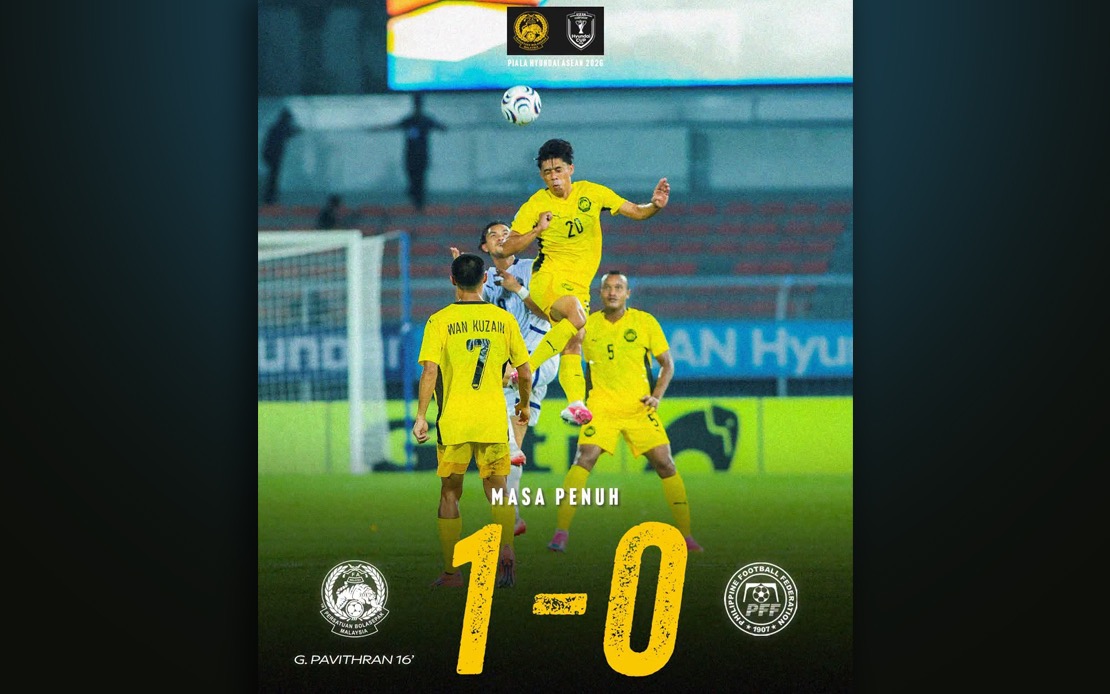
Malaysia's national football team, the Harimau Malaya, has booked a place in the semi-finals of the 2026 ASEAN Cup after a decisive 1-0 triumph over the Philippines on August 8 at the Kuala Lumpur Football Stadium in Cheras. The victory, secured under interim head coach Tan Cheng Hoe's tactical direction, saw Malaysia accumulate nine points in Group B, sufficient to claim second place and automatic progression to the knockout stage of the tournament.
The atmosphere at the 18,000-capacity venue was electric as thousands of Malaysian supporters turned out in black and yellow regalia to back their national side. This backing proved crucial for the team's performance, as the home crowd provided an energising presence that appeared to elevate the players' intensity and focus from the opening minutes. The charged environment reflected deep-rooted Malaysian passion for domestic football, underscoring the importance the nation attaches to regional tournaments as a platform for displaying footballing prowess within Southeast Asia.
The breakthrough came swiftly in the 16th minute when Harimau Malaya midfielder Wan Kuzain Wan Ahmad Kamal executed a well-placed cross into the Philippines' penalty area. Forward G. Pavithran was perfectly positioned to meet the ball and directed his header past the goalkeeper to put Malaysia ahead. The early goal proved strategically significant, allowing Malaysia to dictate play and establish territorial dominance rather than absorb sustained pressure from opponents seeking to impose their game plan.
Following the goal, Malaysia controlled the rhythm of the contest with composed possession and organised defensive shape. The Tan Cheng Hoe-led side prevented the Philippines from creating genuine scoring opportunities during the remainder of the opening 45 minutes. Carles Cuadrat's Philippine side attempted to respond with attacking impetus but found insufficient space and coherence in the final third to trouble Malaysian goalkeeper Farizal Marlias with any clear chances before halftime.
The second half saw the Philippines emerge with heightened attacking intent. They pressed higher up the pitch and committed more players forward in pursuit of an equaliser that would have altered the mathematical complexion of their qualification hopes. However, Malaysia's defensive structure, marshalled by captain Paulo Josue, proved sufficiently organised to withstand this onslaught. The consistency of Malaysia's backline—preventing the opposition from translating increased pressure into genuine goal-scoring opportunities—reflected both disciplined tactical execution and individual defensive quality.
Malaysia came close to extending their advantage in the 85th minute when Pavithran found himself presented with a promising opportunity to double the lead. A teammate's low cross found him in the penalty area, but Philippines defender Jaime Rosquillo's timely intervention thwarted the forward's attempt to convert, ensuring the margin remained a single goal until the final whistle. This defensive intervention, while frustrating for Malaysian attackers, ultimately proved inconsequential to the overall result.
Thailand's dominance in Group B was confirmed earlier when the War Elephants dispatched Myanmar 2-0 in a separate fixture. The reigning group champions accumulated 12 points from their campaign, establishing themselves as one of the tournament's strongest teams entering the knockout phase. Thailand's commanding performance and superior point tally meant Malaysia's second-place finish, while secure, came behind a clearly formidable opponent that had demonstrated consistent quality throughout the group stage.
Malaysia now faces a formidable challenge in the semi-finals, having drawn defending ASEAN Cup champions Vietnam. The Vietnamese topped Group A and enter the knockout stage as tournament favourites, adding significant prestige to the encounter. The semi-final fixture will be contested over two legs on August 16 and 19, following the traditional two-legged format that requires aggregate scores across both matches to determine progression.
Vietnam's pedigree as defending champions and group winners elevates the difficulty of Malaysia's path to the final. The Vietnamese are traditionally one of Southeast Asia's strongest football nations and have accumulated considerable tournament experience through recent successes in regional competitions. For Malaysia, the semi-final presents both an opportunity to measure themselves against elite opposition and a chance to demonstrate whether recent performances represent a sustainable upward trajectory for the national team.
For Malaysian football followers, the progression to the semi-finals represents a positive development after years of inconsistent regional performances. The campaign showcased organisational improvement and player commitment under Tan Cheng Hoe's interim direction. However, the challenge against Vietnam will provide a clearer assessment of whether Malaysia has genuinely strengthened as a competitive force or whether the group stage success represents a temporary respite in a longer struggle for regional relevance.
The home victory also provided important momentum and confidence heading into the semi-final encounters. Playing at the Kuala Lumpur Football Stadium, with enthusiastic home support, had tangible benefits in terms of team performance and psychological advantage. Malaysia will hope to replicate such conditions in the opening leg at home before travelling away for the second encounter, potentially maximising home-field advantage as a factor in the tie against the defending champions.

