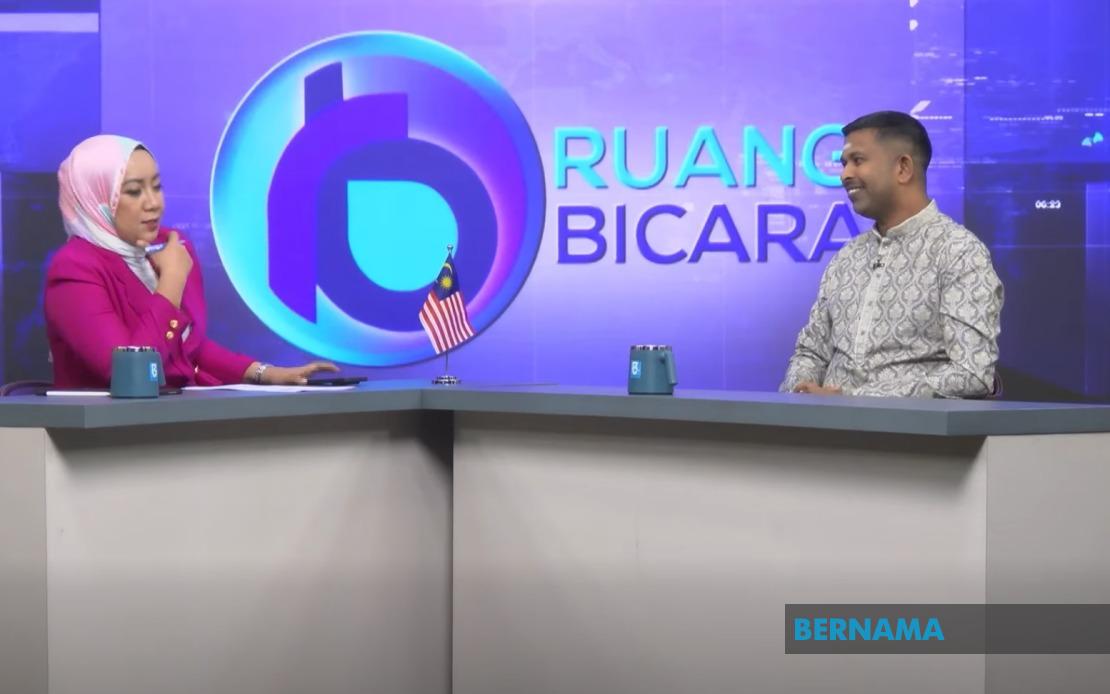
The elevation of Bahasa Malaysia's standing as the nation's official language cannot succeed through isolated governmental efforts alone but demands a coordinated movement spanning government agencies, tertiary institutions, commercial enterprises, and civil society. This assertion comes from Prof Dr Ramalinggam Rajamanickam, a constitutional scholar at Multimedia University's Faculty of Law and board member of Dewan Bahasa dan Pustaka, Malaysia's national language custodian. Speaking on a local broadcaster's current affairs programme, he emphasised that the constitutional foundation for this responsibility is already firmly established, yet realising its full potential requires mobilisation across all societal sectors.
Article 152 of the Federal Constitution provides robust legal grounding for the Malay language's national status, establishing it as the constitutional backbone of Malaysian linguistic identity. Beyond this foundational constitutional clause, the National Language Act 1963/67 reinforces this framework by mandating the use of Bahasa Malaysia in all official governmental functions and transactions. These legislative safeguards represent a comprehensive legal edifice designed to protect and propagate the language. However, as Prof Ramalinggam emphasised, constitutional and statutory protection alone cannot guarantee the language's contemporary relevance or quality of usage in an increasingly digital and globalised society.
The primary challenge confronting the language today extends beyond the sheer prevalence of its usage, which the expert characterised as generally adequate in Malaysian society. Instead, the critical issue centres on preserving linguistic quality amid contemporary pressures that dilute formal expression. The phenomenon of "bahasa rojak"—the colloquial blending of Malay, English, and other linguistic elements—represents a symptom of broader concerns about grammatical precision and structural integrity in formal communication. While such code-switching carries cultural authenticity and reflects the organic evolution of living languages, its proliferation in contexts requiring standardised expression poses genuine challenges for institutional communication, legal documentation, and academic discourse.
Prof Ramalinggam delineated a meaningful distinction between informal and formal linguistic contexts that proves crucial for policymakers. In casual settings, abbreviations and language mixing on social media platforms reflect the natural adaptation of communities to technological affordances and carry minimal institutional concern. Conversely, official communications—whether governmental, judicial, or corporate—demand rigorous adherence to grammatical conventions and syntactic correctness. Universities, he contended, bear particular responsibility for ensuring that Bahasa Malaysia functions authentically as an intellectual medium while simultaneously maintaining the English proficiency increasingly essential for international academic exchange and technological advancement.
The technological frontier presents both unprecedented opportunity and existential challenge for the language's future trajectory. Rather than passively awaiting technological systems to adapt themselves to Bahasa Malaysia, Prof Ramalinggam advocated for a proactive strategy of linguistic modernisation that enables the language to shape and command technological domains. This reorientation requires deliberate investment in terminology development across scientific, economic, and computational fields. Malaysia must cultivate research capacity specifically focused on linguistic integration into artificial intelligence systems, ensuring that AI applications and interfaces can function authentically in Malay rather than remaining permanently dependent upon English-language infrastructure.
Historical precedent provides compelling evidence for the language's dormant potential as a medium of regional and intellectual influence. Bahasa Malaysia previously functioned as a lingua franca facilitating commerce and diplomacy across Southeast Asia and the maritime Indian Ocean world. This historical role demonstrates the language's inherent capacity to transcend local boundaries and serve as a vehicle for sophisticated knowledge exchange. Contemporary academic interest in Malaysia among educational institutions in China, Japan, and India suggests latent international demand for multilingual speakers proficient in Malay, thereby creating market incentives for its serious study and application beyond domestic contexts.
The government bureaucracy must establish enforcement mechanisms and monitoring protocols to ensure that statutory requirements for Bahasa Malaysia usage in official contexts translate into consistent practice. Higher education institutions, as custodians of knowledge production and dissemination, occupy particularly strategic positions in this endeavour. Universities must design curricula and institutional policies that normalise Malay-medium instruction and scholarship in advanced fields traditionally dominated by English, thereby demonstrating that sophisticated knowledge production remains fully achievable within Malay-language frameworks. Such institutional commitment would simultaneously signal to students that mastery of the national language carries both cultural and economic value.
The relationship between linguistic nationalism and international competitiveness need not entail zero-sum competition between languages. Prof Ramalinggam stressed that commitment to Bahasa Malaysia's development and usage does not necessitate the marginalisation or diminishment of English, Mandarin, or other internationally significant languages. Rather, the aspiration involves cultivating genuine multilingual capability wherein Malaysian citizens develop fluency across multiple linguistic systems while maintaining their national language as a symbol of political identity and cultural continuity. This pluralistic vision acknowledges that regional power dynamics require English competence while maintaining that such competence need not come at the expense of national linguistic identity.
The private commercial sector remains an underutilised force in linguistic preservation and modernisation. Corporations operating across Malaysia's diverse economy could substantially advance this agenda through deliberate commitment to Bahasa Malaysia in internal communications, customer service interactions, and technological interfaces. Such commercial adoption would not merely protect the language defensively but would actively demonstrate its functionality in contemporary business contexts, thereby conferring prestige and relevance upon its usage. Technology companies, in particular, could pioneer Malay-language artificial intelligence and software applications that enhance accessibility for ordinary Malaysians while simultaneously contributing to global linguistic diversity in an increasingly homogenised technological landscape.
The challenge ultimately transcends technical linguistic considerations to engage fundamental questions about national identity and cultural continuity amid globalisation. Malaysia's approach to Bahasa Malaysia during this period of rapid technological change will establish precedents with implications extending across Southeast Asia, where other nations grapple with analogous tensions between linguistic nationalism and international integration. A successful Malaysian model demonstrating how a developing nation can maintain distinctive linguistic identity while remaining fully integrated into global knowledge systems and technological networks would offer valuable lessons for regional counterparts navigating similar crossroads.

