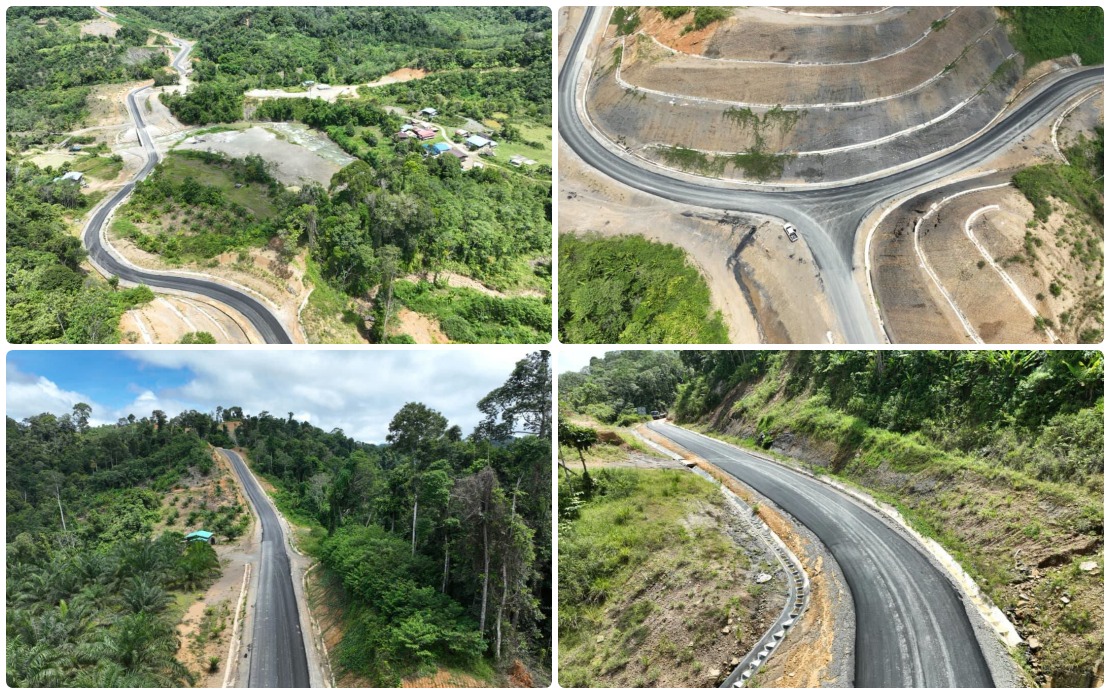
A significant infrastructure milestone has been reached in Sabah's interior as the Sapulut-Salong-Pagalungan-Pensiangan road has been fully paved through to Pensiangan town, transforming connectivity in one of the state's most remote parliamentary constituencies. The completion of this crucial transport link represents a watershed moment for residents who previously endured gruelling journeys through challenging terrain, with the route now passable in roughly half the time previously required. Datuk Seri Arthur Joseph Kurup, the Member of Parliament for Pensiangan and Minister of Natural Resources and Environmental Sustainability, confirmed the achievement during a recent inspection visit to the district.
The urgency of this project becomes clear when examining the practical realities faced by Pensiangan's population. Before the upgrade, a journey from Keningau to Pensiangan town consumed more than six hours under normal conditions, and adverse weather could leave motorists stranded indefinitely on deteriorating roads. The transit time has now compressed to approximately three hours, fundamentally altering the calculus of daily life for teachers, medical professionals, nurses, and ordinary residents who previously relied heavily on river transport. Kurup's observation that the parking areas around Pensiangan town now fill with cars rather than boats serves as a simple yet eloquent marker of the transformation—accessible roads enable economic activity and social mobility that waterways alone cannot support.
The road project's genesis lies within Kurup's parliamentary election manifesto, reflecting a constituency-based commitment to infrastructure modernisation that extends beyond symbolic gestures into tangible quality-of-life improvements. The physical evidence is already visible in behavioural shifts among the local population. Young people are reportedly returning to their villages with renewed interest in developing agricultural land and establishing small enterprises, a phenomenon that typically follows infrastructure improvements in rural areas when transport costs and travel times fall sufficiently to make commerce viable. This demographic reversal—the return of youth to interior settlements—carries significant implications for arresting the depopulation that has plagued many remote Malaysian constituencies.
Kurup's broader development vision encompasses Pensiangan as part of a master plan that extends well beyond a single road project. Phase Four of the road initiative will extend the network to the Kalimantan border, positioning Pensiangan as a potential gateway for regional trade and tourism linkages with Indonesian communities. This cross-border dimension introduces possibilities for joint economic zones and cultural exchange, transforming what has historically been an isolated frontier into a potential nexus for transnational commerce. The strategic positioning near Kalimantan suggests that planners recognise Pensiangan's geographical advantage once basic infrastructure reaches international standards.
The ecosystem of supporting projects that Kurup has initiated reveals sophisticated thinking about balanced development. The completed Jalan Sinaron-Linayukan in Tongod and the ongoing Jalan Rancangan Belia Tiulon-Simbuan project create a network effect, with multiple routes reinforcing each other's utility rather than single highways serving as isolated corridors. These interconnections allow goods and people to circulate more fluidly through the region, strengthening local markets and enabling specialisation. Agricultural infrastructure has received particular attention, with a coffee processing facility under construction and completed collection centres at Pagalungan Tamu and Salong Agrobazaar—elements that suggest a coherent strategy to support commodity production from initial harvesting through processing and aggregation.
Digital connectivity represents another pillar of this development approach, with telephone and internet upgrades proceeding throughout the district. For remote interior constituencies, digital infrastructure carries particular weight, as it enables education, healthcare consultation, and market access that physical presence alone cannot guarantee. A farmer in Pensiangan can now research market prices, access agricultural extension services, and connect with buyers without travelling to Kota Kinabalu, creating efficiency gains that compound over time.
The upgrading of jetty and boat facilities at Pangkalan Salong merits attention as a marker of pragmatic development philosophy. Rather than displacing water transport entirely, the initiative recognises that river corridors remain integral to Pensiangan's geography and transport ecology. Many settlements in the interior maintain primary access via water during certain seasons, making maintenance of this infrastructure essential for resilience and redundancy. This balanced approach—improving roads while simultaneously upgrading river facilities—ensures that development does not create dangerous dependencies on single transport modes.
Border infrastructure development signals Kurup's understanding of Pensiangan's strategic position. The planned immigration and customs complex at the Kalimantan crossing, currently in the approval phase, would formalise and systematise transnational movement, creating administrative frameworks for trade that currently likely occurs informally. Properly functioning border infrastructure facilitates legitimate commerce while improving security and revenue collection, a delicate balance that requires both investment and institutional capacity.
Educational infrastructure has not been overlooked, with completion of the first Sixth Form Centre for Nabawan district at Sekolah Menengah Kebangsaan Nabawan. This provision enables local students to pursue upper-secondary education without leaving the district, reducing education costs for families and potentially improving completion rates by reducing the burden of boarding away from home. Quality-of-life improvements such as extended education access frequently correlate with improved economic prospects in subsequent decades.
The Pensiangan constituency's transformation mirrors patterns emerging across Malaysian interior regions where strategic infrastructure investment, when coupled with supporting facilities and services, catalyses measurable economic and social change. Sabah's interior holds significant natural resources and agricultural potential that has historically remained underdeveloped due to transport constraints and isolation. The Sapulut-Pensiangan road completion represents a necessary, though not sufficient, condition for unlocking this potential. Success will depend on sustained investment in complementary services—reliable electricity, clean water, quality healthcare, and education—that must accompany road infrastructure to create genuinely liveable communities.
The broader implications for Southeast Asia's development agenda are noteworthy. Many ASEAN nations contain vast interior regions isolated by geography and infrastructure deficits, creating populations that remain peripheral to national development despite contributing resources and economic value. The Pensiangan model, emphasising integrated infrastructure, border facilitation, and local economic institution-building, offers potential lessons for other constituencies facing similar challenges. Indonesia's border regions with Sabah, in particular, may find cross-border coordination opportunities as Pensiangan emerges as a more accessible and developed interface.

