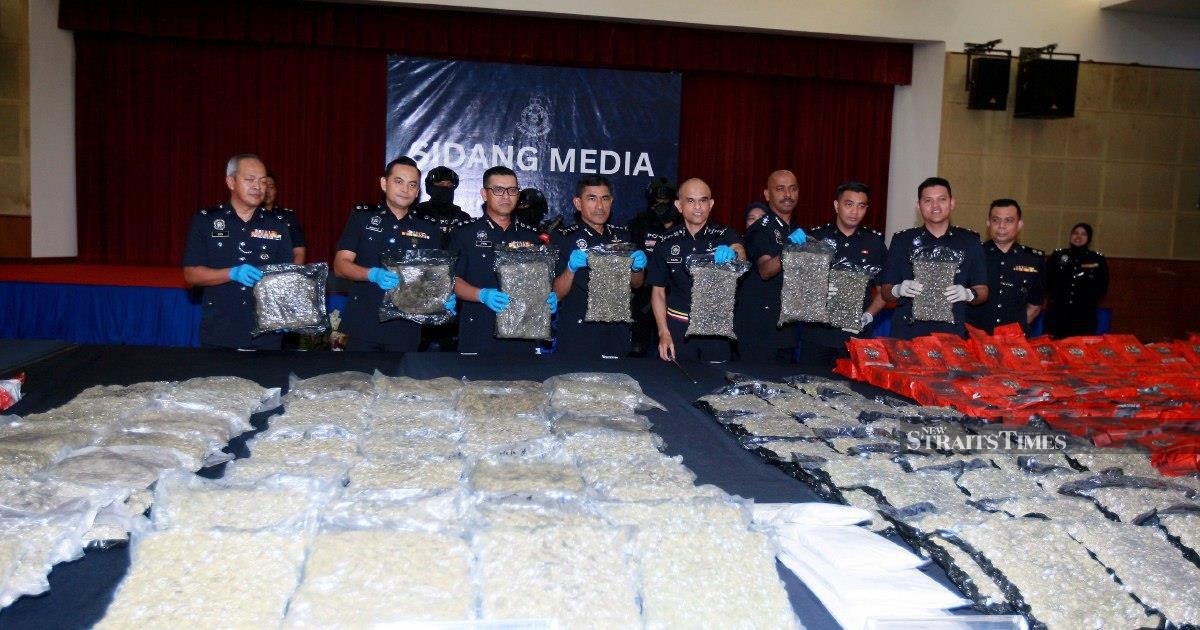
Authorities in Selangor have delivered a significant blow to drug trafficking networks operating across the state, intercepting approximately 600 kilogrammes of illicit narcotics and arresting a dozen individuals following a series of coordinated enforcement operations. The drugs seized, valued at RM37.5 million, represent one of the larger seizures in the state in recent months and underscore intensifying police efforts to combat organised drug distribution.
The operation, which unfolded across multiple locations in Shah Alam and surrounding areas, targeted a trafficking ring suspected of supplying substances to mid and street-level dealers. Police succeeded in dismantling six distinct trafficking attempts, suggesting the network operated with considerable sophistication, employing different distribution channels and storage facilities to evade detection. This decentralised approach is typical of larger trafficking organisations seeking to compartmentalise operations and minimise exposure if one cell is compromised.
The variety of drugs recovered indicates the syndicate trafficked in high-demand narcotics across the market spectrum. Such diversified inventories suggest the network supplied wholesale quantities to downstream distributors rather than focusing on a single substance. This wholesale model is common among major trafficking groups, as it maximises revenue and maintains flexibility in responding to market demand fluctuations across the Klang Valley and surrounding regions.
Selangor has long been identified as a critical transit and distribution hub for drugs entering Malaysia. The state's proximity to major ports, extensive road networks, and dense urban centres make it attractive for trafficking operations seeking to move quantities into the peninsula and beyond. Enhanced enforcement in Selangor therefore carries disproportionate impact on broader drug supply chains throughout the country.
The arrest of twelve individuals provides opportunities for investigators to map the network's structure and identify upstream suppliers and downstream networks. Police typically utilise such arrests to generate intelligence about sourcing methods, financial flows, and connections to larger criminal enterprises. In the Malaysian context, such investigations frequently reveal links to transnational criminal groups and the geopolitical dimensions of drug trafficking in Southeast Asia.
The financial value attached to the seizure—RM37.5 million—reflects current street and wholesale pricing for mixed narcotic batches. Such valuations help authorities communicate the scale of operations to the public but also mask significant variation in per-unit value. Certain controlled substances command premium prices, meaning smaller physical quantities may represent disproportionate financial loss to trafficking organisations.
This seizure contributes to a broader pattern of enforcement activity in Selangor, where police have intensified operations against high-level trafficking rings over the past several years. The state remains one of Malaysia's priority areas for narcotics enforcement, given the volume of drugs flowing through its territory and the criminal violence associated with turf disputes among rival syndicates.
Malaysian drug enforcement faces persistent challenges inherent to the region's geographic position along major trafficking routes from the Golden Triangle and other production zones in Southeast Asia. Selangor's law enforcement must contend not only with trafficking destined for domestic consumption but also transhipment operations moving drugs toward Australia and other markets. The scale of this operational environment means that even substantial seizures represent only a fraction of drugs circulating through the supply chain.
The case illustrates the transnational nature of contemporary drug trafficking, where narcotics flow through multiple jurisdictions and involve cooperation among criminal groups spanning different nationalities and ethnic backgrounds. Malaysian police increasingly employ regional cooperation frameworks and intelligence sharing to counter these networks, though coordination challenges persist across ASEAN borders.
For Malaysian readers, such seizures carry particular significance given domestic drug consumption patterns and the social costs associated with addiction. The drugs interdicted would have reached tens of thousands of users through the downstream distribution network, preventing not only criminal profit realisation but also reducing the immediate harm and violence associated with supply chain competition.
The investigation and prosecutions arising from these arrests will likely proceed through the Malaysian court system, where trafficking charges routinely result in substantial custodial sentences. Malaysia maintains among Southeast Asia's strictest drug laws, reflecting the government's zero-tolerance stance toward narcotics trafficking. Conviction carries mandatory minimum sentences and, for large quantities, potential capital charges under the Dangerous Drugs Act.
Police statement accompanying the seizure will typically emphasise commitment to dismantling trafficking networks and provide assurances about continuing enforcement intensity. Such public communications serve both deterrent functions and reassurance purposes for communities affected by drug-related crime. The announcement of this seizure and the arrest of twelve individuals will likely feature in police public relations materials highlighting operational effectiveness.
Looking forward, the success of this operation may prompt the criminal syndicates to adjust routing and distribution methods, potentially increasing prices for consumers and creating temporary supply disruptions in certain areas. However, history suggests that established trafficking networks typically exhibit resilience and capacity to adapt operations relatively quickly, meaning sustained enforcement pressure remains necessary to achieve durable reductions in drug availability.

