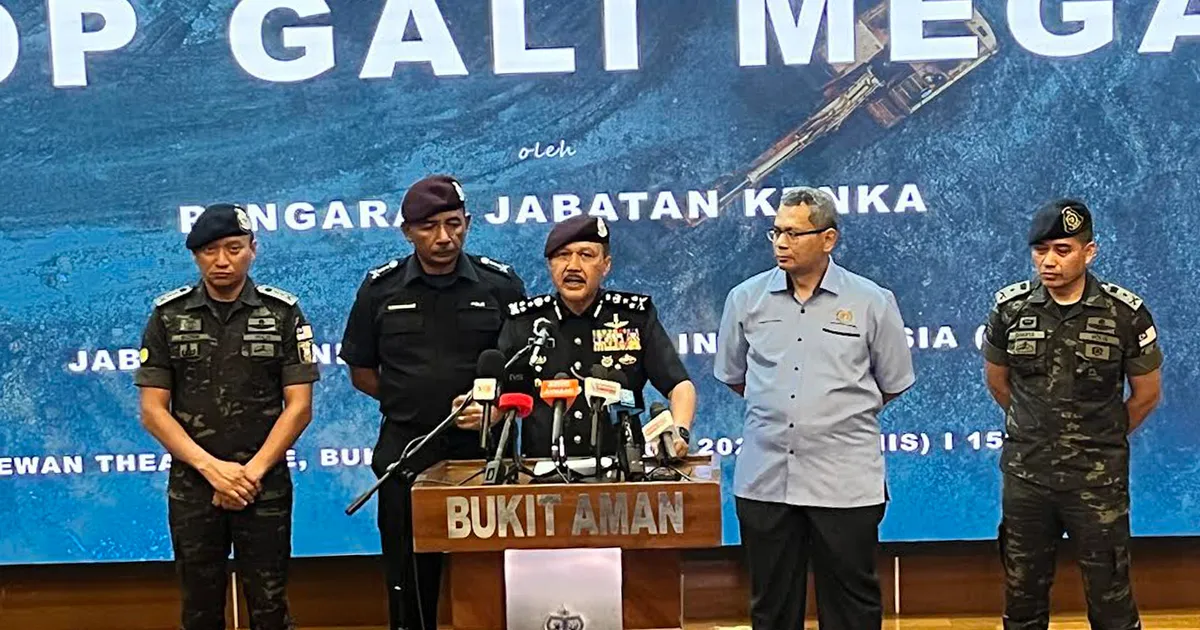
Authorities have mounted a significant enforcement campaign against illegal mining networks across Malaysia, resulting in 99 arrests and the seizure of RM119 million in assets during operations conducted from August 19 to 23. The multi-agency initiative demonstrates intensified efforts to combat the persistent problem of unregulated resource extraction that continues to drain the nation's mineral wealth and damage critical ecosystems.
The operation proved exceptionally productive in terms of material recovery. Enforcement teams confiscated approximately 33,000 tonnes of natural resources, primarily comprising coal, quarry stone, earth, and sand, with an estimated street value of RM21 million. This substantial haul underscores the scale at which illegal miners operate across the country, shifting massive quantities of raw materials through underground supply chains that ultimately feed into legitimate construction and industrial sectors.
Illegal mining represents a multi-faceted threat to Malaysia's economic and environmental interests. Beyond the direct loss of government revenues from unsold mineral concessions, the operations frequently occur without proper environmental assessments or restoration protocols, leaving degraded landscapes that require expensive remediation. Water contamination from mining runoff also poses risks to local communities and agricultural activities in affected regions, creating long-term costs borne by society rather than the perpetrators.
The coordinated nature of this five-day sweep suggests authorities have refined their intelligence-gathering and enforcement strategies to target multiple operations simultaneously. By preventing suspects from receiving advance warning through staggered arrests across different locations, enforcement agencies maximised the likelihood of catching equipment and materials still at operational sites rather than dispersed or hidden. This tactical approach reflects lessons learned from previous operations and represents a maturing enforcement capacity.
The diversity of seized materials—coal, quarry stone, earth, and sand—indicates that organised illegal mining is not concentrated in a single resource type but operates across multiple categories of natural materials simultaneously. This diversification allows criminal networks to spread risk and maintain revenue streams even if specific operations face temporary disruption. Construction and industrial demand for these materials remains consistently high, ensuring steady markets for illegally sourced supplies that typically undercut legitimate producers through tax evasion and avoidance of proper operational costs.
For Malaysian readers, the implications extend beyond enforcement statistics. Illegal mining creates unfair competition for legitimate mining companies that comply with regulations and environmental standards, ultimately driving up costs for consumers. When unlicensed operators avoid licensing fees, royalties, and environmental compliance expenses, they can offer dramatically lower prices, undercutting law-abiding businesses and distorting market dynamics. This places legitimate operators at a competitive disadvantage and erodes the tax base that funds public services.
The RM119 million in seized assets represents equipment, vehicles, processing machinery, and financial holdings linked to mining operations. Recovery of these assets is crucial as they represent capital investment in illegal infrastructure that can be redeployed for legitimate purposes or sold to generate revenue for enforcement activities. However, the true measure of success extends beyond immediate asset seizure to whether authorities can dismantle the criminal networks themselves and prevent their reformation.
Regional perspectives on this crackdown hold significance for Southeast Asian governance. Malaysia's efforts against illegal mining align with broader regional concerns about environmental degradation and resource depletion across the Association of Southeast Asian Nations member states. Illegal extraction operations frequently operate across porous borders, making unilateral enforcement challenging. Stronger Malaysian enforcement creates pressure that may influence regional cooperation frameworks and encourage neighbouring countries to enhance their own compliance mechanisms.
The challenge facing authorities involves distinguishing between large-scale organised operations and smaller-scale illegal activities by local communities facing economic constraints. While organised networks represent the primary enforcement target, sustainability requires addressing underlying economic pressures that push individuals toward illegal mining as income generation. Educational campaigns and alternative livelihood programmes complement enforcement to create more comprehensive long-term solutions.
Sustained enforcement momentum depends on resource allocation and political commitment. Illegal mining networks often feature resilience, quickly rebuilding operations after disruption by relocating to new sites or reinstating equipment at seized locations. Authorities must therefore maintain consistent pressure rather than treating crackdowns as periodic exercises. Regular operations, intelligence sharing among agencies, and community reporting mechanisms create an enforcement environment where illegal mining becomes progressively higher-risk and less attractive to potential participants.
The August operation's success in asset recovery and arrests provides a foundation for understanding enforcement capacity and evolving criminal tactics. Data from this crackdown will inform strategic planning for subsequent operations, identifying patterns in operating locations, seasonal fluctuations, and supply chain vulnerabilities. Effective regulation of Malaysia's natural resource sector requires this continuous cycle of enforcement, analysis, and strategic adjustment.

