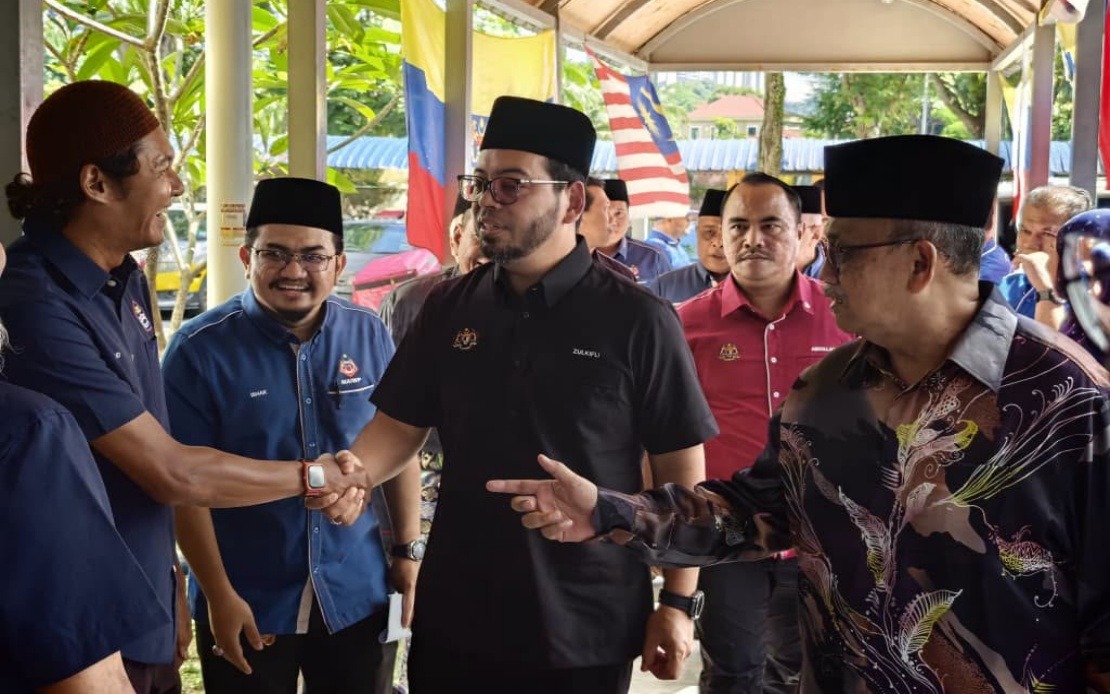
The Federal Territories Islamic Religious Council (MAIWP) has marked a significant expansion of its zakat assistance infrastructure with the opening of a dedicated distribution centre in Batu, positioning the facility as a cornerstone for enhanced service delivery across Kuala Lumpur. Situated at Jalan Pelangi 10 in Taman Pelangi, the Zakat Distribution Centre (PAZA) Batu branch represents MAIWP's strategic effort to modernise how Islamic charitable funds reach beneficiaries in the nation's capital.
Minister in the Prime Minister's Department (Religious Affairs) Senator Dr Zulkifli Hasan outlined the broader mission underlying the facility's inauguration, emphasising that it transcends conventional counter-service operations. The centre has been conceptualised as a comprehensive community hub designed to accelerate zakat processing while ensuring residents experience a streamlined, comfortable experience when accessing support. This approach reflects a growing recognition within Malaysia's Islamic institutions that distribution mechanisms must evolve beyond transactional models to encompass genuine community engagement and welfare integration.
The establishment of PAZA Batu arrives at a time when MAIWP's operational scope has expanded considerably. As of mid-June, the council had channelled RM505.6 million through its zakat system, disbursed across 38 distinct assistance schemes and human capital development initiatives. This substantial quantum demonstrates the council's capacity to manage complex welfare portfolios, yet also underscores the operational pressures that justify investment in dedicated distribution infrastructure. The opening of a dedicated branch in a densely populated parliamentary constituency suggests MAIWP's recognition that centralised operations alone cannot adequately serve diverse demographics across the Federal Territories.
Beyond administrative efficiency, the new facility signals MAIWP's commitment to what it terms "reaching out to the community." This framing indicates a shift from passive benefit distribution towards proactive welfare engagement, a distinction that carries implications for how Islamic charitable institutions operate across Southeast Asia. The centre is intended to function as a visible institutional presence within the Batu community, facilitating not merely financial transfers but sustained dialogue between administrators and recipients about broader welfare needs and development opportunities.
The launch coincided with tangible welfare initiatives that underscored the centre's immediate purpose. MAIWP distributed 50 food baskets, each valued at RM100, to identified beneficiaries within the Batu vicinity during the opening ceremony. This targeted assistance complemented a broader "Ziarah Kasih" courtesy programme involving direct home visits to zakat recipients, particularly those residing in the Pekan Batu People's Housing Scheme, a significant concentration of lower-income households in the federal capital. These simultaneous initiatives revealed how MAIWP intends to leverage the new facility—not as a reception counter alone but as the operational base for comprehensive, community-embedded support mechanisms.
The geographical focus on Pekan Batu PPR deserves particular attention for Malaysian policymakers tracking urban welfare provision. People's Housing Schemes have consistently presented administrative and logistical challenges for benefit distribution due to population density, household turnover, and documentation complexity. By establishing dedicated infrastructure within such catchments, MAIWP demonstrates recognition that marginalised urban communities require tailored institutional approaches rather than generic delivery systems designed for broader populations.
The timing of this expansion also merits contextualisation within Malaysia's post-pandemic welfare environment. Zakat collection mechanisms have typically responded to economic cycles, and the pace of MAIWP's infrastructure investment suggests confidence in sustained or growing fund availability. The RM505.6 million distributed figure, while substantial, must be assessed against potential demand within Federal Territories' lower-income segments, particularly given inflationary pressures affecting household budgets across Malaysia in 2024. The new centre's capacity will be tested against whether distributed assistance volumes can maintain parity with beneficiary numbers and inflation-adjusted need.
For regional observers, the PAZA Batu opening illustrates how Islamic charitable systems in developed Muslim-majority nations are professionalising their operational frameworks. Malaysia's approach—combining centralised policy coordination with localised distribution infrastructure—contrasts with institutional models in some other Southeast Asian contexts and may offer applicable lessons for countries seeking to strengthen zakat systems' effectiveness. The emphasis on community engagement rather than mere fund transfer also reflects evolving standards for charitable governance across the region.
Senator Dr Zulkifli Hasan's public articulation of the centre's mission through social media indicates MAIWP's attention to stakeholder communication and transparency, factors increasingly important as charitable institutions navigate public scrutiny and accountability expectations. By documenting both quantitative outputs (the RM505.6 million figure) and qualitative initiatives (the courtesy visit programme), MAIWP constructs a narrative of purposeful, responsive governance that extends beyond fund disbursement toward genuine welfare provision.
The establishment of PAZA Batu also raises questions about equity across the Federal Territories. Whether comparable infrastructure will be prioritised in other constituencies and whether this represents the beginning of a systematic network of distribution centres versus a targeted intervention for specific high-need areas remain pertinent considerations. The council's future expansion trajectory will indicate whether this represents a singular initiative or the opening phase of comprehensive service decentralisation throughout Kuala Lumpur, Labuan, and Putrajaya.
Looking forward, the centre's performance metrics—processing efficiency, beneficiary satisfaction, and assistance uptake rates—will provide crucial data regarding whether institutional modernisation translates to tangible improvements in welfare delivery. For MAIWP and Malaysian Islamic organisations more broadly, the Batu facility exemplifies the intersection of administrative capability and community commitment that effective zakat systems require in contemporary urban environments, establishing a template potentially applicable across other Malaysian jurisdictions managing complex welfare responsibilities within densely populated metropolitan areas.

