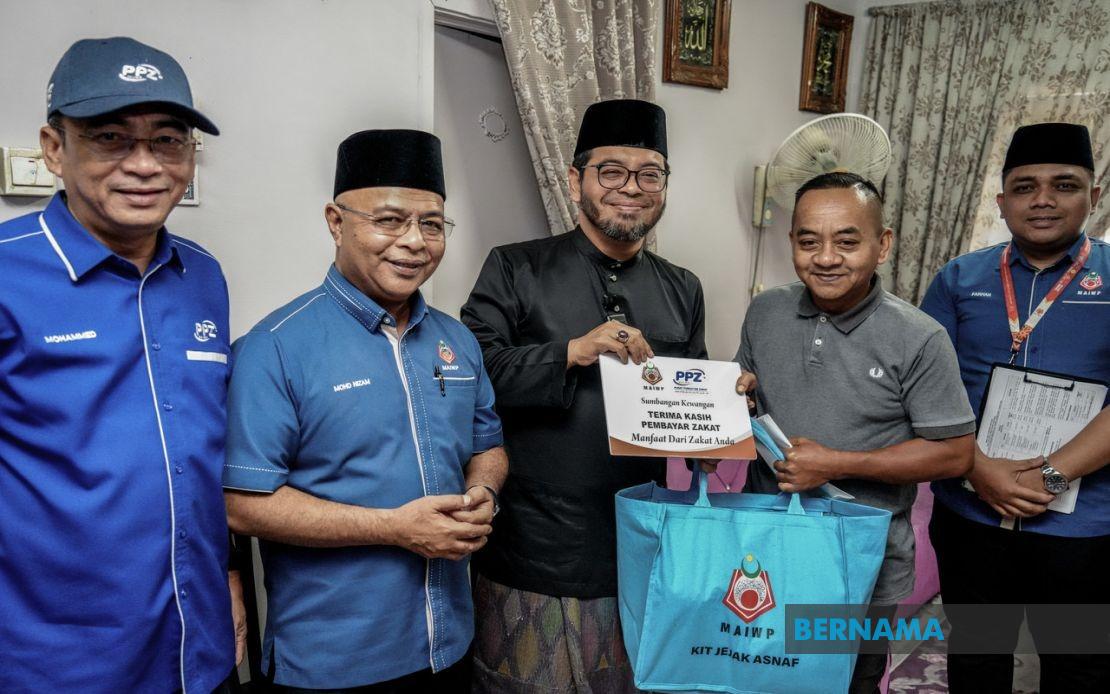
A widow struggling to raise five children aged between six and 15 has received targeted assistance from the Federal Territories Islamic Religious Council (MAIWP) in the wake of her husband's death earlier this month. The multi-faceted support package addresses immediate needs including monthly living allowances, rental assistance and educational expenses, reflecting a comprehensive approach to community welfare delivery in Malaysia's federal capital region.
Datak Dr Zulkifli Hasan, who serves as Minister in the Prime Minister's Department with responsibility for Religious Affairs, emphasised the importance of ground-level engagement in identifying and responding to genuine cases of hardship. Speaking to reporters after visiting the affected families, he highlighted how direct contact between MAIWP staff and beneficiaries ensures that aid programmes align with real circumstances rather than operating from assumptions. This hands-on methodology has become increasingly valued as Malaysian welfare agencies seek to maximise the impact of limited resources.
The assistance framework MAIWP deployed for the widow's family builds upon earlier interventions. The council had previously furnished General Schooling Aid to support the children's education, and the newly proposed measures represent a logical extension addressing the family's acute vulnerability following the loss of their primary income earner. By combining education support with housing and subsistence assistance, MAIWP recognises that sustainable family welfare requires attention to interconnected needs rather than isolated interventions.
Beyond the widow's case, MAIWP's visit encompassed two additional households requiring support. One family comprises a married couple with eight school-going children, where the husband works as a driver for Kuala Lumpur City Hall while his wife manages household duties full-time. This household receives monthly General Medical Assistance covering essential supplies including diapers and diabetic products, alongside provision for wheelchair-related needs and educational support. The presence of chronic health conditions within the family underscores how medical expenses can compound financial strain in lower-income households across urban Malaysia.
The third family visited consisted of a single mother who has navigated divorced status since 2018 while caring for three children in formal education. She receives regular monthly assistance for basic living costs and household necessities, supplemented by targeted support for school-related expenses and learning materials. The diversity of household compositions served by MAIWP reflects how vulnerability transcends traditional family structures, with single mothers facing particular economic pressures in a society where childcare responsibilities typically fall disproportionately on women.
These welfare interventions occur within the broader context of MAIWP's substantial distribution network. As of August 12, 2026, the council had channelled RM699.57 million in cumulative assistance, though the source material indicates this figure remained incomplete in the original reporting. This scale of deployment suggests that religious-affiliated welfare organisations play a significant role in Malaysia's social safety net, particularly in providing support to Muslim populations in the federal territories.
The philosophical underpinning of MAIWP's approach reflects Islamic principles of mutual community obligation and assistance to those experiencing hardship. By framing welfare provision within religious context, the organisation taps into both moral motivation and established charitable infrastructure. For Malaysian policymakers observing these interventions, the model illustrates how faith-based organisations can extend state capacity in addressing poverty and vulnerability, particularly valuable given Malaysia's diverse religious landscape and the role of various communities in welfare provision.
Zulkifli's invocation of "Insya-Allah" when discussing these measures reflects the integration of Islamic values into the welfare dialogue, signalling that assistance programmes represent implementation of religious obligation rather than mere bureaucratic function. This framing may enhance community acceptance and encourage beneficiaries to view receiving aid as compatible with religious identity rather than shameful dependence.
The specific focus on schooling assistance across all three families demonstrates MAIWP's recognition that educational continuity during family crises proves crucial for long-term mobility and breaking cycles of poverty. By subsidising learning expenses, the organisation invests in human capital formation among vulnerable populations, aligning welfare provision with broader national development objectives around educational access and opportunity.
For Malaysian readers, these cases exemplify how welfare systems must adapt to demographic realities including increasing single-parent households, chronic health conditions affecting working-age populations, and the persistent gap between wage levels and urban living costs in Kuala Lumpur. The proactive role of MAIWP in identifying and responding to emerging vulnerabilities suggests a welfare ecosystem responsive to ground-level change rather than static programming.
The visit itself represents a public accountability exercise, with senior government figures demonstrating personal engagement with welfare beneficiaries. This visibility serves multiple functions: it signals government commitment to vulnerable populations, creates opportunities for media coverage reinforcing institutional legitimacy, and enables ministers to gather direct feedback about programme effectiveness. For communities experiencing economic stress, such high-level attention may provide reassurance that their circumstances receive serious consideration within policymaking hierarchies.

