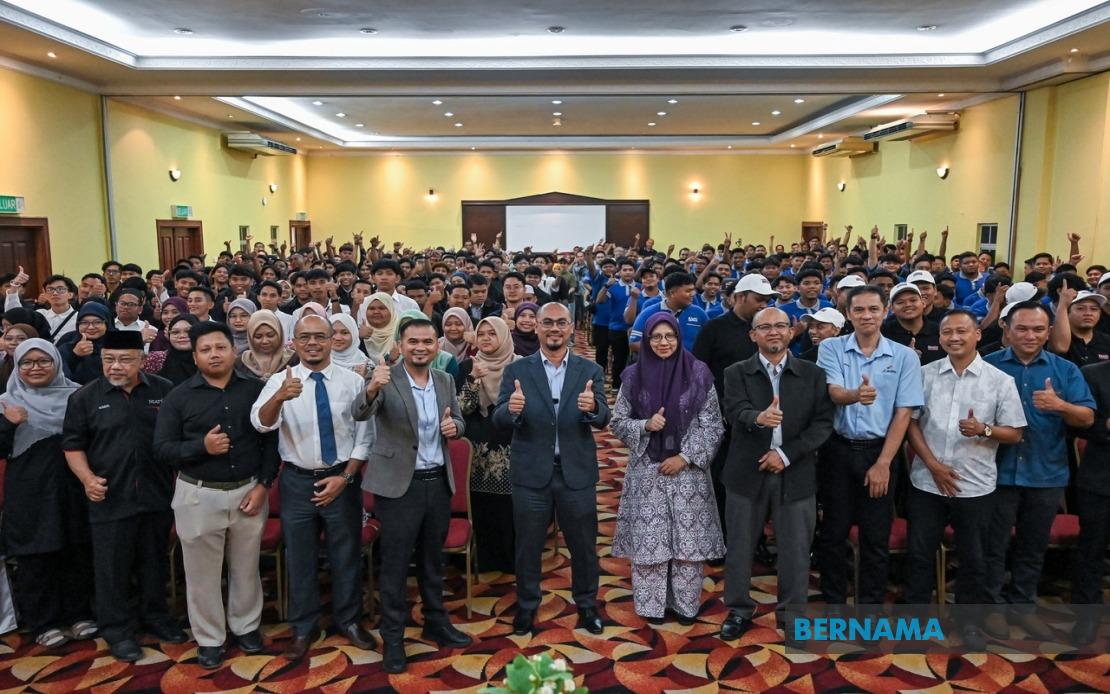
The Perak Islamic Religious and Malay Customs Council (MAIPk) is channelling RM10.9 million this year into an ambitious vocational training initiative designed to equip disadvantaged Muslim citizens with market-ready skills. Launched in Ipoh on July 13, the Asnaf Skills Training Programme in Technical and Vocational Education and Training (TVET) represents a significant investment in human capital development, with plans to train 1,200 participants across the state by year's end. The programme underscores a growing recognition within Malaysia's Islamic charitable institutions that traditional welfare approaches must evolve to address structural unemployment and underemployment among vulnerable populations.
According to MAIPk chief executive officer Syamsul Hazeman Md Salleh, the funding drawn from zakat collections will support not only the direct costs of skills instruction but also professional certifications and supplementary training needs that enhance graduate employability. This comprehensive approach reflects an understanding that modern vocational education requires investment beyond classroom instruction. Participants will gain access to internationally recognised credentials, substantially improving their prospects in competitive labour markets across Perak and beyond. The decision to allocate zakat funds specifically toward skills development signals a strategic pivot toward interventions that create lasting economic mobility rather than temporary income relief.
The programme's curriculum spans six high-demand sectors that align with both regional economic priorities and projected employment growth. Construction, oil and gas, industrial automation, welding, shipping, healthcare, and services industries form the core offerings, with individual courses calibrated to between one and nine months depending on specialisation and complexity. This diversified approach acknowledges the heterogeneous needs of participants and the varied labour market demands across Perak's urban and industrial zones. By tailoring programme duration to specific skill requirements, MAIPk maximises the likelihood that graduates will transition directly into employment rather than requiring extended retraining.
Delivering this ambitious initiative requires substantial institutional coordination. Six training providers have been contracted to deliver courses across the state: Akademi Binaan Malaysia Wilayah Utara, SRC Global Resources Sdn Bhd, Vision University College, Kulim Advanced Technologies Sdn Bhd, Northwestern Institute of Advanced Technical Skills, and Haaza Centre of Excellence. This multi-provider model distributes capacity across different geographic areas and specialisations, reducing bottlenecks and ensuring participants can access training without lengthy travel. The partnership approach also leverages existing expertise and equipment investments rather than requiring MAIPk to establish entirely new training infrastructure.
The scale of applications demonstrates substantial demand among eligible beneficiaries. MAIPk received approximately 10,000 applications this year, a figure that far exceeds the 1,200 available training slots. This tenfold gap highlights both the extent of skills deficits among asnaf populations and the difficulty of reaching all eligible candidates within budgetary constraints. The council implemented rigorous selection criteria to identify candidates most likely to benefit from and complete vocational training. This filtering process, while necessary given limited resources, raises important questions about how to scale these programmes to address broader community needs in coming years.
The initiative's launch ceremony attracted 340 participants, a significant cohort undertaking enrolment on the day. This immediate uptake suggests strong institutional capacity to absorb trainees and indicates genuine enthusiasm among beneficiaries for vocational pathways. The substantial first-day enrolment also demonstrates effective outreach and awareness-raising by MAIPk and partner organisations. However, converting enrolment into successful programme completion and subsequent employment remains the critical test. Early momentum must be sustained through ongoing support, mentorship, and employer engagement to maximise the return on MAIPk's investment.
Vocational training's role in addressing unemployment and underemployment has gained prominence across Southeast Asia as manufacturing and service sectors increasingly demand skilled workers. Malaysia's asnaf populations, often characterised by lower educational attainment and limited access to professional networks, face particular barriers to entering high-wage employment. By providing structured skills training combined with professional certification, MAIPk's programme removes critical obstacles to economic participation. The initiative also responds to employer complaints about skills shortages in technical trades, creating potential win-win outcomes where graduates fill genuine labour market gaps.
The programme reflects MAIPk's broader strategic philosophy regarding asnaf development. Rather than viewing Islamic charitable obligations purely through welfare provision, the council increasingly emphasises education and skills as pathways to sustainable poverty reduction and economic empowerment. This perspective aligns with contemporary thinking about zakat utility across Malaysia and the broader Muslim world. Equipping individuals with commercially valuable skills generates multiplier effects—trained workers become employers, entrepreneurs, and community leaders, creating positive externalities that extend beyond individual beneficiaries to strengthen broader economic ecosystems.
Perak's economic profile makes vocational skills particularly valuable. The state's diversified economy encompasses manufacturing, services, oil and gas operations, and construction sectors. The training curriculum's alignment with these industries suggests MAIPk conducted labour market analysis to identify genuine employment opportunities rather than offering skills for which local demand is limited. This targeted approach increases the likelihood that graduates will find employment within reasonable proximity to their homes, reducing migration pressures and supporting family stability. Perak-based employers who struggle to recruit skilled workers may find the programme particularly beneficial.
Implementing a programme of this scale presents operational challenges that extend beyond funding provision. Ensuring consistent quality across six different training institutions, tracking graduate outcomes, and maintaining employer engagement throughout the training cycle require robust management systems. MAIPk will need to establish clear metrics for success—completion rates, certification achievement, and post-training employment outcomes—to assess whether the RM10.9 million investment delivers intended results. Transparent evaluation also builds confidence among zakat contributors that their funds are deployed effectively.
The broader sustainability question concerns programme continuation and expansion beyond the current financial year. Demonstrating strong outcomes from the initial cohort of 1,200 participants will be essential for securing continued zakat allocation and potentially attracting additional funding from government or private sources. If employment outcomes prove positive, there exists compelling rationale for scaling the initiative to accommodate more of the 10,000 annual applicants currently unable to participate. Building a track record of success among early cohorts thus constitutes an investment in the programme's future viability.
For Malaysian policymakers and other state Islamic councils, MAIPk's TVET initiative offers a replicable model for channelling zakat into productive economic participation. As federal and state governments increasingly emphasise skills-based development and human capital investment, coordinating with religious institutions that command substantial financial resources and community trust creates synergies. Other states may consider similar programmes, particularly in regions with significant asnaf populations and demonstrated labour market demand for skilled workers. Knowledge-sharing and best practice dissemination across Malaysia's thirteen Islamic councils could amplify the collective impact of vocational training initiatives targeting disadvantaged communities.

