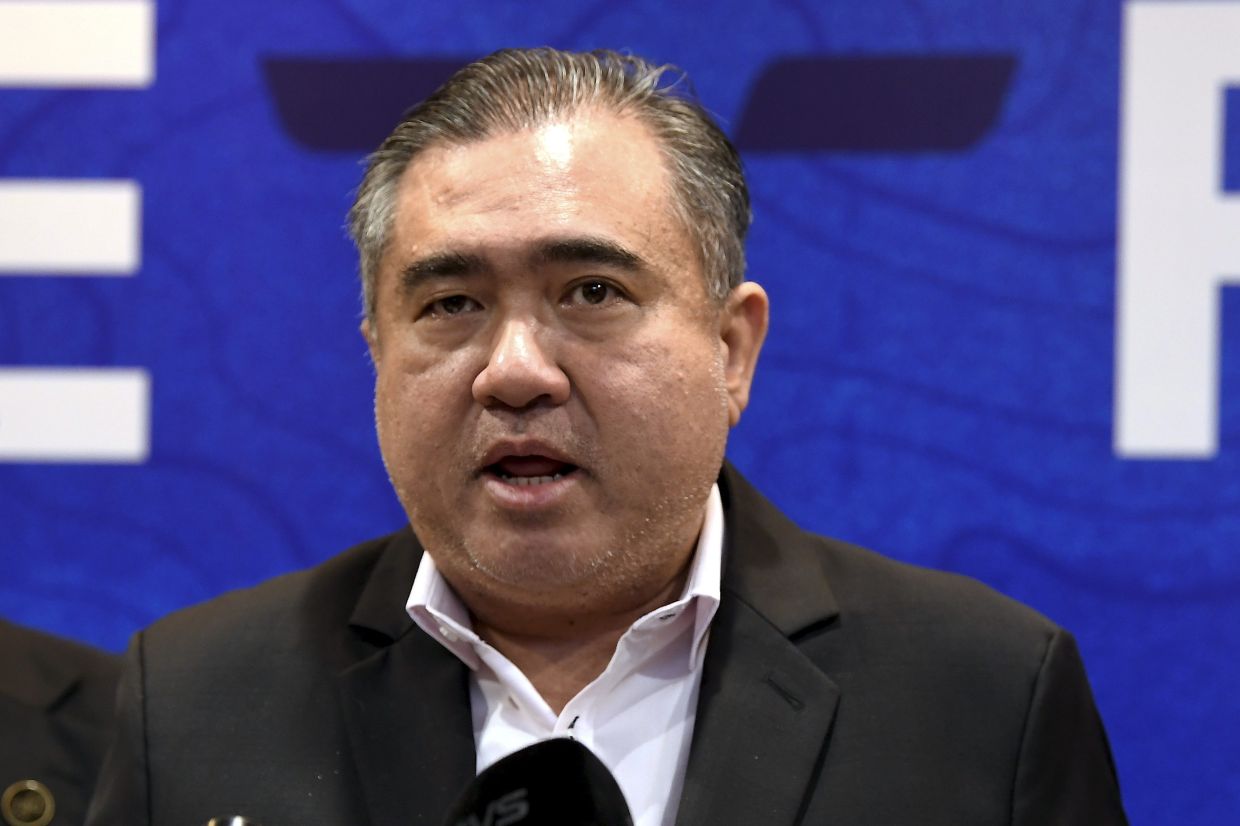
Malaysia Airports Holdings Berhad and Mitsui Fudosan have joined forces to construct a RM80 million air cargo logistics complex at Subang Airport, signalling a shift towards attracting international expertise to modernise the country's aviation infrastructure. Transport Minister Anthony Loke Siew Fook unveiled the groundbreaking for the project on Thursday, describing it as a pivotal moment for MAHB's strategy of unlocking value from its extensive airport landholdings through partnerships with experienced global operators. The announcement reflects growing recognition that Malaysia's air cargo sector requires substantial capital investment and world-class operational standards to compete regionally.
The project emerges from a joint venture between Mitsui Fudosan (Asia) Malaysia and Malaysia Airports (Subang), branded as MFMA Industrial, and targets the expanding aviation and aerospace services market concentrated around Subang Airport. Loke emphasised that Mitsui Fudosan's track record in Japan—particularly its management of logistics complexes at Haneda Airport—positions the partnership to significantly reduce operational risks for MAHB while introducing international best practices. This collaborative model reflects a broader governmental philosophy of leveraging foreign investment and expertise rather than relying solely on domestic capacity.
Situated on a 1.78-hectare plot within Subang Aerotech Park, the facility will offer approximately 254,420 square feet of gross floor area configured as flexible multi-tenant space. The design accommodates diverse operational models suited to different aviation service providers, from maintenance and repair operations to specialised logistics functions. This flexibility is crucial given the heterogeneous nature of the aerospace sector around Subang, which encompasses everything from component manufacturing to aircraft servicing. The complex will capitalise on existing networks of established operators already embedded within the Klang Valley aviation ecosystem.
Completion is targeted for the third quarter of 2027, with operational commencement scheduled for the final quarter of that year. The four-year construction timeline allows for phased development and integration with surrounding infrastructure, though industry observers note that timely execution will be critical to capturing market opportunities in an increasingly competitive regional logistics landscape. Delays, common in Malaysian property development, could undermine the facility's competitive positioning against similar hubs emerging elsewhere in Southeast Asia.
Loke's remarks contextualised the Subang project within a broader national air cargo expansion strategy spanning multiple airports. He highlighted that Penang dominates Malaysia's air cargo throughput, accounting for approximately 75 per cent of total volumes, reflecting the state's pre-eminence in semiconductor manufacturing and related high-value-added industries. This concentration, while economically significant, also represents a vulnerability—overreliance on a single port creates bottlenecks and limits growth potential. The government is therefore pursuing geographic diversification through targeted infrastructure investments.
Kuala Lumpur International Airport is being positioned as ASEAN's regional air cargo hub through a China collaboration, a strategic move that acknowledges the growing importance of Chinese logistics networks across Southeast Asia. KLIA's superior connectivity and handling capacity make it the logical candidate for international hub status, and the Chinese partnership potentially unlocks access to supply chain networks spanning the region. However, this approach also raises questions about Malaysia's strategic autonomy in aviation logistics, particularly as Beijing extends influence over critical infrastructure across the region.
Sabah's Kota Kinabalu International Airport represents another frontier in this expansion strategy. The ministry is working with the state government to develop dedicated air cargo capabilities by repurposing the underutilised Terminal 2. This initiative reflects recognition that Sabah, with its resource wealth and geographic position relative to growth markets in Asia-Pacific, possesses untapped potential for air cargo operations. A functional cargo hub in Kota Kinabalu could serve resource extraction industries, agricultural exports, and regional trade routes connecting Brunei, Indonesia, and the Philippines.
The Subang project specifically targets the aerospace and aviation maintenance sectors, which command premium positioning within global supply chains. Aircraft maintenance, repair, and overhaul operations require proximity to major flight routes, skilled workforces, and integrated logistics support—assets that Subang's location within the Klang Valley manufacturing belt provides. The facility therefore addresses a strategic gap: while Penang dominates air cargo volumes, it remains primarily focused on semiconductor logistics rather than aerospace services. Subang can potentially capture high-margin aerospace business, diversifying Malaysia's air cargo portfolio beyond commodity flows.
Government involvement through MAHB reflects a policy orientation towards public-private partnerships as vehicles for infrastructure development. Rather than the state bearing full capital burden, MAHB's landholdings are monetised through partnerships with experienced private operators. Mitsui Fudosan's participation brings not only capital but also operational knowledge derived from managing Japan's most sophisticated logistics infrastructure. Such partnerships are increasingly common across the region as governments recognise that aviation logistics requires specialised expertise beyond traditional public sector capabilities.
The groundbreaking ceremony drew participation from Japan's Embassy, including Minister Daisuke Nihei, alongside MAHB managing director Datuk Mohd Izani Ghani and Mitsui Fudosan managing director Masayoshi Saito, underscoring the diplomatic dimensions of the project. Japanese conglomerates' deepening involvement in Malaysian aviation reflects Tokyo's broader strategic engagement across Southeast Asia. As Japanese companies expand their footprint in regional logistics, they simultaneously strengthen bilateral ties while advancing their corporate interests—a pattern characteristic of contemporary Japanese economic statecraft.
For Malaysian manufacturers and exporters, particularly in aerospace and electronics sectors, the emergence of this facility offers potential efficiency gains through reduced logistics costs and improved handling capabilities. Access to world-standard cargo infrastructure can enhance competitiveness, particularly for time-sensitive shipments where reliable service quality directly impacts business viability. However, capturing these benefits requires that the facility achieves operational excellence from inception—a challenge given Malaysia's mixed track record in infrastructure project execution.
The Subang complex also signals expanding opportunities for logistics service providers and aerospace specialists to establish operations at Subang Aerotech Park. As the facility nears completion, industry participants should monitor tenant recruitment processes and operational planning, as these will determine whether the facility achieves its potential as a regional aviation services hub or becomes another underutilised infrastructure asset. The success of this partnership will likely influence MAHB's approach to future airport asset monetisation across its network, potentially unlocking similar developments at secondary airports including Kota Kinabalu, Penang, and Kuching.

