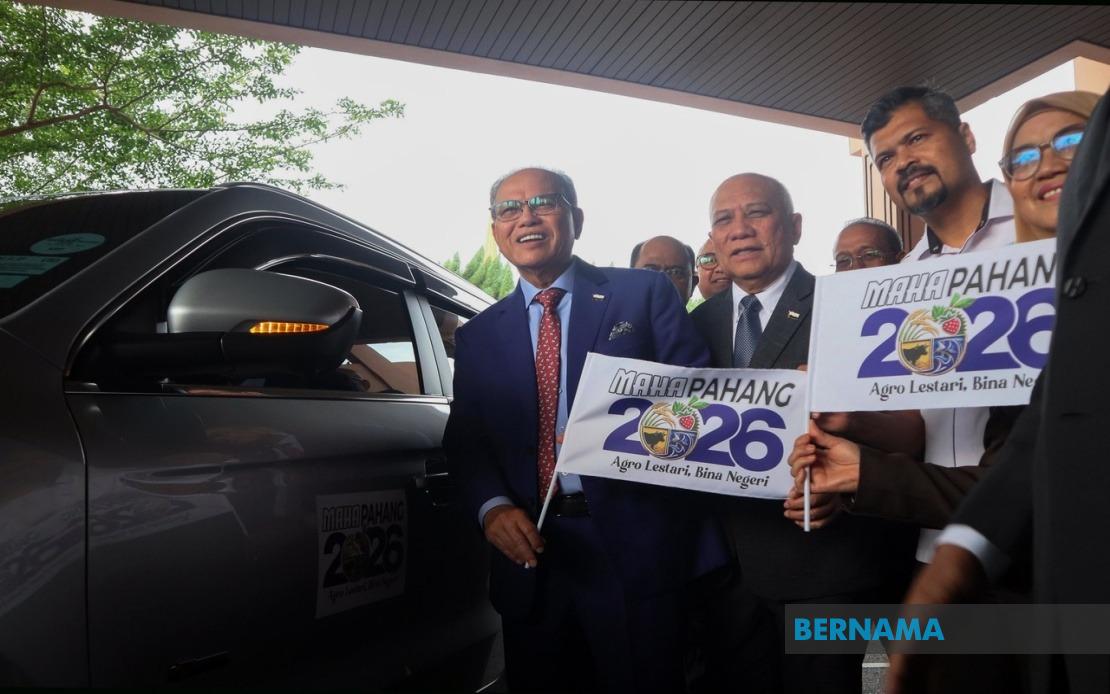
Pahang's premier agricultural showcase, MAHA Pahang 2026, is positioned to become a significant draw for the state, with organisers projecting visitor numbers exceeding 100,000 across its four-day run from July 30 to August 2 at Dataran Raub. The Menteri Besar, Datuk Seri Wan Rosdy Wan Ismail, outlined ambitious targets for the event during a ceremony marking its official launch, with economic forecasts centring on approximately RM1.3 million in direct sales.
The scale of commercial participation underscores the event's importance within Pahang's agricultural economy. The organisers have secured commitment from roughly 100 entrepreneurs and business operators, reflecting confidence in the marketplace that MAHA Pahang 2026 will create. This participation level suggests the event has evolved into a substantial platform for agribusiness engagement across the state, with vendors viewing it as a critical opportunity to reach both consumers and wholesale buyers within a concentrated timeframe.
Recognising that visitor attraction requires tangible incentives beyond agricultural education, the Pahang state government has integrated a substantial raffle component into the event's design. The top prizes include a Wagyu cow and a Perodua Bezza motor vehicle, offerings that operate at the premium end of what Malaysian agricultural fairs typically feature. Additional giveaways have been incorporated throughout the programme, suggesting a layered rewards structure intended to sustain visitor interest and encourage extended attendance across the four days.
The symbolic launch involved a convoy of 20 vehicles representing various government departments and agencies, departing from the Bera District and Land Office. This show of governmental coordination underscores the event's positioning as a state-level initiative rather than a purely commercial venture. The involvement of multiple agencies indicates recognition that agricultural development and food security involve cross-portfolio responsibilities spanning rural development, commerce, transportation, and environmental management.
Agriculture and Food Security Minister Datuk Seri Mohamad Sabu received specific acknowledgement from Wan Rosdy for his role in facilitating the event's success. This ministerial endorsement is significant for several reasons. It places MAHA Pahang 2026 within the broader national framework of agricultural policy and food security initiatives, elevating its profile beyond a regional carnival to a component of federal-level agricultural ambitions. The committee structure guiding the event's execution has apparently earned Wan Rosdy's confidence in delivering on stated objectives.
From a content perspective, MAHA Pahang 2026 operates as an educational and commercial hybrid. Beyond transactions and entertainment, visitors will encounter comprehensive information regarding agricultural innovation and crop development. Specifically, the event will showcase new crop varieties and contemporary farming methodologies, positioning it as a knowledge transfer platform. This dimension appeals to smallholder farmers seeking to upgrade their practices, agricultural students gathering research data, and agribusiness professionals scouting emerging opportunities within Pahang's agricultural sector.
The timing of the event carries practical significance for Pahang's agricultural calendar. Late July and early August represent a transitional period in the state's farming seasons, meaning farmers may have scheduling flexibility to attend. The weekend placement of at least two days within the four-day window could attract casual visitors and families alongside industry professionals, potentially broadening the demographic reach and household spending.
For Malaysian agriculture more broadly, MAHA Pahang 2026 represents a strategic showcase of one of the peninsular's significant agricultural regions. Pahang's agricultural footprint spans palm oil, rubber, cocoa, and increasingly diversified crops. An event drawing 100,000 visitors provides substantial visibility for the state's farming sector during a period when Malaysian agriculture faces competitive pressures from regional producers and must demonstrate both tradition and innovation to maintain relevance.
The projected RM1.3 million in sales, while substantial, merits context regarding the broader agricultural economy. This figure likely represents point-of-sale transactions at the venue rather than the multiplier effect throughout supply chains. The true economic value may extend to business relationships formed, contracts negotiated, and subsequent purchasing relationships initiated during the four-day period. For participating entrepreneurs, the investment in exhibition space and staffing could yield returns extending well beyond the event itself through customer acquisition and market validation.
The success of MAHA Pahang 2026 will depend significantly on effective promotion reaching both rural agricultural communities and urban consumers in Pahang and neighbouring states. The convoy launch and ministerial participation suggest a coordinated promotional strategy, though the test will be converting awareness into actual attendance. Marketing targeting should emphasise the premium prizes, educational opportunities, and shopping convenience to different audience segments.
For policymakers, events like MAHA Pahang 2026 serve dual purposes: they generate immediate economic activity within the agricultural sector while simultaneously functioning as feedback mechanisms regarding farmer concerns, market demands, and emerging opportunities. Successful execution can provide data informing future state agricultural policy and resource allocation.
The four-day timeframe reflects standard practice for Malaysian agricultural fairs, balancing visitor convenience with organisational sustainability. Extending beyond this window typically encounters diminishing returns in attendance, while shorter durations risk insufficient time for comprehensive exploration and purchasing decisions. The July 30 to August 2 schedule positions MAHA Pahang 2026 to capture visitor traffic across a working week and weekend period.
Ultimately, MAHA Pahang 2026 represents a convergence of state economic development, agricultural sector promotion, and consumer engagement, with clearly defined metrics for measuring success. The 100,000 visitor target and RM1.3 million sales projection provide quantifiable benchmarks against which organisers can assess outcomes and identify improvements for subsequent iterations.

