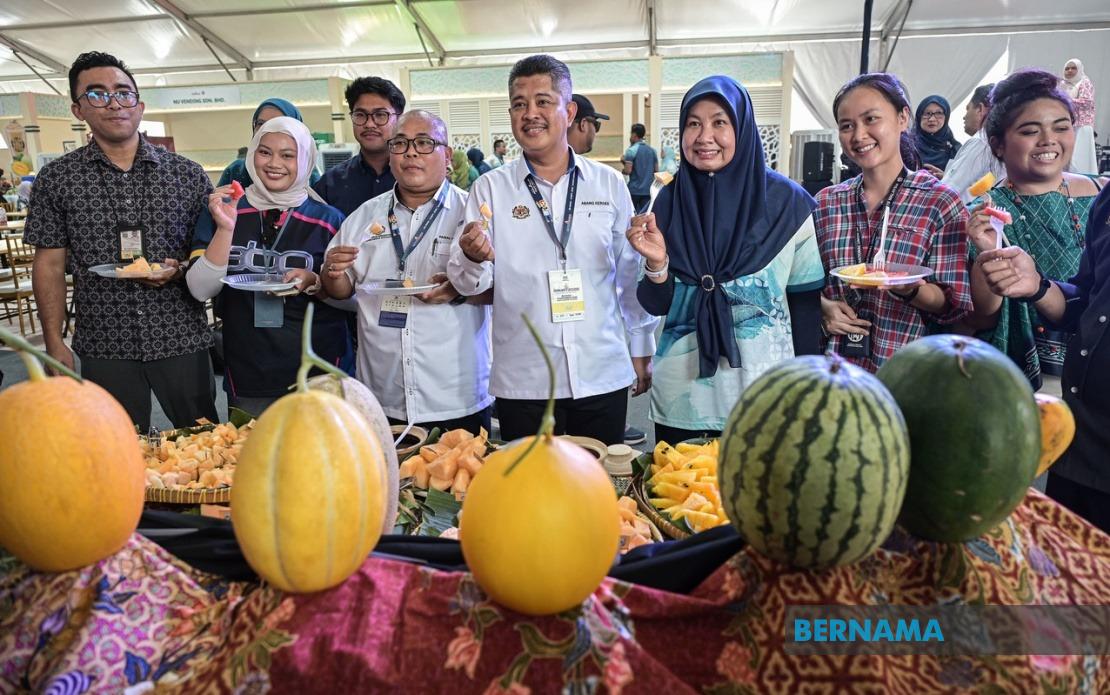
Malaysia's horticultural sector is preparing to mark a significant milestone this week with the unveiling of a new melon variety specifically engineered for domestic consumers. The fruit, which will serve as the symbolic icon for this edition of the Malaysia Agriculture, Horticulture and Agrotourism Exhibition (MAHA) 2026, officially launches tomorrow evening at the event's opening ceremony at the Malaysia Agricultural Expo Park Serdang (MAEPS). The introduction reflects a strategic shift within the industry towards product innovation responsive to local market demands, moving beyond generic international varieties towards domestic consumer preferences.
The melon represents the culmination of three years of intensive research and development conducted jointly by the Federal Agricultural Marketing Authority (FAMA) and a network of local entrepreneurs. This timeline underscores the complexity of developing a commercially viable produce variety, requiring not merely botanical innovation but comprehensive market validation and supply chain adaptation. According to FAMA chairman Abang Ahmad Kerdee Abang Masagus, the new variety was conceived specifically to address a void in Malaysia's horticultural offerings. The official naming ceremony will be conducted by Minister of Agriculture and Food Security Datuk Seri Mohamad Sabu, elevating the launch beyond a commercial introduction to a symbolic statement about national agricultural capability.
The variety distinguishes itself through several carefully calibrated characteristics tailored to contemporary Malaysian households. Its compact size of approximately 1.3 kilogrammes responds directly to the documented consumer shift towards single-serving or small family portions, a trend accelerated by changing household structures and consumption patterns across urban Malaysia. The melon achieves a sweetness concentration level (Brix) of 18, placing it at the premium end of the sweetness spectrum for commercial melons. Equally significant is its flesh texture, engineered to be crunchier than competing varieties currently available in Malaysian supermarkets and wet markets, addressing consumer preferences for textural quality alongside flavor intensity.
The pricing strategy positions this innovation as an accessible premium product rather than a luxury commodity. At approximately RM15 per melon, the variety targets the middle-income segment of Malaysian consumers who demonstrate willingness to pay above-baseline prices for quality differentiation but remain sensitive to value-for-money propositions. The attractive netting pattern on the skin serves both aesthetic and practical functions, signalling maturity to consumers while facilitating handling and shelf presentation. These design elements collectively suggest that the development process extended beyond agronomic consideration to encompass consumer psychology and retail dynamics.
The strategic emphasis on mini-sizing reflects broader demographic and economic shifts within Malaysian society. Smaller household units, particularly among younger urbanized populations and aging demographic segments, increasingly purchase smaller portions to minimize waste and accommodate storage constraints in modern apartment living. FAMA director-general Faisal Sulaiman characterized the variety as meeting convergent demands for practicality, portability, and maintained nutritional quality. The melon's compact dimensions make it easier to transport from marketplace to kitchen, a consideration that resonates particularly with consumers utilizing public transportation or managing multiple shopping trips through crowded urban spaces.
Beyond the individual product innovation, the initiative demonstrates FAMA's institutional evolution towards data-driven agricultural strategy. The three-year research period incorporated systematic consumer trend analysis that enabled the organization and its entrepreneurial partners to anticipate rather than merely react to market preferences. This approach contrasts with historical patterns where Malaysian agricultural development often followed international technological adoption rather than originating consumer-responsive innovation domestically. The collaboration model itself, spanning government authority and private entrepreneurs, suggests an emerging institutional framework where agricultural development increasingly emerges from public-private partnerships rather than purely state-directed initiatives.
The timing of this launch during MAHA 2026, which operates as Malaysia's premier biennial agricultural showcase, strategically amplifies visibility and market penetration potential. The exhibition, running for ten days at MAEPS, provides an intensive marketplace where hundreds of local and international entrepreneurs converge with consumer audiences, agricultural professionals, and technology providers. This environment enables accelerated market testing, direct consumer feedback, and supply chain relationship development that would otherwise require months of conventional marketing activity. The symbolic designation of the melon as this year's event fruit elevates its prominence within an exhibition featuring agrotech displays, state-level pavilions, and direct farm sales operations.
FAMA's projection to supply over 150,000 units of melons during the exhibition, encompassing nearly 100 local and international varieties alongside this new offering, underscores the scale of horticultural commerce now channeled through organized platforms. This volume demonstrates that Malaysian horticultural commerce has achieved sufficient sophistication to simultaneously promote traditional varieties, international options, and locally-developed innovations within single market events. The supply of 150,000 units across ten days represents logistics capacity that reflects Malaysia's developed agricultural infrastructure, cold chain management capabilities, and distribution networks.
The broader implications for Malaysian agriculture extend beyond individual product success. Successfully commercializing a domestically-developed melon variety establishes proof-of-concept that local research institutions and entrepreneurs can compete in produce innovation traditionally dominated by international seed and agricultural companies. This capability matters particularly as Southeast Asian consumers increasingly demand products aligned with regional preferences and locally-responsive characteristics. The melon's development thus potentially catalyzes further domestic innovation across other horticultural categories, from tropical fruits to vegetables, creating a multiplier effect across the agricultural economy.
For farmers and entrepreneurs within Malaysia's melon production sector, this initiative promises beneficial market dynamics. By establishing a differentiated product with institutional backing and high-profile promotion, FAMA essentially creates category expansion rather than merely redistributing existing market share. Farmers adopting this variety position themselves to serve premium market segments willing to pay above-commodity pricing while accessing broader distribution through organized retail and modern trade channels. The melon's characteristics also enable extended shelf life and reduced spoilage compared to some competing varieties, potentially improving farmer profitability margins through reduced post-harvest losses.
The introduction strategy reflects growing sophistication within Malaysian agricultural policy regarding value chain development. Rather than focusing exclusively on production volume, this initiative targets value addition through product differentiation. This approach aligns with broader national economic diversification strategies emphasizing higher-margin agricultural products and sophisticated supply chain participation. As competition from lower-wage agricultural producers in neighboring Southeast Asian countries intensifies, Malaysian agriculture increasingly must compete through innovation, quality premiumization, and consumer preference alignment rather than cost-based competition.
Looking forward, the new melon variety serves as a template for potential agricultural development across multiple commodities. If this initiative achieves commercial success and consumer acceptance, it could stimulate similar efforts for other high-value horticultural products. The collaboration model between FAMA, entrepreneurs, and ministerial-level political support could become institutionalized as the standard framework for agricultural innovation commercialization. This would represent evolution from ad-hoc innovation to systematic agricultural product development capacity building. For Malaysian consumers, the availability of locally-developed premium products addresses both economic and nationalist preferences, combining quality assurance with national agricultural capability recognition.

