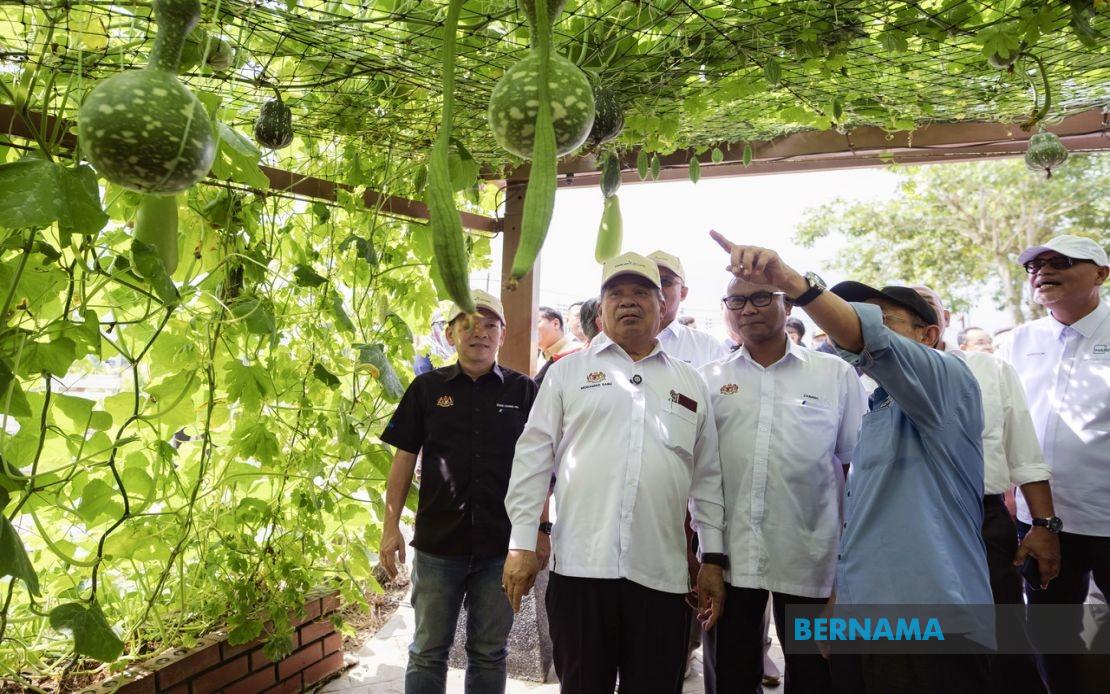
Construction work at Malaysia Agro Exposition Park Serdang is entering its final phase, with Agriculture and Food Security Minister Datuk Seri Mohamad Sabu confirming that MAHA 2026 will be fully operational when doors open on Aug 28. Speaking at the venue on Aug 19 after an inspection tour, Mohamad indicated that 80 per cent of the exhibition's preparations are complete, with finishing touches scheduled for completion by Aug 27. The core infrastructure at MAEPS has been finalised, leaving mostly logistical work and display arrangements to occupy the remaining week before the public arrives.
The Malaysia Agriculture, Horticulture and Agrotourism Exhibition 2026 will run through Sept 6, positioning itself as a showcase for the sector's technological evolution. Mohamad will formally open proceedings, while Prime Minister Datuk Seri Anwar Ibrahim will preside over the closing ceremony. The event carries the thematic banner 'Penciptaan Nilai Demi Keterjaminan Makanan'—roughly translating to value creation for food security—which reflects Malaysia's strategic priorities in ensuring sustainable agricultural output amid regional food chain pressures. This framing connects MAHA to broader national food security objectives, making it more than merely an industry trade show.
Technology adoption will dominate the exhibition floor. The showcase will feature modern mechanised farming equipment and autonomous vehicles designed for agricultural operations, alongside an expanded presence of drone technology in cultivation practices. These demonstrations carry particular relevance for Malaysian farmers, as drones are increasingly deployed in paddy, pineapple, and melon production. Mohamad drew explicit comparisons to agricultural modernisation in China and the Netherlands, signalling that Malaysia views such technological integration as essential for competitive positioning in global agribusiness. This messaging suggests the government sees MAHA as an opportunity to narrow the technology gap between Malaysian farming operations and advanced international practice.
A critical emphasis this year centres on value-chain development within the agri-food sector. Mohamad stressed that farmers and livestock producers must move beyond raw material generation toward downstream processing and value-added manufacturing. Milk, pineapple, and cassava were cited as examples where processing multiplies product variety and profit potential, opening entrepreneurial pathways for local participants across the supply chain. This pivot toward value addition addresses a longstanding constraint in Malaysian agriculture, where producers have traditionally captured lower margins than downstream processors. By highlighting these opportunities at MAHA, the minister aims to attract smallholder interest in processing enterprises and cooperative ventures.
Cultural programming balances the exhibition's technology focus. Perkampungan Abang Mat, a dedicated village space within MAHA, will demonstrate traditional communal cooking practices known as 'rewang', alongside food heritage presentations and conventional cuisines. Daily rotations of activities will maintain visitor engagement, while traditional games such as congkak offer recreational appeal particularly to older demographics. This cultural element reflects recognition that MAHA functions as a family attraction alongside its trade and educational missions, requiring programming that resonates across generations and demographics.
Visitor engagement extends beyond passive observation. MAHA 2026 is allocating daily prize draws with motorcycles awarded twice daily, totalling 20 units across the 10-day run. Electrical appliances will serve as consolation prizes, creating financial incentive for repeat visits. These mechanisms aim to sustain attendance momentum across the full 10-day window, reducing the front-loading of crowds typical of such exhibitions. Mohamad anticipates exceeding four million visitor entries, representing growth on previous years and reflecting expanded programming aimed at multiple audience segments.
International participation has expanded notably. The exhibition will host approximately 2,000 exhibitors, with delegations arriving from 14 countries representing diverse agricultural systems and export interests. Kenya's inclusion marks its inaugural MAHA participation, adding East African agricultural perspectives to the exhibition mix. This international dimension creates bilateral opportunity; participating nations will showcase home technologies while exploring cooperative arrangements with Malaysian counterparts. For Malaysia, the diversity of exhibiting nations amplifies MAHA's positioning as a regional agricultural hub, signalling openness to technology transfer and international collaboration.
Educational outreach to younger demographics constitutes a strategic priority. Mohamad disclosed that approximately 800,000 youth entries are projected through programmes centred on automation, technological application, and agricultural modernisation. The ministry is simultaneously securing Education Ministry approval to incorporate school students through co-curricular activities, effectively channelling MAHA content into formal educational frameworks. This institutional integration signals intent to use the exhibition as a springboard for agricultural career awareness among secondary students, addressing potential skills shortages in a modernising sector.
The exhibition arrives amid broader regional dialogue around food security and agricultural sustainability. Southeast Asian nations are collectively navigating supply chain vulnerabilities exposed by pandemic disruption and climate variability, making agricultural modernisation increasingly central to national planning. Malaysia's emphasis on technological adoption and value-chain development through MAHA positions the country as a thought leader within ASEAN on agricultural transformation, while the event serves domestically as a rallying point for sectoral progress. The convergence of technology showcases, value-chain promotion, cultural programming, and youth engagement reflects multifaceted objectives extending well beyond conventional trade exhibition function, embedding MAHA within Malaysia's broader economic and food security strategies.

