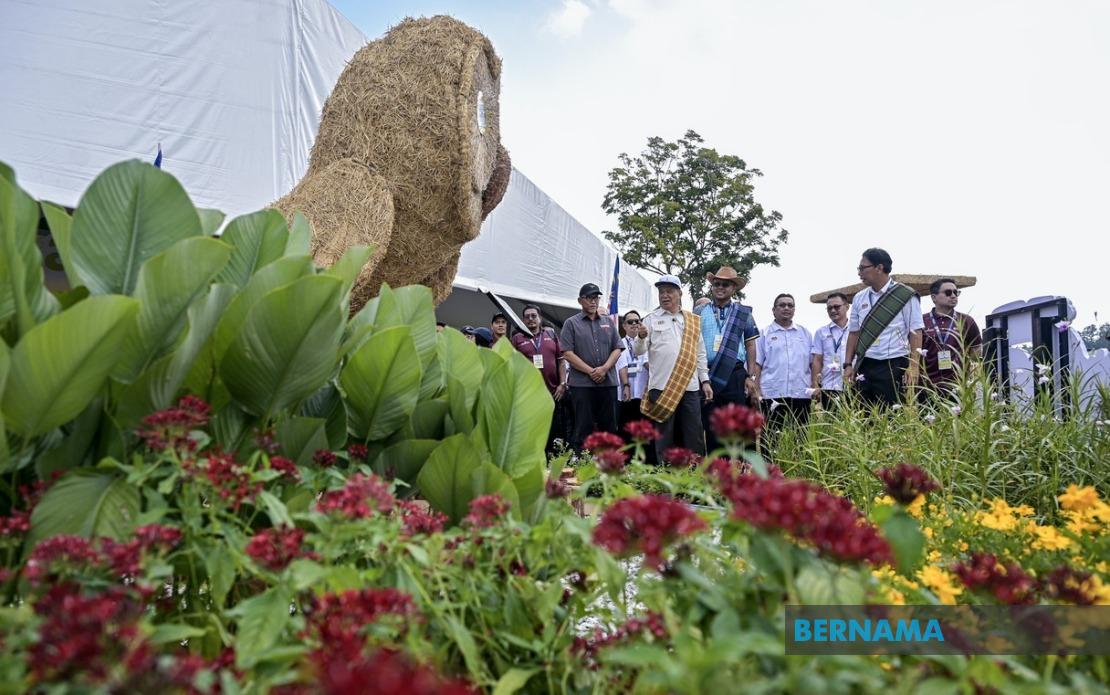
The Malaysia Agriculture, Horticulture and Agrotourism Exhibition (MAHA) 2026 is already proving to be a commercial and public relations triumph, having welcomed 1.8 million visitors and generated close to RM6 million in sales during its initial three days of operations at the Malaysia Agro Exposition Park Serdang (MAEPS). Agriculture and Food Security Minister Datuk Seri Mohamad Sabu disclosed these figures to reporters at the exhibition grounds on Sunday, emphasising the scale of the attendance through vehicle movements, with 184,000 cars recorded entering and exiting the venue across the opening weekend.
The unprecedented traffic volume underscores both the success of the exhibition in attracting visitors and the logistical challenges that such massive public attendance creates. The minister acknowledged the congestion frankly, noting that the density of vehicles had overwhelmed normal traffic patterns in the Serdang area. This level of engagement reflects growing consumer interest in agricultural products and agrotourism experiences, particularly in the Malaysian market where such events serve as important touchpoints between farmers, agribusiness enterprises, and retail buyers seeking specialty crops, seeds, and farming inputs.
Organisers have set an ambitious target of RM58 million in total sales by the time MAHA 2026 concludes on September 6, suggesting that the initial RM6 million milestone represents approximately 10 percent of the overall sales objective. If the exhibition maintains its current trajectory, the target appears well within reach, though organisers will need to sustain visitor momentum through the middle and final weeks of the ten-day event. The sales figures encompass a diverse range of agricultural commodities, with crop seeds identified as a particularly significant category contributing to the total—a detail that highlights farmer demand for quality genetic material and improved varieties.
The exhibition has attracted roughly 2,000 exhibitors, making it a comprehensive showcase of Malaysia's agricultural sector and related industries. This substantial vendor presence creates competition that can drive innovation and competitive pricing, ultimately benefiting consumers and agricultural practitioners. For Malaysian farmers and agribusiness operators, MAHA 2026 represents a critical marketplace where they can launch products, demonstrate innovations, establish supply relationships, and gauge market demand for their offerings. The sheer number of exhibitors also reflects the sector's economic importance and the diversity of agricultural production across the country.
A significant portion of the early visitor surge can be attributed to special programming timed to coincide with the National Day period. MAHA Merdeka celebrations, held during the opening weekend, featured fireworks displays and drone shows coordinated with Malaysia's independence commemorations, effectively combining patriotic sentiment with commercial activity. This strategic scheduling transformed the exhibition into a destination event for families and larger groups, driving attendance beyond what purely agricultural programming might have achieved. Such integration of national celebrations with economic events demonstrates sophisticated event planning that maximises both symbolic importance and practical turnout.
The minister's walk-through of state pavilions revealed another important dimension of MAHA 2026: the regional diversity of agricultural representation. Each Malaysian state operates its own pavilion at the exhibition, showcasing regional specialties and allowing visitors to explore the geographical variation in crop production, traditional farming methods, and local agrotourism initiatives. The observation that queues extended lengthy distances at these pavilions indicates high public interest in discovering state-specific agricultural products and learning about regional farming enterprises. These pavilions serve not merely as commercial spaces but as educational platforms that enhance public understanding of agriculture's role in each region's economy.
Transportation and crowd management have emerged as immediate operational concerns requiring daily attention from the exhibition committee. The minister confirmed that a dedicated committee convenes each day to address visitor complaints and identify solutions to logistical bottlenecks. Shuttle services have been expanded in response to the traffic challenges, reflecting management's responsiveness to real-time conditions. The midday heat—which the minister specifically noted as an additional stressor for visitors standing in extended queues—has prompted management to accelerate visitor movement through pavilions and attractions, combining comfort considerations with operational efficiency.
The exhibition's early performance carries implications for Malaysia's agricultural sector beyond the immediate commercial transactions. Strong visitor attendance and sales velocity signal robust consumer engagement with domestic agricultural products and agritourism experiences, potentially encouraging further private investment in value-added agricultural enterprises and farm-based tourism facilities. For policymakers, the success validates the strategic importance of major agricultural exhibitions as platforms for industry development, knowledge dissemination, and consumer education about the origins and quality of locally produced food.
SEAsian context amplifies the significance of MAHA 2026. The exhibition positions Malaysia as a regional hub for agricultural innovation and trade, with the performance metrics potentially attracting international agribusiness interest from neighbouring countries. The exhibition model—combining large-scale farmer participation, consumer engagement, entertainment programming, and state representation—offers a scalable template for agricultural sector development that other Southeast Asian nations may observe and potentially replicate.
Maintaining momentum through September 6 will be crucial for achieving the RM58 million target. The exhibition's trajectory during its middle weeks, when National Day excitement has subsided but the event retains novelty, will determine whether the strong opening translates into sustained commercial success. Continued promotional efforts, targeted marketing to specific buyer segments, and management of operational challenges will shape the final outcome. For stakeholders across Malaysia's agricultural sector, MAHA 2026 has already delivered measurable evidence of consumer demand and commercial viability, establishing a strong foundation for the remainder of the event's run and informing strategies for future iterations.

