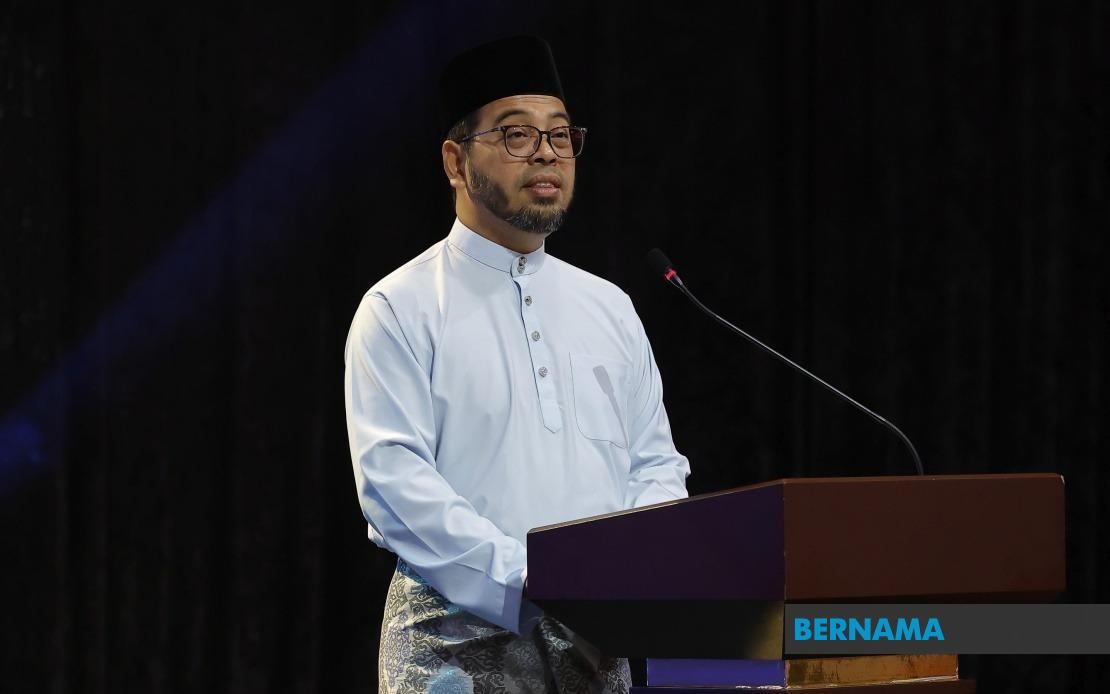
Malaysia's Religious Affairs Minister Dr Zulkifli Hasan has reaffirmed the MADANI Government's dedication to advancing tahfiz education as a complementary pillar alongside the country's mainstream education system. Speaking at the 34th Darul Quran (DQ) JAKIM convocation ceremony in Kuala Lumpur, Dr Zulkifli stressed that Islamic Quranic memorisation programmes extend far beyond simply producing hafiz—individuals who have committed the entire Quran to memory—but rather encompass the holistic development of citizens equipped with academic knowledge, ethical grounding, and practical skills capable of driving national progress.
The vision articulated by the Religious Affairs Minister reflects a maturing understanding within Malaysian policymaking circles that tahfiz institutions serve a broader societal function than traditionally recognised. Rather than viewing these religious schools as separate from the national education ecosystem, the government frames them as integral contributors to a diversified learning landscape. This positioning is particularly significant given ongoing public debate about education quality, religious instruction, and the integration of Islamic values within Malaysia's plural society. By emphasising the production of "well-rounded individuals," Dr Zulkifli attempts to address concerns that tahfiz education might narrow students' horizons or limit their career prospects outside religious fields.
The occasion marking Darul Quran JAKIM's 60th anniversary since its 1966 establishment provides a natural juncture for reflecting on the institution's trajectory and influence. Over six decades, DQ JAKIM has established itself as a national flagship for Quranic studies, becoming a reference point for other tahfiz programmes across Southeast Asia. The institution's alumnus network demonstrates impressive breadth, with 12,633 graduates now dispersed across diverse professional domains—from formal education and Islamic jurisprudence to research, administration, and private sector employment. This distribution pattern contradicts perceptions that tahfiz graduates necessarily remain confined to religious vocations, suggesting instead that such programmes may cultivate transferable intellectual disciplines and values applicable across sectors.
The graduation cohort of 700 students receiving credentials at this year's convocation underscores the scale of Malaysia's tahfiz education apparatus. The tiered qualification structure—ranging from basic tahfiz certificates through diploma programmes in Quranic studies and qiraat (intonation methods) to full bachelor's degrees awarded in collaboration with Universiti Sains Islam Malaysia—reveals sophisticated credential-building architecture. This framework enables students to progress through increasing levels of specialisation while maintaining flexibility to transition into formal higher education. The collaboration with USIM particularly illustrates efforts to bridge tahfiz institutions with the conventional university system, potentially easing pathways for graduates seeking further professional qualification.
Dr Zulkifli's invocation of DQ JAKIM's founding mission—to cultivate hafiz who become "inheritors of knowledge, community leaders and builders of an Islamic civilisation based on the Quran"—positions contemporary tahfiz education within a historical continuum. This framing acknowledges that Islamic scholarship traditions predate modern nation-states and professional credentialing systems, yet simultaneously anchors these institutions within Malaysia's developmental priorities. The language of "Islamic civilisation" carries particular resonance in a Southeast Asian context where Islam has historically coexisted with other traditions, and where contemporary expressions of Islamic identity intersect with national citizenship and economic participation.
The timing of the Diamond Jubilee celebration coincides with broader Malaysian policy initiatives addressing skills development and workforce preparation. The government's acknowledgment that tahfiz graduates serve in professional and administrative capacities reflects recognition that Islamic education can complement rather than compete with technical and secular skill acquisition. This understanding proves especially relevant for Malaysia's sizeable Muslim population seeking to maintain religious commitment while pursuing economic advancement and professional mobility in an increasingly competitive regional and global marketplace.
Dr Zulkifli's exhortation to use the 60-year legacy as inspiration for building "the next 60 years with greater excellence" signals anticipation of evolving roles for tahfiz institutions. This forward-looking orientation suggests potential expansion in curriculum scope, pedagogical innovation, or integration with emerging fields—whether digital technologies, environmental studies, or social entrepreneurship. For Malaysian policymakers, the challenge involves strengthening tahfiz education's academic rigour and professional utility without diluting religious depth or alienating constituencies for whom these institutions represent repositories of traditional Islamic scholarship.
The government's institutional support for institutions like DQ JAKIM reflects confidence in tahfiz education's contribution to Malaysia's social fabric. By positioning such institutions as national assets rather than peripheral additions to the education system, the MADANI Government signals intention to invest in their development and integration. This approach carries implications for funding allocation, teacher training, curriculum standardisation, and quality assurance frameworks—dimensions requiring sustained commitment beyond ceremonial recognition.
For Malaysia's broader Southeast Asian context, the approach to tahfiz education carries regional significance. As other Muslim-majority nations in the region grapple with balancing religious instruction, secular education, and professional preparation, Malaysia's institutional model—with its tiered credentials, university partnerships, and emphasis on professional contribution—offers potential reference points. The evolution of DQ JAKIM and similar institutions may influence how neighbouring countries structure Islamic education within modernising systems.
The substantive challenge facing Malaysia's tahfiz education sector involves demonstrating that religious depth and contemporary professional competence are compatible rather than antagonistic. DQ JAKIM's graduate distribution across sectors suggests this integration is achievable, yet systemic barriers—whether in employer perceptions, university admissions, or curriculum standardisation—may persist. The government's rhetorical commitment requires translation into concrete policies addressing these structural dimensions. Enhanced tahfiz education alongside mainstream systems demands not merely rhetorical affirmation but sustained investment in infrastructure, faculty development, and institutional coordination ensuring graduates possess genuine competitive advantage in Malaysia's evolving economy.

