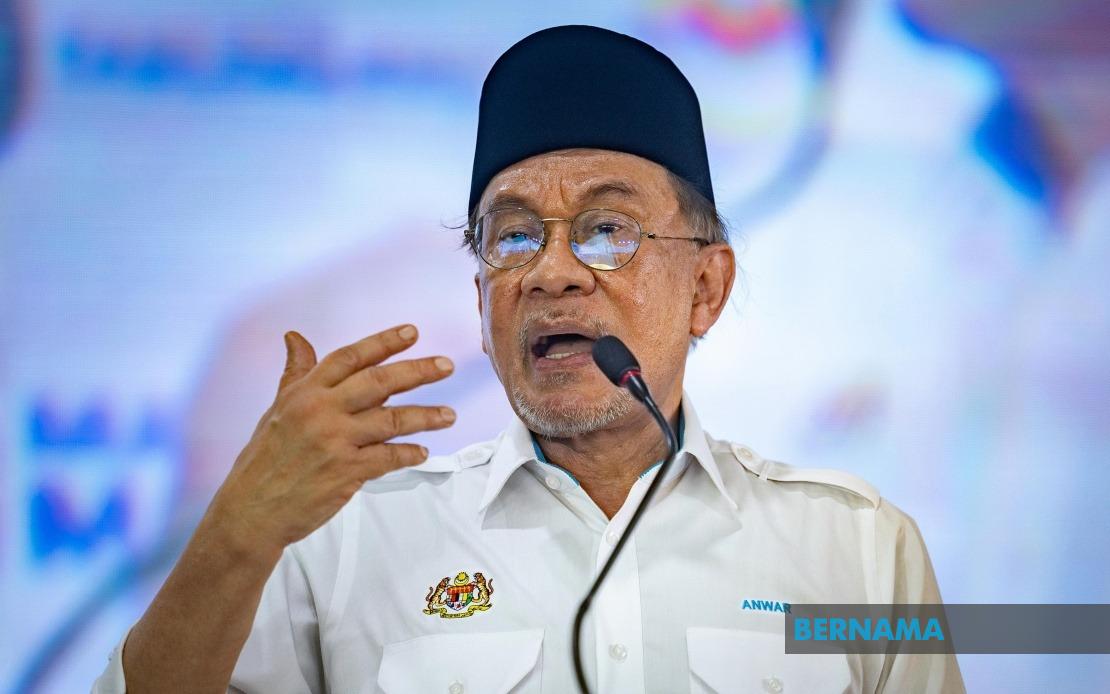
Prime Minister Datuk Seri Anwar Ibrahim has pledged the MADANI Government's sustained dedication to strengthening religious schools and pondok institutions across the country, signalling a policy direction that seeks to blend traditional Islamic education with contemporary technological advancement. Speaking at the 2026 Perak Pondok and Religious Schools Gathering in Ipoh on July 19, Anwar underscored the government's commitment to preventing these educational institutions from becoming obsolete in a rapidly evolving global landscape.
The Prime Minister acknowledged a critical historical juncture for Malaysia's Islamic boarding schools. These institutions, which once served as vital educational anchors in their communities, gradually lost relevance as the pace of technological and social change accelerated. Pondok schools found themselves constrained by curricula limited to religious and classical texts, lacking exposure to secular disciplines that have become essential in the modern job market and knowledge economy.
Anwar expressed considerable satisfaction with the adaptability demonstrated by religious educators and pondok school administrators nationwide. Rather than rigidly clinging to purely traditional models, these leaders have shown willingness to embrace emerging fields such as computer technology and artificial intelligence alongside their core mission of preserving Islamic traditions and classical religious scholarship. This balanced approach reflects a sophisticated understanding that religious education need not be antagonistic to scientific and technological literacy.
The government has not acted unilaterally in this endeavour. Anwar acknowledged the instrumental contributions of the Malaysia Digital Economy Corporation (MDEC) and the Implementation Coordination Unit (ICU) under the Prime Minister's Department in facilitating improvements to these schools. These agencies have provided crucial infrastructure, technical expertise, and coordination to help religious institutions integrate digital literacy and AI capabilities into their teaching frameworks.
The Prime Minister's remarks carried an implicit economic dimension relevant to Malaysian policymakers. By modernising pondok school curricula, the government aims to ensure graduates possess marketable skills for contemporary employment, reducing economic vulnerability and enhancing social mobility for students from these institutions. This approach addresses longstanding concerns that purely traditional religious education left graduates unprepared for diverse career pathways in technology-driven sectors.
Anwar's reference to his conversation with Sheikh Wazir Che Awang Al-Makki, a prominent Kelantan religious scholar, illustrates the government's engagement with grassroots Islamic leadership. These interactions suggest a consultative approach where policy commitments emerge from dialogue with respected figures within the religious education ecosystem, rather than top-down mandates that might face resistance.
The timing of this announcement at a Perak-specific gathering reveals the government's attention to regional implementation. The presence of Perak Menteri Besar Datuk Seri Saarani Mohamad, Minister in the Prime Minister's Department (Religious Affairs) Dr Zulkifli Hasan, and Chief Secretary to the Government Tan Sri Shamsul Azri Abu Bakar underscores the multi-level commitment required to execute such initiatives. State and federal coordination remains essential for translating policy pledges into tangible improvements in school infrastructure, teacher training, and curriculum development.
For Malaysian stakeholders in Islamic education, Anwar's assurances carry conditional weight tied to economic stability. The Prime Minister explicitly linked future enhancements to the government remaining "healthy" and the economy maintaining its current trajectory. This framing acknowledges budget constraints while positioning Islamic school improvement as a priority sensitive to fiscal circumstances—a realistic but politically significant caveat.
The modernisation agenda extends beyond technical skill acquisition. Integrating artificial intelligence and digital literacy into pondok school environments addresses a fundamental disconnect between Malaysia's aspirations as a knowledge economy and the educational preparation of students from these often-marginalised institutions. Graduates equipped with both Islamic scholarly grounding and AI literacy could contribute uniquely to Malaysia's digital transformation across sectors ranging from fintech to healthcare.
This policy direction also carries intercommunal implications for Malaysia's plural society. By demonstrating that Islamic institutions can thrive while adopting secular technological disciplines, the government counters narratives of incompatibility between religious education and modernisation. Such proof of concept may build confidence among diverse communities regarding the trajectory of Islamic education in Malaysia.
The MADANI Government's framing represents a departure from historical tendencies where religious education and technological modernisation were sometimes portrayed as competing rather than complementary objectives. By positioning pondok school advancement as a government priority requiring institutional coordination and resources, policymakers signal recognition that these institutions serve significant populations and merit investment equivalent to secular educational infrastructure.
Looking forward, the practical challenge lies in translating rhetorical commitment into sustained funding and capacity-building. Effective implementation requires training educators in both Islamic classical texts and contemporary technology, upgrading physical infrastructure in often-remote pondok locations, and developing hybrid curricula that authentically integrate rather than superficially append modern content to traditional frameworks. The involvement of MDEC and ICU suggests institutional mechanisms exist, but sustained political will and budgetary allocation remain critical for transforming pledges into systemic change.

