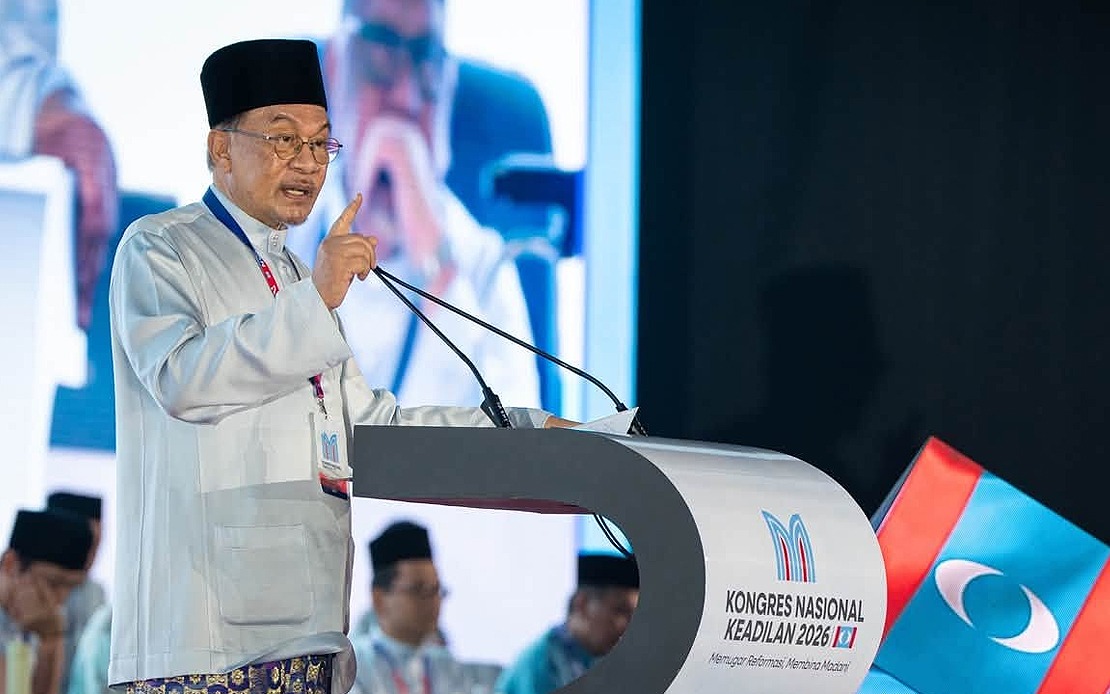
Prime Minister's Senior Political Advisor Tengku Datuk Seri Zafrul Tengku Abdul Aziz has underscored a critical challenge facing the MADANI Government: bridging the gap between policy announcements and public perception. Speaking at the 2026 PKR National Congress in Melaka, he stressed that ambitious reform agendas remain hollow unless ordinary Malaysians experience their direct impact on their daily lives and economic circumstances.
The two-day congress, held at the Melaka International Trade Centre under the theme "Reviving Reform, Building MADANI", provided a platform for Tengku Zafrul to address what many view as the government's communication deficit. Despite implementing numerous initiatives across various policy domains, the administration risks squandering political goodwill if citizens remain unaware of or unconvinced by these efforts. This observation carries particular weight for a coalition government still establishing its credibility with voters after assuming power.
Tengku Zafrul highlighted a specific paradox in Malaysia's current economic performance. The nation's economy expanded by six percent, exceeding analyst forecasts and positioning Malaysia favorably against regional and global comparisons. Yet this macro-level success has not demonstrably improved the circumstances of all segments of society. The challenge, he suggests, lies in ensuring that broad-based economic growth generates spillover effects reaching ordinary citizens rather than concentrating benefits among specific economic actors. This disconnect between national growth figures and household prosperity remains a persistent political vulnerability for any administration seeking public confidence.
The advisory to PKR delegates resonated with the core messaging delivered by PKR President Datuk Seri Anwar Ibrahim during his policy address to the congress. Anwar's speech enumerated substantial policy commitments reflecting the government's reform orientation, yet Tengku Zafrul's intervention suggests the leadership recognises that merely announcing reforms is insufficient. The party and government machinery must actively ensure awareness and comprehension permeate through society's different layers and demographics.
Among the significant policy initiatives highlighted by Anwar, and echoed by Tengku Zafrul, was the abolition of the Universities and University Colleges Act (AUKU). This reform addresses long-standing grievances within Malaysia's university sector regarding academic freedoms and student activism restrictions. The repeal signals the government's commitment to liberalising institutional frameworks, though implementation challenges and stakeholder alignment remain forthcoming considerations. Additionally, efforts to rehabilitate the Federal Land Development Authority (FELDA), a historically important institution serving smallholder farmers and rural communities, represent attempts to revitalise entities crucial to rural prosperity and agricultural productivity.
Tengku Zafrul emphasised that the government's policy agenda, particularly regarding economic initiatives incorporated into upcoming budgetary allocations, demonstrates ongoing commitment to advancing welfare across society. These initiatives collectively suggest the MADANI Government views its reform mandate as far from concluded and continues identifying areas requiring intervention. However, public perception of these efforts depends substantially on effective communication strategies reaching diverse constituencies through channels they frequent and trust.
A fundamental critique embedded in Tengku Zafrul's remarks concerns the government's self-awareness regarding communication shortcomings. He explicitly stated that if citizens remain ignorant of government achievements, responsibility rests with the administration's delivery mechanisms rather than public apathy. This accountability framing acknowledges that government messaging cannot rely solely on traditional media or official announcements but must employ targeted, multi-platform approaches resonating with contemporary Malaysian audiences. The admission reflects broader recognition within ruling circles that contemporary governance demands sophisticated communication strategies matching policy sophistication.
Tengku Zafrul identified party solidarity and enhanced working mechanisms as prerequisites for translating reform agendas into demonstrated outcomes. For PKR, this carries particular significance given the party's historical role within Malaysia's opposition movements and its relatively recent transition to governing roles. Strengthening internal cohesion while maintaining reform credentials presents ongoing tensions requiring skillful navigation. The party's capacity to listen to diverse membership viewpoints whilst maintaining strategic direction will significantly influence its effectiveness in delivering promised reforms.
The broader context informing these remarks involves Malaysia's post-2022 political reconfiguration. The MADANI coalition's formation represented an attempt to recalibrate governance approaches following years of instability and deepening public cynicism. Citizens demonstrated cautious interest in reform narratives but remain sceptical given previous unfulfilled promises. This scepticism, whether justified or not, constitutes a political reality that the government must overcome through demonstrable action rather than rhetorical appeals.
Tengku Zafrul's confidence in the government's capacity to regain public trust hinges explicitly on two factors: improved working mechanisms ensuring policies translate into practical benefits, and sustained party unity enabling coherent implementation. Both conditions prove challenging given Malaysia's complex federal structure, competing provincial interests, and the coalition's internal diversity. The PKR congress discussions reflected these dynamics, with delegates engaging substantively on how reform commitments could be operationalised despite structural constraints.
For Malaysian citizens and businesses, the remarks carry implications regarding government priorities and expected policy implementation timelines. The emphasis on AUKU reform, FELDA rehabilitation, and economic initiatives outlined in forthcoming budgets signals likely government focus areas in coming months. However, Tengku Zafrul's cautions against overestimating reform momentum suggest implementation will require patience and persistent advocacy from stakeholders.
The discourse also illuminates broader Southeast Asian governance challenges. Across the region, governments grapple with translating growth statistics into meaningful improvements in citizen living standards and economic security. Malaysia's experience suggests that policy competence and economic expansion alone prove insufficient without effective public communication and demonstrated institutional responsiveness. This lesson resonates beyond Malaysia's borders, particularly for governments attempting simultaneous economic transformation and democratic engagement.
Moving forward, the MADANI Government faces heightened pressure to deliver tangible results justifying the political capital invested in its reform narrative. Tengku Zafrul's remarks, ostensibly directed at PKR delegates, fundamentally constitute a challenge to the entire ruling coalition regarding strategic communication and results-oriented governance. How effectively the government meets this challenge will substantially determine whether current public receptiveness to reform agendas translates into sustained political support or reverts to scepticism.

