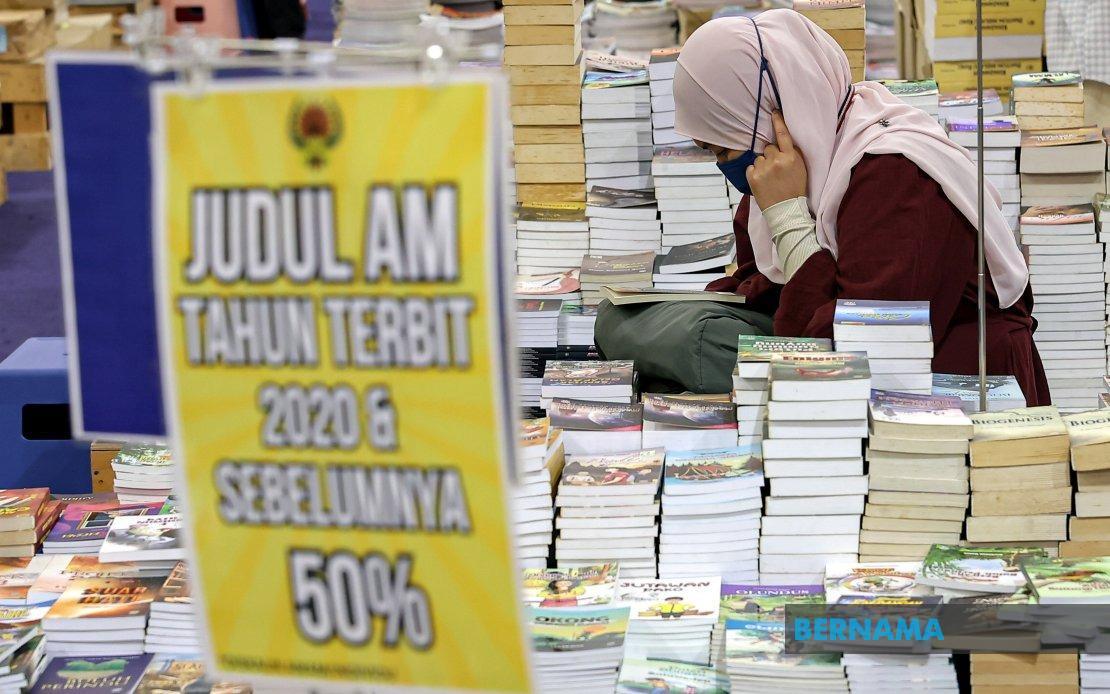
The Malaysian education system is taking another significant step towards equitable access to learning materials. The MADANI Book Voucher Programme 2026 will distribute RM100 e-vouchers to more than 2.2 million students nationwide, funded by a RM221.6 million government allocation. Beginning tomorrow, redemption will remain open until October 31 through an entirely digital ecosystem, marking a continuation of the government's commitment to ensure no student is left behind when it comes to educational resources.
Deputy Education Minister Wong Kah Woh detailed the programme's scope during a parliamentary session, confirming that 2,217,579 eligible recipients spanning Remove Class through Form Six, vocational colleges, matriculation institutions, and the Malaysian Institute of Teacher Education will participate. This expansive reach demonstrates how the initiative has matured since its introduction in 2024, now encompassing not just traditional secondary students but also those pursuing technical and teacher training pathways. The diversified beneficiary pool reflects Malaysia's multi-track education system and ensures consistency in support across different educational trajectories.
The BookCapital platform continues to serve as the backbone of this digital initiative, currently hosting 1,238 registered booksellers across the country. This substantial merchant network enables students to select from a wide variety of titles while ensuring transparent transactions and real-time tracking. The platform's growth demonstrates that Malaysia's bookselling community has embraced the opportunity to reach young readers through government-facilitated channels, creating a sustainable ecosystem that benefits both the education sector and the retail book industry.
A notable enhancement for the 2026 iteration involves the introduction of the MADANI Special Title Focus category, which curates literary works, classics, and non-fiction titles addressing history, philosophy, economics, geopolitics, and human capital development. This strategic curation reflects the government's belief that reading should transcend entertainment and serve as a bridge to developing critical thinking and civic understanding. Additionally, the programme now prioritizes books on emerging technologies including artificial intelligence, information technology, STEM disciplines, and digitalisation. Students must purchase at least one book from this designated category, ensuring that every recipient engages with content preparing them for a technology-driven future.
The policy's impact is already evident from empirical data gathered over the programme's lifespan. An impact study by the Darul Ehsan Institute revealed that 97.5 per cent of surveyed recipients agreed the vouchers significantly assisted their studies, with particular benefits for students from economically disadvantaged backgrounds. Furthermore, 92.2 per cent reported that the vouchers helped them prepare more effectively for examinations. These metrics suggest the programme is achieving its intended purpose of reducing financial barriers to educational materials.
A striking achievement from the 2024 rollout was the attainment of a 100 per cent redemption rate, indicating near-universal participation among eligible students. This remarkable figure underscores both the accessibility of the BookCapital platform and genuine student demand for reading materials. In the Malaysian context, where digital literacy and internet access have become increasingly widespread, the transition to an entirely online system has proven both technically feasible and practically effective. The high redemption rate also suggests that the value proposition—RM100 per student—is sufficient and appropriately calibrated.
The digital architecture of the programme delivers tangible equity outcomes that would be difficult to achieve through traditional distribution mechanisms. By enabling nationwide access through an online platform, students in remote rural areas now enjoy identical opportunities to their urban counterparts. Books that might take weeks to physically transport to Sabah or Sarawak can be ordered and delivered through conventional postal or logistics networks. This geographical neutrality represents a quiet revolution in Malaysian educational access, effectively dismantling traditional urban-rural divides in reading material availability.
Wong emphasized during the parliamentary exchange that the programme has achieved three critical objectives: 100 per cent redemption, 100 per cent transparency in financial deployment, and zero leakages—implying that allocated funds reach their intended beneficiaries without diversion. In a region where governance concerns often dominate public discourse, demonstrating full accountability in a RM221.6 million expenditure strengthens public confidence in government spending on education. The transparency underpinned by the BookCapital platform's digital architecture creates an auditable trail, contrasting with potential vulnerabilities in traditional cash-based voucher systems.
The MADANI Book Voucher Programme also carries implications for Malaysia's publishing and bookselling ecosystem. By guaranteeing a substantial annual market of 2.2 million student transactions, the initiative provides predictable demand that encourages publishers to maintain diverse catalogues and keep quality educational titles in print. Small and independent booksellers have equal platform access, preventing market consolidation and supporting local entrepreneurship. The programme thus functions as both an education policy and an indirect industrial support mechanism for knowledge-based industries.
For Southeast Asian education policymakers, Malaysia's approach offers an instructive model of technology deployment in social programmes. The success of the BookCapital platform demonstrates that digital infrastructure can effectively deliver direct assistance to vast populations when properly designed. As other countries in the region grapple with widening educational inequalities exacerbated by the pandemic, the Malaysian example illustrates how fintech integration with traditional retail can create inclusive systems that don't require students or families to navigate complex redemption procedures.
The inclusion of thematic focus categories—particularly emerging technology and geopolitical literacy—reveals sophisticated thinking about what contemporary students need to read. Rather than leaving selection entirely to student preference, the programme gently nudges young Malaysians toward engaging with content addressing artificial intelligence, digital transformation, and global affairs. This curation reflects policymaker awareness that students' voluntary reading choices may not naturally incline toward subjects perceived as difficult or abstract, yet essential for informed citizenship and economic participation.
Looking ahead, the successful track record of the MADANI Book Voucher Programme provides a foundation for potential expansion or refinement. The 2024 baseline of 100 per cent redemption suggests the system is robust and user-friendly enough to absorb increased scale. Future iterations might explore mechanisms to track long-term outcomes—whether students who utilized vouchers subsequently demonstrate improved academic performance, higher literacy rates, or greater engagement with learning. Such longitudinal data would strengthen the policy's evidence base and could influence education programmes across the region.

