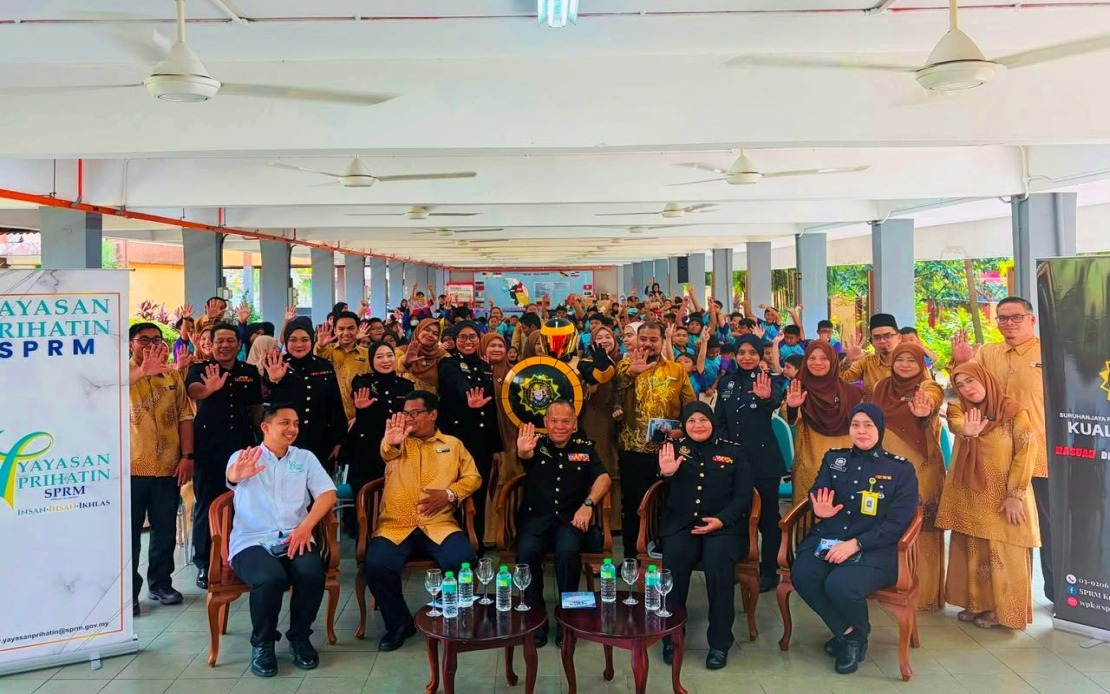
The Malaysian Anti-Corruption Commission's Kuala Lumpur branch is reinforcing its push to root out graft through community engagement, launching an educational initiative aimed squarely at primary school pupils who represent the nation's future gatekeepers of ethical conduct. The Wira Antirasuah (WAR) programme, unveiled at Sekolah Kebangsaan Jalan Pasar 1 in the federal capital, reflects a strategic pivot towards preventative anti-corruption work that begins in classrooms rather than courtrooms.
According to Mohamad Zakkuan Talib, the director of MACC's Kuala Lumpur operations, instilling a culture of integrity during childhood constitutes a vital long-term investment in developing a generation fundamentally resistant to misconduct. Rather than viewing anti-corruption as a technical compliance issue, he frames it as a values-based endeavour that must take root early when moral foundations are being formed. This approach aligns with broader understanding among governance experts that corruption prevention is most effective when embedded in education systems at foundational levels.
The conceptual heart of the initiative rests on a principle Zakkuan articulated with clarity: heroism in the modern context does not require superhuman capabilities, but rather the willingness to choose integrity when faced with temptation or pressure. This reframing is particularly significant for young audiences who might otherwise associate anti-corruption messaging with adult criminal justice proceedings remote from their lived experience. By connecting integrity to everyday moral choices—resisting the urge to cheat on examinations, respecting others' property, honouring commitments—the programme translates abstract ethical principles into practical conduct standards that pupils can recognise and apply immediately.
The implementation at Sekolah Kebangsaan Jalan Pasar 1 demonstrated a multifaceted approach combining education, engagement and symbolic institutional presence. The Community Education Branch of MACC delivered briefing sessions designed to communicate core messages about corruption and its societal costs in language and frameworks appropriate for primary-age learners. Interactive elements including engagement with Kapten MACC, the commission's mascot character, served to make anti-corruption themes more approachable and memorable for children who might otherwise find formal governance discussions alienating or incomprehensible.
Beyond pure messaging, the programme established what organisers termed an Anti-Corruption Corner at the school—a dedicated physical space within the institution serving as an ongoing information resource for both staff and students. This infrastructure suggests an intention for sustained engagement rather than a one-off awareness event. Such permanent installations can facilitate ongoing conversations about integrity and provide reference points for staff members addressing ethical questions that inevitably emerge in school environments, from academic honesty policies to fair treatment of resources.
The initiative also addressed material welfare concerns that frequently intersect with corruption vulnerability. The donation of smart television technology through Yayasan Prihatin SPRM to the school reflects understanding that educational institutions serving communities with limited resources often lack tools necessary for modern curriculum delivery. Additionally, the distribution of school assistance to 29 pupils from asnaf families (those qualifying for state welfare support) acknowledges that financial desperation sometimes provides motivation for unethical conduct. By supporting vulnerable students, the programme addresses both the symptoms and potential root causes of corruption simultaneously.
A symbolic dimension to the activities underscored the programme's alignment with broader national campaigns and celebrations. The participation of the school's special education pupils in planting hibiscus flowers connected anti-corruption messaging to the Keep Malaysia Clean campaign and National Month festivities, positioning integrity as a shared national value rather than a specialist concern confined to law enforcement agencies. This integrative approach helps normalise anti-corruption thinking as part of Malaysia's collective civic identity.
For Malaysia's anti-corruption ecosystem, this grassroots education strategy represents recognition that deterrence through prosecution alone has demonstrated limited effectiveness across Southeast Asia. The MACC's pivot towards schools places the commission in conversation with long-standing debates about whether corruption control is fundamentally a legal and enforcement challenge or a cultural and educational one. By investing in young Malaysians before they enter government or corporate hierarchies, the agency implicitly acknowledges that institutional checks alone cannot prevent misconduct if individuals lack personal commitment to ethical standards.
The programme also carries particular relevance for a Malaysian context where concerns about governance quality periodically mobilise public attention and political discourse. The establishment of integrity frameworks during formative years could gradually shift cultural norms around acceptable conduct, creating generational cohorts with different baseline assumptions about what constitutes appropriate behaviour in positions of authority or access to resources. Such slow cultural change often proves more durable than regulatory adjustments that can be circumvented or rolled back through political cycles.
For schools like Sekolah Kebangsaan Jalan Pasar 1, hosting such initiatives provides curriculum enrichment and exposes students to institutional understanding of ethics and governance beyond what most primary education systems conventionally address. Teachers gain support in reinforcing character education principles they are increasingly expected to impart as part of holistic student development. This collaborative engagement between law enforcement agencies and educational institutions represents practical implementation of the understanding that preventing corruption requires coordination across sectors rather than siloed efforts.
The scalability question naturally emerges: whether the WAR programme can be extended beyond individual schools to reach broader pupil populations across Malaysia's various states and school systems. The apparent success at Sekolah Kebangsaan Jalan Pasar 1 could establish a template for replication elsewhere, though resource constraints and varying local capacities might affect implementation quality across different regions. Nonetheless, the initiative demonstrates tangible commitment to investing in anti-corruption infrastructure that operates at grassroots levels where many citizens form foundational attitudes about state institutions and official conduct.

