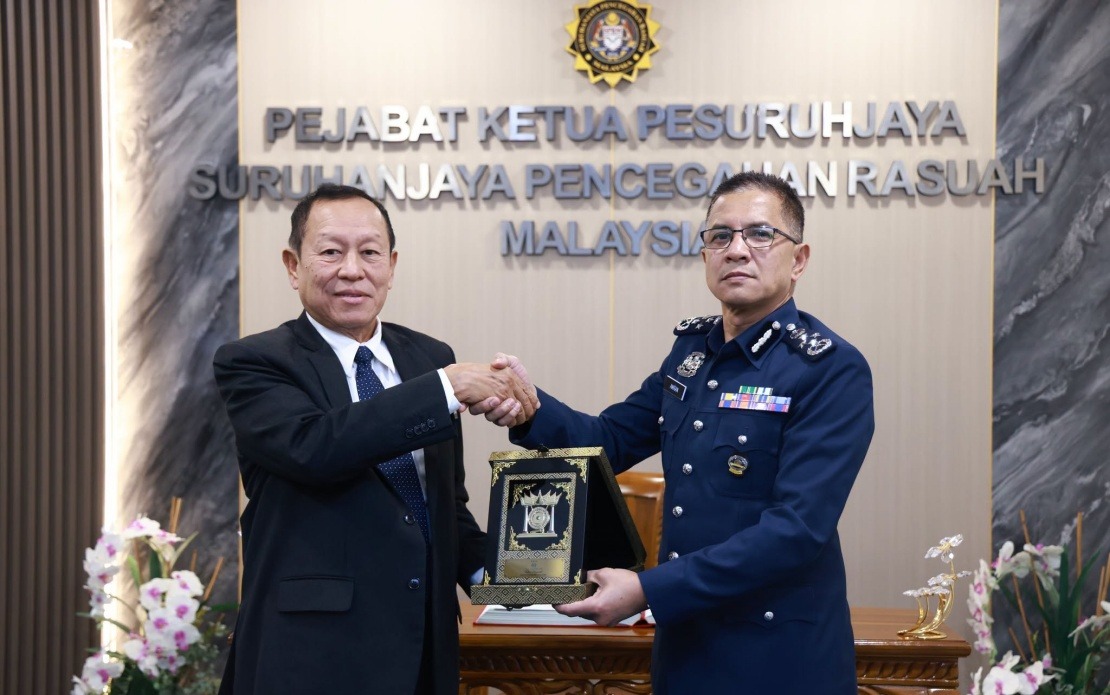
The Malaysian Anti-Corruption Commission and the Royal Malaysian Customs Department are moving forward with plans to establish a dedicated task force focused on strengthening enforcement operations and revenue collection at the nation's key maritime gateways. The initiative emerged from high-level discussions held at MACC headquarters in Putrajaya, where both agencies recognised the need for closer collaboration to tackle emerging threats to port integrity and fiscal security.
Datuk Seri Abd Halim Aman, the MACC chief commissioner, unveiled the proposal during a formal courtesy meeting with Datuk Amran Ahmad, the customs director-general. The one-hour strategic discussion examined the operational frameworks and institutional pressures facing each organisation, creating space for candid exchanges about the real obstacles preventing effective port management across Malaysia's network of maritime facilities.
The establishment of this joint task force reflects growing concerns about the sophistication of methods employed to circumvent Malaysia's customs and tax regimes. Officials acknowledged that traditional inspection approaches have become insufficient to address the evolving tactics of syndicates dedicated to undermining revenue collection and national security. The collaboration signals recognition at the highest levels that port leakages represent a systemic challenge requiring integrated rather than siloed responses.
Customs personnel have documented numerous schemes designed to evade legitimate tax obligations. One particularly troubling pattern involves the deliberate misclassification of cargo within container management systems—a practice that allows goods to transit Malaysian ports without triggering appropriate duties or regulatory scrutiny. Additionally, syndicates have refined their capacity to fabricate supporting documentation, submitting falsified records to obtain approvals they would otherwise be denied. These deceptions undermine the integrity of the entire customs ecosystem and represent direct losses to government revenues needed for public services.
Amran highlighted a specific vulnerability recently detected within Malaysia's border controls: the systematic undervaluation of cash declarations. Individuals smuggling currency into the country have begun declaring amounts far lower than what they actually possess, exploiting gaps in verification protocols. This particular scheme carries implications beyond simple tax evasion, touching on concerns about money laundering, terrorism financing, and the illicit movement of proceeds from criminal activity. The fact that Customs has catalogued this as a distinct modus operandi suggests the pattern has reached sufficient frequency to warrant formal institutional attention.
The customs chief also acknowledged MACC's broader mission to embed integrity standards within government operations. By inviting anti-corruption personnel to conduct ethics training sessions for Customs staff, JKDM recognised that preventing leakages requires building a workforce culture that actively resists opportunities for collusion with smugglers or corrupt officials. Such cultural investments often yield results that exceed those achievable through enforcement mechanisms alone, as employees internalise professional standards rather than merely complying with surveillance.
For Malaysian stakeholders, this development carries multiple implications. Legitimate importers and exporters face delays and transaction costs created by the misconduct of others; stronger enforcement at ports may temporarily increase processing times but should ultimately improve conditions for honest traders by reducing the incentive structures that reward rule-breaking. Small and medium enterprises, which often lack resources to navigate complex customs environments, stand to benefit from more transparent and consistent application of regulations.
Regionally, Malaysia's initiative reflects a broader Southeast Asian movement toward stronger port security governance. The country's position as a major transhipment hub means that leakages at Malaysian facilities have spillover effects throughout the region, potentially facilitating smuggling networks that operate across multiple jurisdictions. Demonstrating commitment to rigorous enforcement strengthens Malaysia's standing among regional trading partners and international bodies concerned with supply chain integrity.
The task force's effectiveness will depend on adequate resource allocation, coordination mechanisms that transcend normal bureaucratic boundaries, and sustained political support insulating the initiative from competing budget pressures. Historical experience with inter-agency task forces in Southeast Asia shows variable outcomes, with success clustering around cases where participating organisations received dedicated funding, clear mandate definitions, and executive-level oversight ensuring accountability for performance metrics.
Looking forward, the MACC-Customs partnership will require detailed protocols governing intelligence sharing, investigation procedures, and case management workflows. Given the involvement of MACC's Investigation Division senior director Datuk Mohd Hafaz Nazar and JKDM's Integrity branch head Azian Umar, the framework appears designed to blend customs technical expertise with anti-corruption investigative capacity. Such hybrid structures can prove powerful when properly resourced but risk becoming bureaucratic bottlenecks if decision-making authority remains unclear.
The initiative also suggests Malaysian policymakers recognise that port security cannot be addressed through enforcement alone. The reference to examining container management leakages points toward systemic vulnerabilities in cargo tracking, documentation systems, and physical security infrastructure. Addressing these underlying technical and procedural gaps may ultimately prove more consequential than the task force's investigative activities, as properly designed systems prevent violations rather than merely punishing them after the fact.

