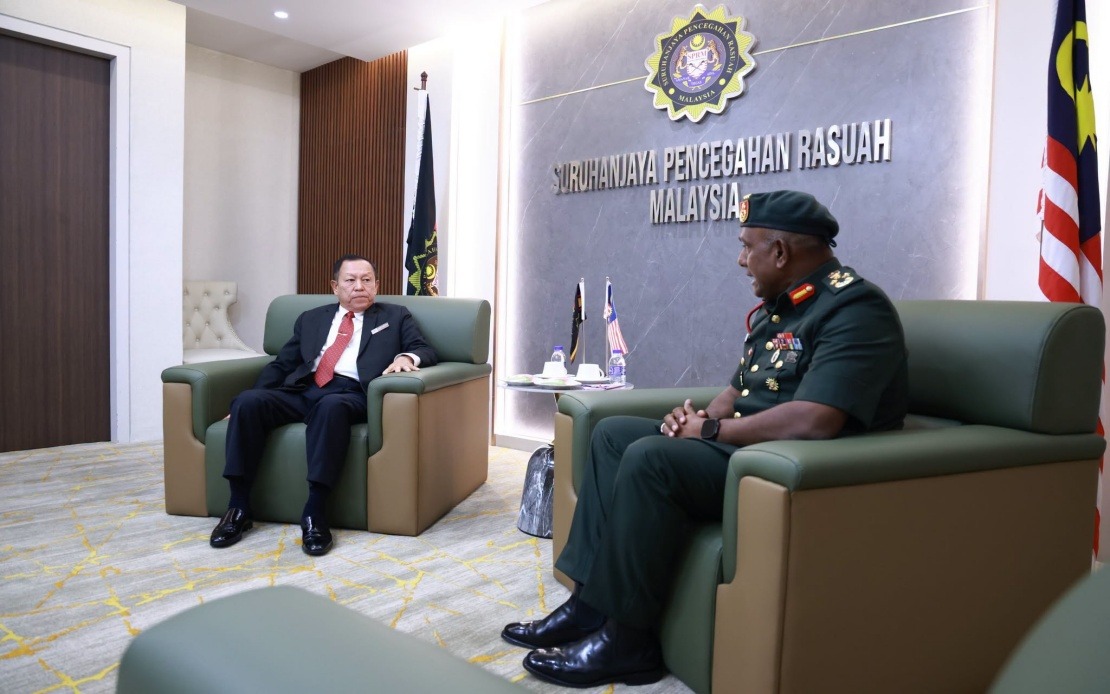
Malaysia's anti-corruption watchdog and its military establishment have renewed their institutional commitment to tackle graft through enhanced intelligence sharing and joint governance initiatives. The Malaysian Anti-Corruption Commission (MACC) and the Malaysian Armed Forces (MAF) formalized their strengthened partnership during a recent courtesy visit at MACC headquarters in Putrajaya, signalling a strategic realignment of efforts to combat corruption across defence and security sectors.
MAAC Chief Commissioner Datuk Seri Abd Halim Aman emphasized the significance of this cooperation, noting that the two institutions have maintained a productive relationship over many years. He articulated confidence that this collaborative framework will yield tangible results in anti-corruption operations, particularly as the agencies coordinate on critical information exchanges and intelligence protocols designed to strengthen governance across the Malaysian state apparatus.
The timing of this partnership reinforcement coincides with Lt Gen Datuk Fazal Abdul Rahman's appointment as director-general of the Malaysian Defence Intelligence Organisation (MDIO), a position he assumed effective May 21. His initial engagement with MACC leadership demonstrates institutional prioritization of inter-agency coordination within Malaysia's security architecture, reflecting broader recognition that corruption vulnerabilities within defence establishments pose significant risks to national security and resource management.
Lt Gen Fazal articulated the Armed Forces' institutional commitment to maintaining rigorous governance standards and ensuring disciplinary consistency across all operational domains. His statement underscored the MAF's recognition that professional conduct and transparent practices constitute foundational elements of military effectiveness and public confidence. The emphasis on professional operations conducted within established frameworks suggests the military leadership acknowledges corruption as an operational impediment rather than merely an ethical concern.
The intelligence-sharing protocols emerging from this partnership represent a practical dimension of the agreement. By establishing formal channels for information exchange between MACC investigators and military intelligence personnel, both organizations can identify patterns of misconduct more efficiently and coordinate investigations that span defence procurement, personnel management, and infrastructure development. Such coordination proves particularly valuable given the substantial defence budget allocations that Malaysia directs annually toward equipment acquisition, facility development, and personnel operations.
Governance enhancement constitutes the third pillar of this cooperative framework. The MACC and MAF will collaborate on developing institutional safeguards, transparency mechanisms, and accountability procedures that reduce corruption opportunities within military structures. This might encompass procurement oversight, financial auditing processes, and personnel conduct monitoring systems that prevent conflict-of-interest situations from developing into entrenched corrupt practices.
From a Southeast Asian perspective, Malaysia's institutional approach to military anti-corruption carries regional significance. As defence establishments across the region grapple with modernization pressures and rising procurement costs, corruption vulnerabilities threaten both operational readiness and democratic governance. The MACC-MAF partnership provides a potential model for other ASEAN militaries considering similar institutional safeguards, demonstrating how civilian anti-corruption bodies can engage constructively with military leadership without compromising chain-of-command integrity.
The composition of attendees at this engagement—including MACC Intelligence Division senior director Datuk Saiful Ezral Arifin and MAF Security and Counter Intelligence Directorate director Lt Col Muhamad Zainol Md Yusof—indicates the specialized nature of this cooperation. These appointments suggest the partnership operates at intelligence and counterintelligence levels rather than through generalized anti-corruption channels, enabling the agencies to address sophisticated corruption schemes that might involve classified information access or security clearance exploitation.
Historically, Malaysian defence sectors have experienced high-profile corruption cases involving procurement fraud, contract manipulation, and financial misappropriation. By institutionalizing intelligence cooperation and establishing formal governance enhancement protocols, the MACC and MAF demonstrate collective commitment to preventing recurrence of such incidents. This commitment carries budgetary implications, as reduced corruption losses directly strengthen defence resource allocation for operational purposes rather than siphoning funds through illicit channels.
The partnership also reflects evolving international standards regarding military transparency and accountability. As Malaysia engages with international defence partners and participates in multilateral security arrangements, maintaining robust internal anti-corruption mechanisms enhances diplomatic credibility and strengthens Malaysia's position within regional security frameworks. Foreign defence establishments increasingly scrutinize corruption vulnerabilities when considering technology partnerships and strategic collaborations, making institutional anti-corruption capacity a component of military soft power.
Moving forward, the effectiveness of this MACC-MAF partnership will depend upon sustained institutional commitment, adequate resource allocation, and mechanisms for measuring cooperative outcomes. Establishing clear performance indicators, regular coordination meetings, and formal reporting structures will transform this partnership statement into sustained operational reality. Malaysian citizens and policymakers should monitor whether this renewed commitment produces measurable improvements in corruption detection and prevention within defence sectors, or whether institutional cooperation remains largely symbolic.
The MACC-MAF initiative ultimately reflects recognition that combating corruption requires sustained inter-institutional engagement rather than isolated enforcement operations. By pooling intelligence resources, coordinating governance improvements, and maintaining high professional standards across both organizations, Malaysia demonstrates institutional maturity in addressing corruption as a systemic challenge requiring comprehensive, coordinated responses that transcend individual agency mandates.

