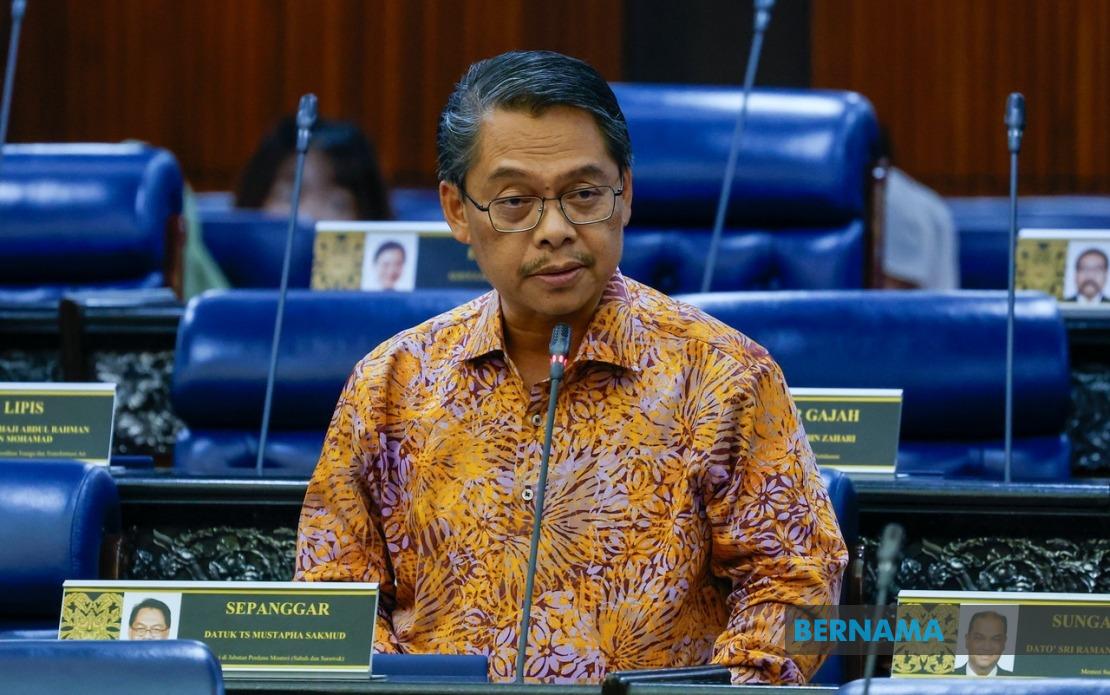
The federal government has made tangible headway on implementing the Malaysia Agreement 1963, with Datuk Mustapha Sakmud, the Minister in the Prime Minister's Department overseeing Sabah and Sarawak affairs, announcing that 13 of the 29 negotiated items have now been fully settled. Speaking during parliamentary questions on June 25, Mustapha provided an updated accounting of progress across the two East Malaysian states, indicating that momentum is building on one of the nation's most complex federal-state negotiations.
Beyond the fully resolved items, Mustapha disclosed that five additional issues have achieved what officials term "interim" or partial resolution following decisions made at a Technical Committee meeting held on March 2. This distinction between full and interim resolution reflects the nature of implementation: some matters require phased rollout or ongoing coordination between federal and state authorities, while others involve foundational agreements that will guide future action. The categorisation reveals the negotiation's granular complexity and the government's determination to track progress methodically rather than claiming blanket success prematurely.
Among the four interim matters specifically highlighted are questions surrounding the expansion of state public service positions under Article 112 of the Federal Constitution. This touches on a sensitive aspect of Sabah and Sarawak's constitutional standing—their right to maintain distinct civil services staffed preferentially by local personnel. The government has also signalled interim progress on three additional fronts: health policy, education frameworks, and the so-called Borneonisation initiative, which seeks to ensure that federal public service positions in the East Malaysian states are progressively filled by qualified local candidates rather than those posted from Peninsular Malaysia.
The Borneonisation issue carries particular significance for East Malaysian communities, as it relates directly to employment opportunities and demographic representation in government institutions. The interim status suggests that while agreements exist in principle, the practical mechanics of implementation—including timelines, recruitment procedures, and coordination mechanisms—remain under refinement. This approach reflects the complexity of restructuring federal employment patterns across two geographically dispersed and demographically distinct states without destabilising existing administrative capacity.
Mustapha confirmed that the Sabah and Sarawak Affairs Division, operating as the secretariat for these negotiations, continues to monitor the remaining 11 outstanding matters in close coordination with stakeholders across both federal and state governments. The existence of this dedicated secretariat underscores the high-level priority attached to the MA63 process, which represents a comprehensive recalibration of federal-state relations more than six decades after the original agreement established Sabah and Sarawak's entry into Malaysia. The ongoing nature of these discussions indicates that negotiators recognise the 1963 settlement was not intended as a final document but rather as a framework requiring periodic renewal and interpretation.
A question from Isnaraissah Munirah Majilis, representing Warisan in Kota Belud, shifted attention to the more contentious matter of parliamentary representation. The query specifically raised demands from East Malaysian constituencies for an increase in parliamentary seats to achieve a 35 per cent quota of seats in the Dewan Rakyat. This represents a long-standing grievance: while Sabah and Sarawak comprise significant portions of Malaysia's territory and population, their proportional representation in Parliament has long been viewed by their populations as inadequate relative to their constitutional status.
Mustapha's response acknowledged that the parliamentary seats issue remains unresolved and continues as an active discussion point. However, he outlined the substantial institutional and procedural obstacles to any change. Electoral redistribution can only be undertaken by the Election Commission following completion of an eight-year cycle, a provision designed to prevent frequent manipulation of electoral boundaries. This procedural requirement means that even if political consensus emerges, no redelineation can occur immediately, creating a temporal mismatch between political agreement and implementation that frustrates advocates of reform.
Beyond the procedural constraint lies a constitutional barrier of even greater significance. Any alteration to the composition of the Dewan Rakyat requires amendment to Article 46 of the Federal Constitution, which itself demands a two-thirds supermajority in Parliament. This exceptionally high threshold reflects the constitutional framers' intention to protect the fundamental structure of the federal parliament from easy change. Obtaining two-thirds support on an issue where constituency interests are sharply divided—as would be the case with a significant reallocation of seats away from Peninsular Malaysia toward Sabah and Sarawak—presents a formidable political challenge, particularly in a Parliament characterised by narrow working majorities.
The parliamentary seats question also highlights the tension at the core of MA63 renegotiation. While many of the 29 matters under discussion involve administrative implementation or policy coordination that lies substantially within executive authority, the representation question touches on the most fundamental aspect of democratic governance: the allocation of voting power at the national level. This moves the negotiation beyond technocratic adjustment into the realm of constitutional politics, where competing regional interests confront each other directly.
For Malaysian observers and regional stakeholders, the MA63 process carries implications extending beyond bilateral federal-state relations. How Malaysia manages the resolution of these historic grievances while maintaining national cohesion will influence perceptions of federalism across Southeast Asia and the credibility of constitutional arrangements in managing diversity. The slow but steady progress on implementation matters suggests institutional patience and commitment to process, yet the apparent stalling on high-visibility issues like parliamentary representation raises questions about the limits of that commitment.
The acknowledgement that 11 matters remain outstanding, coupled with the interim status of five others, indicates that substantial work lies ahead. These negotiations, now spanning several years with dedicated secretariat support and repeated committee meetings, represent an unprecedented effort to comprehensively revisit the constitutional settlement of 1963. Whether the current institutional mechanisms and political will prove sufficient to resolve remaining disputes—particularly those involving constitutional amendment—will likely determine the success of the entire enterprise and shape East Malaysian attitudes toward federal governance for decades to come.

