The world of haute couture has entered genuinely strange territory. Whilst excellence in tailoring, precision in construction and visual perfection have long constituted the foundation of luxury fashion, an entirely contradictory aesthetic is now commanding premium prices and generating lengthy waiting lists. Designers worldwide are deliberately manufacturing the appearance of damage, wear and neglect—selling intentional disaster as desirability to affluent consumers willing to pay handsomely for garments that deliberately mimic the effects of time, carelessness and decay.
This inversion of traditional fashion values represents far more than mere novelty or shock marketing. The phenomenon reflects deeper shifts in how wealth and status are performed in contemporary culture. Where previous generations signalled their privilege through immaculate presentation—flawless clothing unmarred by wear, staining or visible damage—today's luxury consumers are gravitating toward silhouettes and finishes that suggest age, rough treatment and careless ownership. Chanel has reimagined its iconic 2.55 bag with deliberately distorted proportions, as though the leather handbag has survived being trampled. Prada's recent collections feature artificially aged fabrics embellished with spots and discolouration that evoke decades of neglected storage. Coach's "Loved Leather" collection, which sold out completely upon launch, pre-scuffs and pre-damages bags to create the impression they have already been cherished and well-used by previous owners.
The commercial success of these lines indicates consumers are responding enthusiastically to the aesthetic. Coach responded to their initial collection's popularity by releasing additional iterations in different colourways for the current season, suggesting robust demand continues. This willingness to pay substantial sums for engineered deterioration invites critical reflection on authenticity, value and the peculiar economics of luxury markets. Why would anyone purchase deliberately damaged goods when identical construction defects would be grounds for returned merchandise in conventional retail contexts?
The answer lies partly in cultural rebellion and the desire to subvert established hierarchies of taste. Ralph Lauren's Spring 2027 offerings pair carefully ripped jeans with traditional elements including proper shirting, neckties, waistcoats and tailored blazers—a combination that disrupts the neat categorical separation between formal and casual wear. This deliberate clash creates cognitive tension that signals sophistication through unexpected juxtaposition rather than conventional elegance. The look is completed with contrasting penny loafers in white and green, alongside tan-coloured hand-carry totes, establishing a visual statement that prioritises personal perspective over received notions of appropriate dressing.
Other houses are pursuing similar strategies with varying degrees of intensity. Burberry's response to the distressed denim trend comprises stonewashed pink pieces layered with argyle sweaters in a combination that evokes prep-school aesthetics corrupted by deliberate wear patterns. The styling deliberately challenges the precision usually associated with Burberry's heritage brand identity. Sandro's Spring/Summer 2026 collection takes the concept further with cropped vests and shorts embellished with rustic metal hardware and suede trim, packaging what might be termed "cowgirl cool" within the vocabulary of contemporary runway presentation.
The trend extends beyond denim into more conceptually adventurous territory. Louis Vuitton's Spring/Summer 2027 denim jackets feature earth-toned splatter patterns and accumulated grit, styled as bold statements rather than manufacturing mistakes. Similarly, Acne Studios has developed jeans with mud-slick patina surfaces, paired deliberately with crumpled companion pieces. The aesthetic celebrates rawness and suggests authenticity derived from rough use, contrasting sharply with the pristine presentation luxury houses historically demanded.
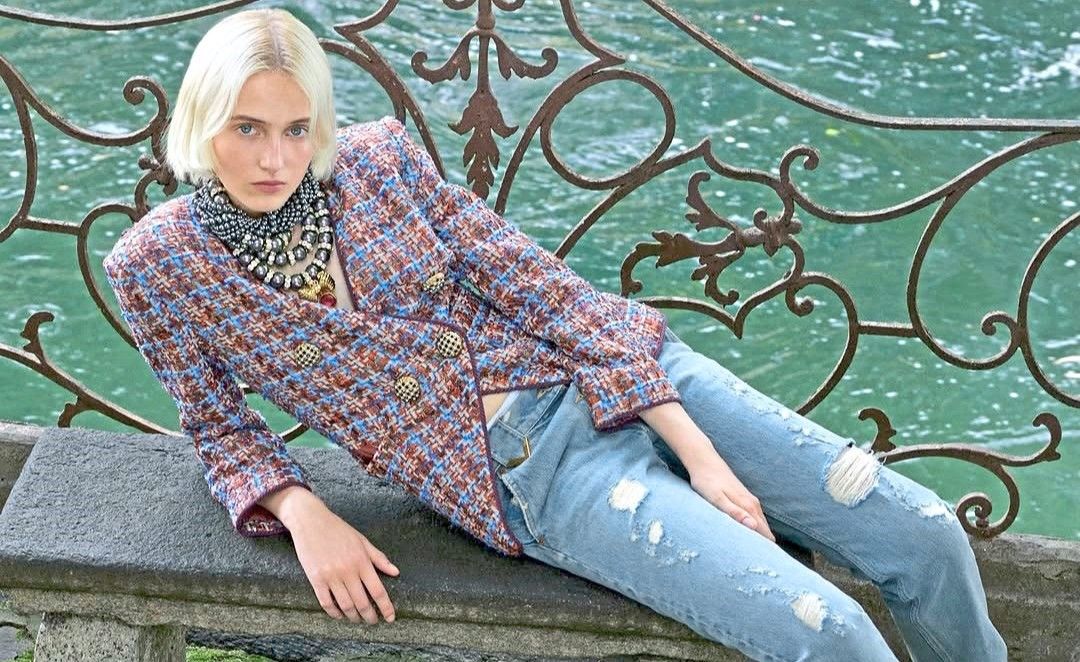
Ventimiglia presents perhaps the most provocative interpretation. The Italian luxury house, historically synonymous with refinement, elegance and meticulous tailoring, now presents deliberate contradictions in its Cruise 2027 collection. Tweed jackets featuring gold buttons—conventional markers of wealth and taste—are offset against shredded and systematically distressed jeans, whilst pearl necklaces and studded heels provide additional layers of visual complexity. The resulting combinations deliberately undermine coherence and polish, asserting instead that luxury now resides in the conceptual audacity to reject perfection.
For Malaysian and Southeast Asian fashion consumers, this trend carries particular implications. The region has historically embraced luxury goods as status markers, with pristine presentation representing both personal discipline and economic achievement. The emergence of this counter-aesthetic challenges readers to reconsider what luxury means in contemporary contexts. Does distressed haute couture represent genuine innovation, or does it constitute cynical marketing that exploits the fundamental human desire to belong to exclusive communities? The high price points remain unchanged even as product quality ostensibly diminishes, suggesting the premium reflects not construction excellence but rather cultural capital and narrative authority.
Moreover, this development raises environmental and ethical questions particularly relevant to Southeast Asian markets. If luxury fashion now celebrates planned obsolescence and the intentional replication of damage, what becomes of sustainability narratives? The artificial ageing of garments demands additional processing, dyeing and finishing techniques that consume resources and generate waste. Meanwhile, consumers are encouraged to discard perfectly serviceable clothing from their personal wardrobes in favour of designer-engineered distress, replicating the appearance they already own through accumulation and neglect.
The trend also illuminates how fashion operates as a language of distinction and belonging. By celebrating the worn and damaged, luxury brands create new hierarchies wherein consumers must possess sufficient cultural literacy to distinguish intentional design decisions from manufacturing defects. The ability to interpret a strategically placed mud stain as artistic vision rather than accident requires the kind of insider knowledge that justifies premium pricing. This gatekeeping mechanism—where understanding the concept constitutes as significant a barrier to entry as affording the price tag—ensures luxury maintains its exclusivity even as the visual markers shift.
Looking forward, this aesthetic will likely persist as luxury fashion continues searching for novel methods to differentiate itself and capture consumer imagination. The implications extend beyond clothing into broader questions about authenticity, value and the relationship between appearance and substance. As these distressed and deliberately damaged pieces circulate within Malaysian society, they carry meanings that extend far beyond their material composition. They represent, fundamentally, a radical inversion of traditional luxury values—suggesting that perfection itself has become unfashionable, and that the true status symbol now lies in the freedom to wear deliberate disasters with complete confidence.

