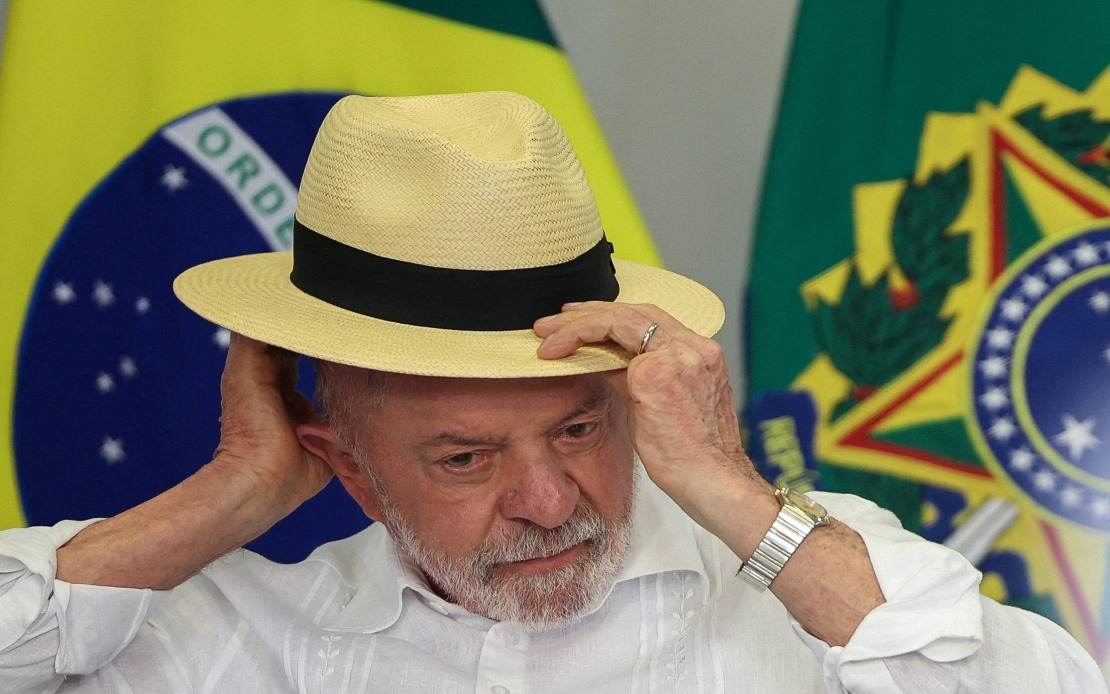
Brazilian President Luiz Inacio Lula da Silva has retained a slender lead over Senator Flavio Bolsonaro in the race toward October's presidential election, according to fresh polling data released this week. The Quaest survey, commissioned by major broadcaster Globo, reveals the incumbent commanding 43 percent support against Bolsonaro's 40 percent in a hypothetical runoff matchup. However, with a two-point margin of error factored in, the two candidates remain virtually deadlocked in what increasingly appears to be a fiercely contested rematch between Brazil's left and right.
The survey, which gathered responses from 2,004 voters between August 10 and 13, suggests minimal movement since earlier polling conducted on August 5, when Lula held a similar 44-to-39 percent advantage. This consistency in the data indicates a stabilising race roughly two months before voting, despite expectations that late-campaign developments could shift voter preferences. The incremental tightening, even if marginal, underscores intensifying competition as both camps mobilise their respective bases and vie for persuadable middle-ground voters.
When voters were asked about first-round preferences without the runoff constraint, Lula's support strengthened to 38 percent, compared with Bolsonaro's 31 percent. This gap widens further when both candidates benefit from unified messaging, suggesting deeper underlying support for the president among the broader electorate. The poll also tested several secondary challengers: Renan Santos and Ronaldo Caiado each registered four percent, while Romeu Zema captured two percent. Under Brazil's electoral framework, if no candidate secures an outright majority of valid votes cast, the top two finishers automatically proceed to a runoff ballot, a mechanism that has shaped Brazilian politics for decades.
Flavio Bolsonaro's emergence as the principal right-wing contender marks a significant shift in Brazilian political dynamics. The eldest son of former President Jair Bolsonaro effectively inherited his father's political coalition after Bolsonaro himself was disqualified from seeking office. Brazil's superior electoral court declared the former president ineligible on grounds of abuse of political authority, a decision strengthened by his subsequent criminal conviction related to an alleged scheme to reverse his 2022 election defeat to Lula. This barring has forced Brazil's conservative movement to coalesce around the younger Bolsonaro, despite questions about his independent standing and policy platform.
Lula framed his campaign launch on August 2 at the Workers' Party gathering in São Paulo around protecting Brazilian sovereignty in an increasingly contested geopolitical environment. His messaging directly addressed anxieties about external interference and resource extraction, themes that resonate deeply in a nation possessing vast mineral reserves and rare earth deposits essential to global technology and energy transitions. The president invoked concerns about rival powers—specifically naming China, the United States, and France—attempting to secure preferential access to Brazil's natural wealth. This nationalist rhetorical strategy appeals to Brazilian voters across the political spectrum who harbour historical suspicions about foreign domination.
Lula's sovereignty-centred campaign carries particular weight given the incoming administration of US President Donald Trump, who has maintained longstanding ties with the Bolsonaro family. The Brazilian president explicitly warned Trump in June against electoral interference, declaring that Brazilian elections constituted an internal matter divorced from American interests. Such messaging serves dual purposes: it reassures domestic voters that Lula will defend national interests against external pressure while simultaneously distancing himself from any perception of being a weak negotiator with Washington. For Southeast Asian readers familiar with regional debates about managing great-power influence, Lula's emphasis on sovereignty echoes familiar anxieties about protecting domestic decision-making autonomy.
The president articulated his position on resource sovereignty with unambiguous language, stating that Brazil would not permit foreign nations to encroach upon decisions regarding its mineral wealth. His assertion that "in Brazil, we do not accept anyone sticking their nose where it does not belong" served as both domestic political messaging and implicit criticism of perceived Bolsonaro alignment with Trump's geopolitical interests. This rhetorical distinction could prove decisive among swing voters concerned about Brazil's international positioning, particularly those who view Bolsonaro as overly deferential to Washington during his earlier presidency.
Bolsonaro's earlier term as president, from 2019 to 2022, was marked by close alignment with Trump's administration on trade, environmental, and security matters. Many Brazilian voters credited this relationship with both economic benefits and troubling dependencies. Lula's nationalist framing implicitly critiques this approach, positioning himself as a leader capable of negotiating with Washington from a position of strength rather than subordination. This distinction carries significance beyond Brazil's borders, as regional powers throughout Latin America and Southeast Asia grapple with balancing relationships between the United States and China while maintaining autonomous policy space.
The statistical tightness of the runoff scenario, despite Lula's apparent first-round strength, reflects the polarised nature of contemporary Brazilian politics. The three-point gap between candidates—effectively erased by the margin of error—suggests that either campaign could realistically capture the presidency through targeted voter persuasion in the coming weeks. Historically, Brazilian runoff elections have experienced significant shifts as voters consolidate behind one candidate or the other, meaning the current snapshot captures only a preliminary stage of what promises to be a volatile final contest.
With roughly sixty days remaining before voting, both campaigns face critical windows for messaging refinement and mobilisation strategy. Lula's focus on sovereignty and resource protection competes against Bolsonaro's likely emphasis on inflation, employment, and security concerns that may weigh heavily on working-class and middle-class voters. The narrow polling margins indicate neither candidate has secured decisive advantage, even as Lula retains marginal first-round superiority. Developments in coming weeks—ranging from economic data to international events to campaign incidents—could substantially alter the trajectory toward October's vote.
For regional observers, Brazil's electoral dynamics offer instructive parallels to Southeast Asian politics. Like many developing democracies in the region, Brazil experiences contests between incumbent progressives and resurgent conservative forces, with sovereignty, resource management, and external relations serving as central campaign themes. The tight Brazilian polling reminds analysts that even sitting presidents commanding state apparatus and media advantages cannot assume electoral victory when political divisions run deep and voter preferences remain fluid. Both Lula and Bolsonaro's camps will intensify efforts to mobilise supporters and convert persuadable voters before ballots are cast in October.

