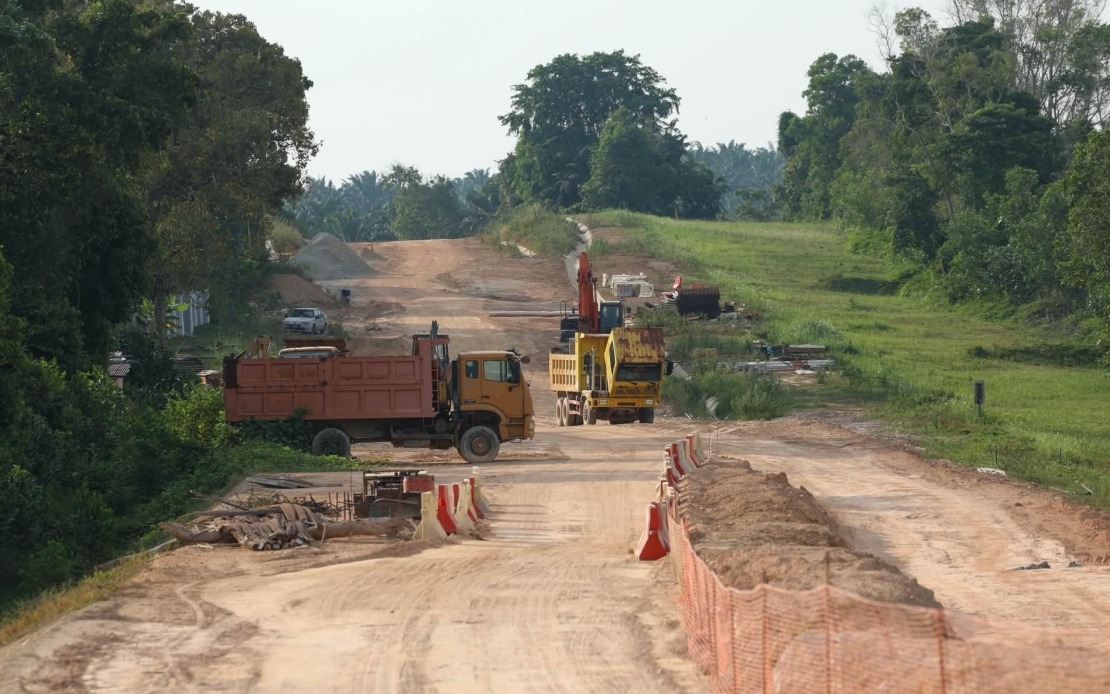
The ambitious RM81.92 million road infrastructure project linking Lukut to Kampung Sirusa through Port Dickson's rural settlements is tracking well ahead of its original timeline. As of mid-July, the construction effort has achieved 60.57 per cent physical progress, exceeding expectations by 43 days. The Works Ministry's announcement underscores the government's commitment to delivering critical rural connectivity infrastructure across Malaysia's western corridor, where such projects directly influence residents' access to essential services and economic opportunities.
The 10-kilometre road network is being constructed to comprehensive Public Works Department specifications, incorporating all necessary technical elements including slope stabilization, sophisticated drainage infrastructure, sewerage systems, structural works, and utility installations. This thoroughness reflects contemporary best practices in rural road construction, ensuring the finished product can withstand Malaysia's tropical climate and serve communities reliably for decades. The project's scheduled completion date of August 10, 2027, remains feasible given the current accelerated pace, though construction teams will need to maintain momentum through the remaining 39 per cent of works.
Port Dickson, historically dominated by maritime industries and tourism, stands to benefit significantly from enhanced internal connectivity. The road will directly link previously isolated or poorly connected settlements including Kampung Paya and Kampung Bagan Pinang, territories that have remained peripheral to the district's economic mainstream. By establishing smoother transit routes between residential areas and commercial centres, the infrastructure promises to unlock latent economic potential within these communities and facilitate more efficient movement of goods and services throughout the region.
Deputy Works Minister Datuk Seri Dr Ahmad Maslan's on-site inspection during July reflected the federal government's hands-on oversight of the project. Such ministerial engagement demonstrates that despite Malaysia's numerous infrastructure commitments, Port Dickson's rural development retains policy priority. The visit specifically focused on validating construction adherence to contractual schedules, technical specifications, and quality standards, while simultaneously identifying and resolving on-ground implementation challenges. This supervisory approach helps prevent the delays that frequently plague Malaysian infrastructure projects, particularly those in geographically challenging terrain.
Beyond immediate transportation benefits, planners anticipate the road will catalyse broader socio-economic transformation across Port Dickson's hinterland. Safer, more comfortable travel conditions will reduce journey times for residents accessing schools, clinics, and municipal facilities dispersed throughout the district. This accessibility enhancement carries particular significance for vulnerable populations including schoolchildren and patients requiring medical attention, for whom reliable transportation infrastructure remains essential to social welfare. Simultaneously, improved connectivity typically generates secondary economic benefits as local businesses gain improved market access and supply chains become more efficient.
The project's tourism dimensions deserve particular attention for Malaysian and Southeast Asian observers. Port Dickson already attracts substantial domestic and regional tourism through its beaches and heritage attractions. Enhanced road connectivity to currently marginalised communities positions these areas to capture tourism spillover effects, potentially developing homestays, artisanal enterprises, and cultural tourism initiatives. Such diversification could provide sustainable income alternatives for rural populations traditionally dependent on fishing, agriculture, or informal sectors, contributing to broader regional economic rebalancing away from coastal concentration.
Implementation through the Ministry of Rural and Regional Development indicates the project's classification within Malaysia's strategic rural modernisation framework. Funding through federal government development allocations—rather than state budgets—reflects the national priority assigned to bridging infrastructure gaps in less-developed areas. The assignment of implementation responsibility to State JKR ensures local knowledge and responsiveness to ground conditions, a governance arrangement increasingly recognised as more effective than purely centralised project management. This hybrid approach combines federal financial commitment with local operational expertise, potentially serving as a model for similar initiatives across Peninsular Malaysia.
The infrastructure project's advancement ahead of schedule offers valuable lessons for Malaysia's broader development ambitions. Project delivery at or ahead of schedule, within budget, and to specification remains statistically uncommon in Malaysian public works. The Port Dickson road's performance suggests that appropriate planning, realistic contracting terms, robust oversight, and adequate resourcing can indeed deliver results. As Malaysia pursues increasingly ambitious infrastructure targets under various five-year plans and development strategies, replicating this project's success factors could substantially improve the nation's infrastructure delivery performance.
For regional observers, the project illustrates Malaysia's continuing investment in rural connectivity despite competing pressures from urban development, industrial expansion, and fiscal constraints. Port Dickson's relatively modest scale—neither a major metropolitan area nor an economically dominant state—demonstrates that infrastructure investment reaches communities beyond Malaysia's primary economic zones. This geographic inclusivity reflects constitutional commitments to regional equity and pragmatic recognition that sustainable national development requires broadly distributed growth rather than concentration in established economic hubs.
Looking forward, the road's completion will establish foundation infrastructure upon which Port Dickson's district authorities can build complementary development initiatives. Water supply augmentation, telecommunications infrastructure, commercial facilities, and educational expansion become feasible and economically viable once transportation connectivity reaches critical thresholds. The synergistic effects of integrated infrastructure development create multiplier effects that simple individual projects cannot achieve. Port Dickson's experience may inform planning approaches for comparable rural districts across Selangor and other Peninsular states facing similar connectivity deficits.

