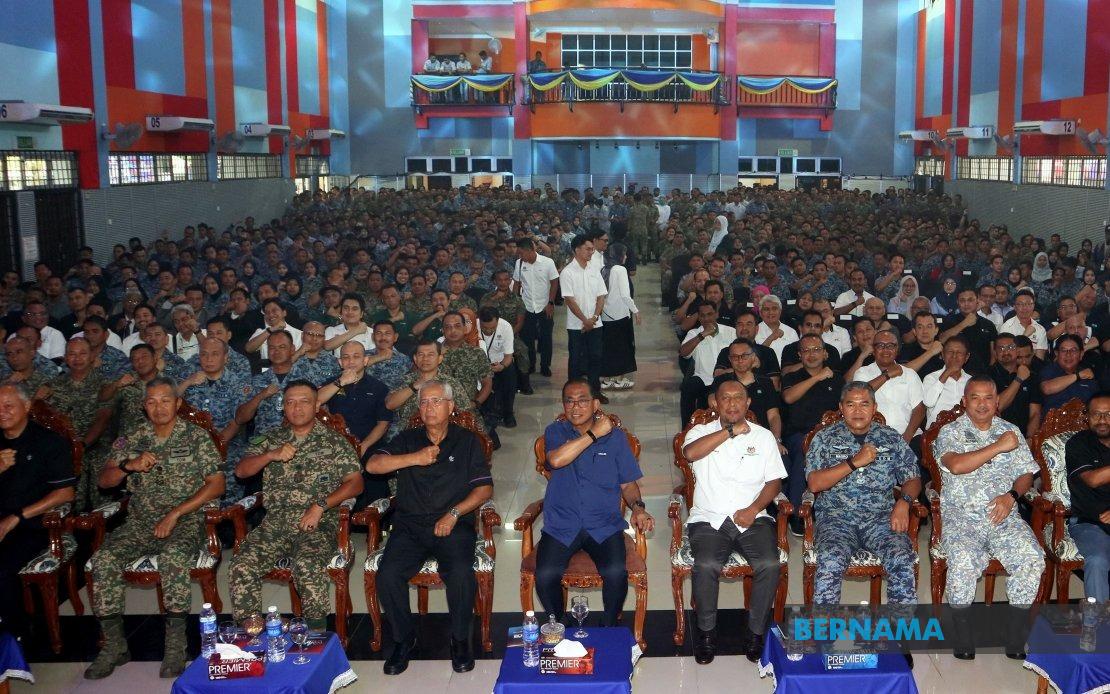
The Armed Forces Fund Board (LTAT) has successfully extended its welfare and financial services to 28,500 Malaysian Armed Forces personnel through a phased nationwide engagement tour branded 'Jelajah Wira', with the East Coast leg providing a platform to strengthen institutional connections with service members across multiple military establishments.
Mohammad Ashraf Md Radzi, Chief Executive of LTAT, outlined the strategic rationale behind the extensive roadshow during an event in Kuantan on 13 July. Rather than a passive administrative exercise, the touring initiative represents a deliberate effort to foster two-way communication between the fund's leadership and contributors from all ranks. This direct engagement model acknowledges that military personnel, who contribute 10 per cent of their monthly income to LTAT, deserve transparent interaction with fund management regarding their accumulated savings and retirement benefits.
The comprehensive tour schedule reflects LTAT's commitment to geographic inclusivity across the peninsula. Six military installations in the East Coast and southern regions have been designated as programme venues: Kem Desa Pahlawan in Kelantan, Kuantan Air Force Base, Kem Seri Pantai (home to the 16th Royal Malay Regiment) in Terengganu, Kem Sungai Udang in Melaka, the naval facility KD Sultan Ismail in Johor, and Kem Mahkota Kluang, also in Johor. This geographical spread ensures that service members stationed across diverse locations can access information and services without excessive travel burdens.
A significant product launch accompanied the engagement initiative: the LTAT-Affin Debit Card, introduced as a tangible recognition of armed forces personnel's dedication and sacrifice. Ashraf emphasised that this financial instrument represents more than mere convenience—it serves as a symbolic acknowledgement of the unwavering loyalty displayed by Malaysian military personnel to national defence and security. The card symbolises LTAT's appreciation for their contributions, positioning the fund as an institutional stakeholder in their financial wellbeing beyond the mechanics of pension accumulation.
The welfare approach embraced by LTAT extends beyond individual service members to encompass their families and the broader military ecosystem. Ashraf articulated this holistic philosophy, noting that the fund recognises how military service affects entire households and communities dependent on defence personnel. This family-centric perspective reflects contemporary understanding that military compensation must address not merely individual savings but the financial security of dependents and next-of-kin arrangements.
Testimonials from serving personnel underscored LTAT's competitive positioning within Malaysia's savings landscape. Airman I Muhammad Syahmi Mohd Shobri, aged 23, highlighted the scheme's long-term value proposition, praising annual dividends that consistently outpace alternative savings vehicles available to service members. Such performance metrics are crucial for younger military personnel making early-career financial commitments, as compound growth over 20 to 30 year service tenures can substantially amplify retirement security.
For personnel approaching or at mid-career stages, the scheme's retirement implications proved equally compelling. Airman I Muhammad Izzuddin Mohd Hanapi, 25, articulated how accumulated LTAT balances combined with ongoing dividend distributions provide robust financial foundations during the vulnerable transition from military to civilian employment. This dual-benefit structure—capital preservation plus annual returns—addresses a persistent challenge facing retiring service members who often lack adequate post-service income cushioning.
The event incorporated gamification elements designed to sustain engagement and convey appreciation. Air Sergeant Haidil Jafar from the Royal Malaysian Air Force won an electric motorcycle through a lucky draw, generating memorable positive associations between LTAT and the military community. Such experiential engagement tactics, whilst seemingly minor, contribute meaningfully to institutional goodwill and encourage ongoing participation in fund activities and communications.
The initiative attracted high-level political and institutional endorsement. Datuk Lokman Hakim Ali, Secretary-General of the Defence Ministry, attended alongside General Tan Sri Azizan Ariffin, Chairman of LTAT, and Datuk Khairol Anuar Mohamad Tawi, LTAT Investment Panel Chairman. This concentrated senior leadership presence signalled government commitment to military personnel welfare and validated LTAT's institutional importance within Malaysia's defence apparatus.
For Malaysian and regional observers, LTAT's 'Jelajah Wira' initiative demonstrates evolving institutional approaches to personnel engagement and benefits administration within security forces. Rather than implementing top-down policy changes, the fund has adopted grassroots communication strategies that build constituent understanding and institutional legitimacy. This model carries broader implications for how Southeast Asian militaries approach personnel retention, particularly as younger service members increasingly expect transparent financial stewardship and competitive welfare packages comparable to private sector employment.
The scale of reach—28,500 personnel across the East Coast alone—suggests this represents merely an initial deployment of a significantly broader programme. Future phases will determine whether the model sustains engagement momentum and successfully translates improved communication into measurable outcomes such as enhanced benefit understanding, earlier financial planning, or improved long-term fund sustainability. The Malaysian defence establishment's capacity to maintain such extensive personnel engagement initiatives will influence perceptions of institutional responsiveness across the broader military structure.

