The Armed Forces Fund Board (LTAT) has marked a significant shift in how it engages Malaysia's military community through the official launch of the Jelajah Wira LTAT 2026 East Coast Edition in Kota Bharu. The initiative represents a watershed moment in the board's outreach strategy, blending traditional on-ground engagement with digital innovation to break geographical barriers and reach service members stationed across the country. Deputy Defence Minister Adly Zahari formally inaugurated the programme at Desa Pahlawan Camp, signalling the government's commitment to supporting the armed forces beyond traditional compensation frameworks.
The hybrid approach reflects a broader recognition within Malaysia's defence establishment that personnel welfare extends beyond salary and benefits to encompass financial empowerment and family security. By incorporating live-streaming capabilities, LTAT aims to simultaneously serve over 3,600 military personnel attending physical sessions across the East Coast corridor while extending engagement to an estimated 10,000 service members nationwide through digital platforms. This two-pronged strategy acknowledges the dispersed nature of military deployments, where personnel stationed in remote bases or undergoing training elsewhere remain isolated from traditional roadshow benefits. For a military organisation operating across diverse geographical terrains—from maritime bases to jungle training centres—such digital innovation becomes practically essential rather than merely aspirational.
The roadshow itinerary encompasses three major military installations across the East Coast region, with scheduled stops at Sri Pantai Camp in Kuala Terengganu on July 9 and Kuantan Air Base in Pahang on July 13, following the initial launch at Desa Pahlawan Camp. This structured progression allows LTAT to consolidate messaging and gather feedback from distinct military communities, each with potentially different financial and personal circumstances. The concentration on East Coast bases reflects strategic priority-setting within Malaysia's defence infrastructure, while the digital component ensures that personnel elsewhere—whether in Sabah, Sarawak, or peninsular bases far from these three locations—can participate in real-time or access recorded content subsequently.
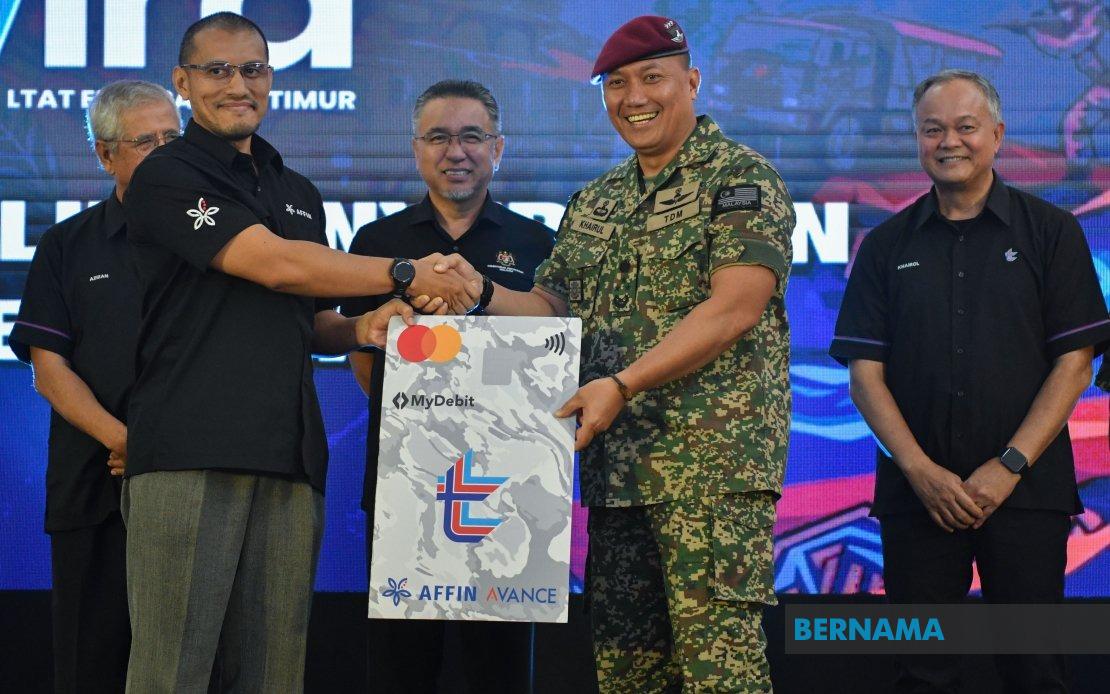
Beyond raw attendance figures, the Jelajah Wira initiative packages several complementary value-added offerings designed to holistically address military family needs. The symbolic presentation of AFFIN LTAT Affiliate Debit Cards represents financial infrastructure integration, enabling service members to access tailored banking solutions. Simultaneously, distribution of smart devices under the 2026 SPM e-Perkasa programme provides dependents of ATM personnel with technological access to free online tuition, directly addressing educational inequality among military families. This bundled approach recognises that serviceman welfare cannot be compartmentalised—financial literacy proves sterile without corresponding family support mechanisms, particularly regarding children's educational advancement.
A particularly compelling element involves honouring armed forces veterans through structured economic empowerment programming. The Second Series of the LTAT Wira Entrepreneur Empowerment Programme graduation ceremony, coupled with launching the third series targeting the East Coast veteran community, represents a deliberate effort to transition post-service personnel toward economic self-sufficiency. The quantified results speak compellingly: second series participants averaged a 162 per cent increase in monthly business income, demonstrating that structured intervention—combining business mentoring, financial literacy, and ecosystem support—generates measurable economic outcomes. For Malaysia's defence establishment, this validates investing in veteran entrepreneurship as a sustainable welfare alternative to indefinite monetary assistance, while simultaneously strengthening broader MADANI Economy objectives centring inclusive growth.
The financial literacy programming itself represents institutional learning accumulated over multiple years of military engagement. Since its December 2023 introduction, the LTAT Contributors' Briefing and Financial Literacy Programme has successfully reached over 68,000 ATM personnel through continuous camp-based sessions. This substantial reach—spanning nearly seven years of cumulative engagement—indicates genuine appetite within the military community for financial education and that camp-based delivery proves operationally feasible within existing military structures. For Malaysian policymakers observing military welfare trends, this demonstrates that financial empowerment messaging resonates across ranks and geographic distribution when delivered through appropriate channels.
The initiative's alignment with broader government frameworks—specifically the MADANI Economy aspiration and PuTERA35 development goals—situates military welfare within Malaysia's macro-economic policy architecture. Rather than treating armed forces support as a discrete budgetary line item, LTAT positions military personnel as integral stakeholders in national economic transformation. This framing has practical implications: military communities' economic participation, their children's educational advancement, and veteran business success all contribute measurably to inclusive growth targets and demographic development objectives that extend beyond defence sector considerations.
From a regional perspective, Malaysia's systematic approach to military personnel welfare and family support offers potential reference points for neighbouring Southeast Asian defence establishments grappling with similar challenges. The combination of digital accessibility, multi-generational support mechanisms, and veteran economic integration reflects sophisticated understanding of contemporary military demographics and geopolitical realities where retention and morale depend increasingly on comprehensive welfare ecosystems rather than salaries alone. As regional defence spending intensifies across Southeast Asia, how nations address military family welfare and post-service transitions increasingly influences recruitment and retention capacity.
The digital live-streaming innovation deserves particular attention as it navigates practical military operational constraints. Real-time engagement capability enables LTAT to address personnel questions immediately, facilitating two-way communication in ways traditional briefings cannot accommodate. Recorded content accessibility allows time-shifted participation for personnel unable to attend scheduled sessions due to operational commitments—a significant consideration given military training schedules and deployment rotations. This flexibility enhances programme effectiveness while respecting operational realities that frequently prevent personnel attendance at centrally-scheduled civilian programmes.
Looking forward, the Jelajah Wira LTAT 2026 framework establishes templates potentially adaptable to other military welfare dimensions. Success in reaching dispersed personnel through hybrid digital-physical approaches might inform future initiatives addressing healthcare access, family counselling services, or career transition planning. The quantifiable success metrics—particularly the 162 per cent entrepreneurship income increase and 68,000-person education reach—provide measurable baselines against which future initiatives can benchmark performance.
Ultimately, LTAT's strategic evolution reflects recognition that military personnel welfare constitutes not peripheral social expenditure but essential investment in defence force capability, morale, and long-term sustainability. By expanding accessibility through digital innovation while maintaining targeted physical presence, the organisation acknowledges both resource constraints and genuine personnel needs. For Malaysia's defence establishment, such systematic, data-driven approaches to military welfare increasingly define institutional credibility and operational effectiveness in an era where global competition for skilled personnel intensifies regardless of sector or national context.

