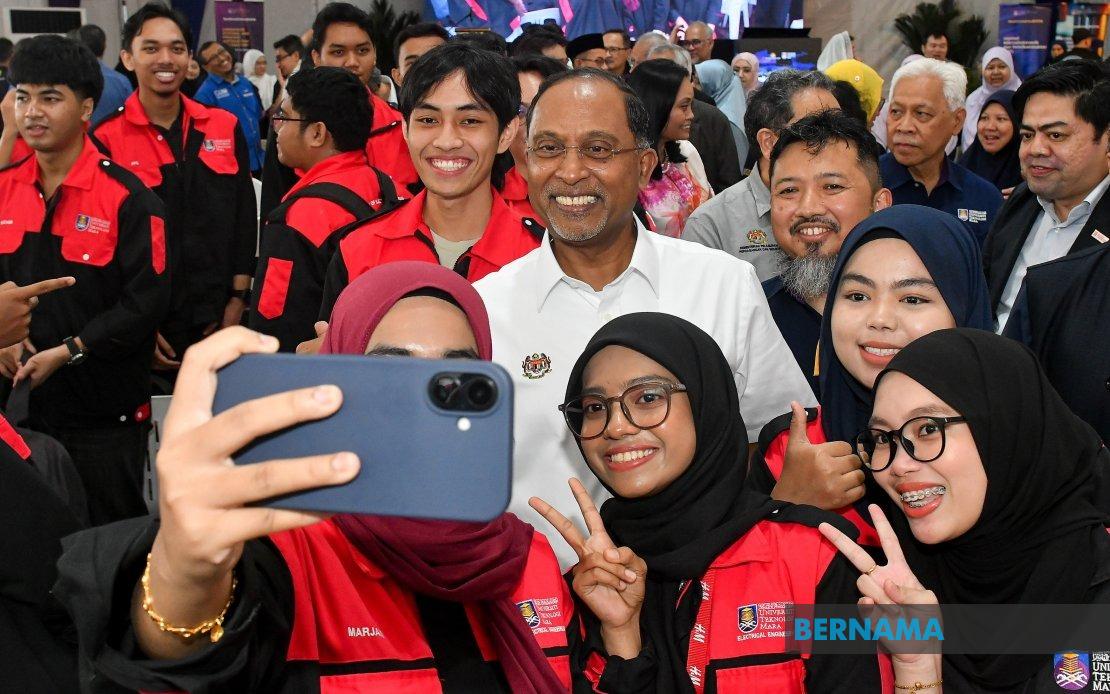
The Light Rail Transit 3 Shah Alam Line, which entered service this month, is already transforming how students and residents navigate the sprawling Klang Valley metropolitan region. Speaking at UiTM Shah Alam after launching the Semiconductor@UiTM initiative, Higher Education Minister Datuk Seri Dr Zambry Abd Kadir emphasised how the new rail corridor addresses longstanding commuting challenges that have plagued the area as rapid development continues to reshape its geography and traffic patterns.
Access to reliable public transport has become increasingly critical as UiTM Shah Alam expands its student population and academic footprint. The dedicated UiTM Shah Alam Station now provides direct connectivity across the 20-station corridor, which stretches from Bandar Utama in the north through central Shah Alam and extends southward to Johan Setia. For a student population historically dependent on private vehicles or costly taxi services, this represents a fundamental shift in mobility economics. The minister noted visible enthusiasm among students upon the service's launch, reflecting genuine relief from the daily frustration of navigating congested roads during peak commuting hours.
Prime Minister Datuk Seri Anwar Ibrahim's decision to implement free fares from June 29 through July 31 effectively removes the initial cost barrier for trial adoption. This promotional period is strategically significant, as it allows students and commuters to incorporate the service into their daily routines without financial hesitation. The arrangement provides a critical window for ridership patterns to establish themselves naturally, potentially converting temporary users into committed commuters. Beyond immediate user experience, the free-fare initiative signals government confidence in the infrastructure's long-term viability and recognition of the region's transportation deficit.
The Shah Alam Line's integration into Malaysia's broader rapid transit network amplifies its value for Klang Valley residents. By connecting major residential nodes like Glenmarie, Subang, and Bandar Baru Klang with commercial and institutional hubs, the line addresses historical fragmentation in the region's transport architecture. For UiTM students specifically, access extends far beyond the campus itself, enabling engagement with internship opportunities, part-time employment, and social amenities distributed across the wider metropolitan area. This enhanced connectivity particularly benefits students from lower-income backgrounds, for whom transportation costs can significantly constrain their campus engagement and economic participation.
Simultaneously, UiTM's launch of the Semiconductor@UiTM initiative demonstrates how the university is leveraging government support to position itself at the forefront of Malaysia's high-technology workforce development. The RM20 million investment represents substantial commitment to building infrastructure, curriculum, and industry partnerships aligned with the semiconductor sector's technical demands. The timing is deliberate: as Malaysia faces intensifying global competition for semiconductor manufacturing and design talent, universities must rapidly upgrade capabilities to remain relevant to employer expectations and industry evolution.
Malaysia's semiconductor sector currently represents 13 per cent of global market share and generates over RM300 billion annually, making it a foundational pillar of the national economy. However, this dominance faces mounting pressure from shifting geopolitical dynamics, including supply chain reconfiguration and increased competition from regional players investing heavily in domestic capability building. The National Semiconductor Strategy represents government recognition that maintaining competitive advantage requires systematic investment in human capital across the pipeline, from secondary through postgraduate education. UiTM's initiative directly addresses this imperative by targeting Electrical and Electronics Engineering education with upgraded facilities and industry-aligned curriculum.
The partnership model embedded within Semiconductor@UiTM reflects evolved understanding of how academic institutions must operate within contemporary technology ecosystems. Rather than isolated classroom instruction, the initiative emphasises cross-learning between campus-based researchers and industry practitioners, providing students with exposure to current technologies and direct engagement with multinational corporations anchoring Malaysia's semiconductor supply chain. This approach recognises that technical competence alone insufficient; graduates must understand industry workflows, quality standards, and global commercial contexts shaping how technology translates into economic value.
For Malaysian policymakers and regional observers, the convergence of LRT3 Shah Alam's launch with Semiconductor@UiTM's inauguration illustrates a broader strategy: anchoring institutional development in physical infrastructure and human capability simultaneously. Transport connectivity enables human potential to manifest; workforce development programmes ensure that connectivity translates into economic participation and national competitiveness. The LRT3 investment demonstrates government commitment to reducing friction in daily life for students and workers, while the semiconductor initiative proves that such friction reduction must accompany serious investment in skills development.
UiTM's central location in Shah Alam positions it as natural anchor for this integrated approach. As a major public university serving predominantly Malaysian students from diverse socioeconomic backgrounds, UiTM's capacity to absorb RM20 million in semiconductor capabilities directly translates into expanded opportunity for students who might otherwise lack access to premium technical education. The university's track record in engineering education, combined with existing partnerships across Malaysia's industrial sector, provides authentic foundation for the initiative rather than aspirational posturing.
The LRT3 project also illustrates how transport infrastructure functions as equaliser in higher education access. Students previously constrained by transportation costs or time burdens can now participate more fully in campus life, attend lectures without time pressure, and engage in enrichment activities previously unavailable due to commuting constraints. This accessibility dimension proves particularly significant for Malaysia's regional competitiveness: every student unable to participate fully in university experience represents lost potential contribution to the innovation economy.
Looking forward, the success of both initiatives will likely influence how other Malaysian universities and regions approach infrastructure-skills integration. If LRT3 ridership reaches projected levels and Semiconductor@UiTM graduates meet employer expectations, the model demonstrates replicable pathways for translating government investment into tangible economic and social outcomes. Conversely, shortfalls would signal the need for different approaches to either transport planning or technical education delivery.
For Southeast Asian regional context, Malaysia's simultaneous investment in transport infrastructure and semiconductor workforce development positions the country distinctively within the ASEAN technology economy. While other regional players expand manufacturing capacity, Malaysia's emphasis on skilled human capital and integrated institutional support suggests differentiation strategy based on quality and innovation rather than volume competition. This approach aligns with longer-term economic sustainability objectives as global supply chains continue reconfiguring and technology manufacturing increasingly concentrates in locations offering superior skilled workforce ecosystems.

