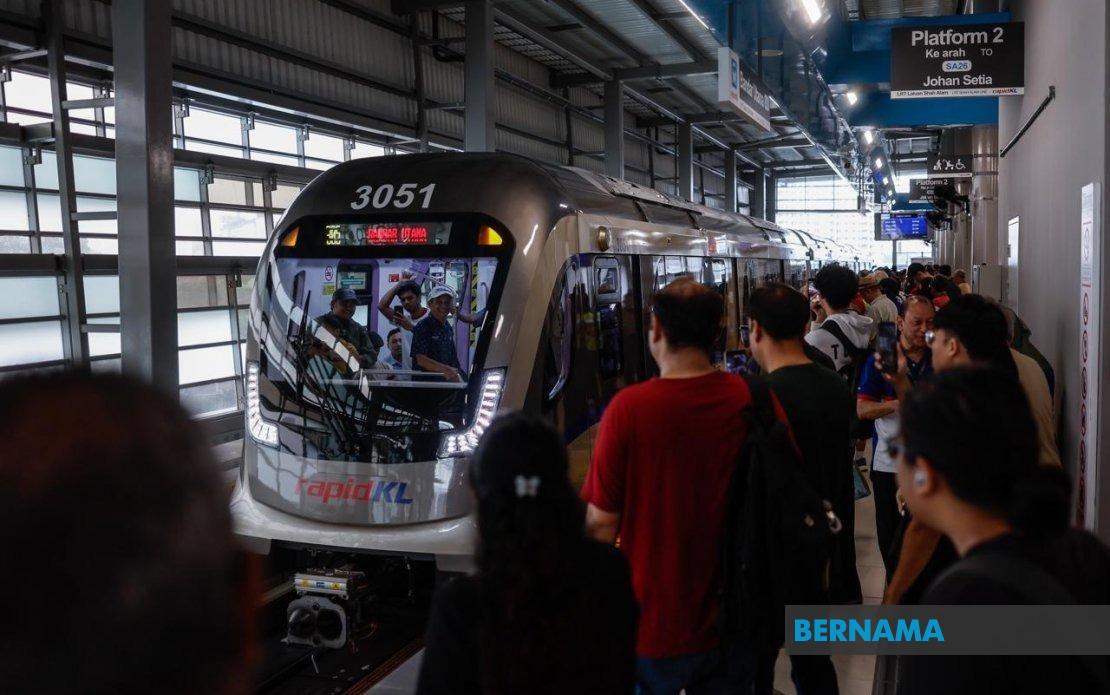
Prasarana Malaysia Berhad opened the Light Rail Transit 3 (LRT3) Shah Alam Line on June 29, positioning the new transport corridor as a solution to congestion in the Klang Valley corridor. The operator forecast between 5,000 and 10,000 passengers would use the line during its inaugural day of service, marking the beginning of what management hopes will become a significant component of the region's integrated public transport network.
Amir Hamdan, the company's president and chief executive officer, articulated an ambitious trajectory for the nascent line during an inspection at Glelmarie 2 station. Prasarana projects ridership will climb to 67,000 passengers per day within the first twelve months as travellers become acquainted with the service and incorporate it into established commuting patterns. This ramp-up reflects industry experience suggesting that new transit infrastructure typically requires an adjustment period before reaching operational capacity, a reality that shapes both operational planning and revenue expectations during the critical launch phase.
The opening commenced at 6 am, drawing enthusiastic responses from early adopters who flooded social media platforms with positive commentary. Passengers expressed particular satisfaction with the prospect of trading exhausting and unpredictable automobile journeys for a reliable, climate-controlled alternative that circumvents the notorious traffic conditions afflicting the Selangor conurbation. This sentiment underscores a broader transition in commuting preferences within Malaysia's urban centres, where congestion costs—measured in lost productivity, pollution, and stress—have created genuine demand for viable mass transit options.
Prasarana commenced operations with a train frequency of approximately eight minutes during peak periods, a scheduling interval designed to balance passenger accommodation with operational efficiency. The company reported that all systems functioned without significant disruption on opening day, encompassing automated ticketing gates, fare collection machinery, and passenger circulation protocols throughout the station network. This operational stability matters considerably for public confidence, as transit system reliability often determines whether occasional users become regular commuters.
The LRT3 Shah Alam Line incorporates strategic interchange nodes that extend its utility across the broader metropolitan rail ecosystem. Glenmarie 2 station provides connectivity to the Kelana Jaya Line, while Bandar Utama links to the Kajang Line, enabling passengers to construct multi-leg journeys without reverting to automobile transport. These integration points represent crucial infrastructure value, as they transform individual transit lines into a cohesive network capable of serving diverse origin-destination pairs across greater Kuala Lumpur and surrounding municipalities.
During the initial operational phase, Prasarana is emphasizing user experience metrics and passenger accommodation. Management explicitly stated that no women-only coaches would be introduced immediately, instead announcing that such facilities would be evaluated based on empirical ridership data and collected passenger feedback. This data-driven approach reflects contemporary transit management philosophy, wherein decisions about service modifications emerge from quantified usage patterns rather than advance assumptions about passenger preferences.
Prime Minister Datuk Seri Anwar Ibrahim announced a promotional fare strategy designed to encourage uptake during the critical formative weeks. The LRT3 Shah Alam Line, together with Prasarana's complementary feeder bus services, will offer costless travel through July 31, creating a one-month window where potential commuters can evaluate the service without financial commitment. This incentive structure serves dual purposes: it removes barriers to trial usage and generates substantial passenger volumes that enable operational assessment and network refinement.
Prasarana has articulated contingency protocols should demand exceed initial projections. Management indicated readiness to augment train frequency or deploy additional rolling stock to accommodate passenger growth, including positioning reserve units strategically along specific corridors during congestion periods. This flexibility reflects lessons learned from previous transit expansions, where inadequate capacity during peak hours can undermine public confidence and suppress ridership growth. The operator's willingness to scale resources based on real-world demand patterns demonstrates institutional responsiveness.
The Shah Alam Line's commencement arrives at a pivotal juncture for Malaysian metropolitan transit. The Klang Valley experiences chronic congestion that constrains economic productivity and contributes substantially to air quality deterioration across the region. Each increment in public transport ridership represents a reduction in vehicle kilometres travelled, with cascading benefits for emissions reduction, infrastructure maintenance costs, and urban livability. The LRT3 Shah Alam Line therefore functions not merely as a commercial transportation service but as infrastructure addressing systemic urban challenges.
For Malaysian commuters and policymakers alike, the line's performance during its inaugural months will provide vital information about the Klang Valley's receptiveness to expanded rail transit. The gap between initial ridership expectations and the eventual stabilized demand curve will illuminate how transport planners should approach future expansion projects. Whether the line achieves its 67,000-passenger target within the promised timeframe depends on execution excellence, sustained promotional efforts, and whether the service truly addresses the pain points that commuters experience with automobile-dependent commuting in greater Kuala Lumpur.

