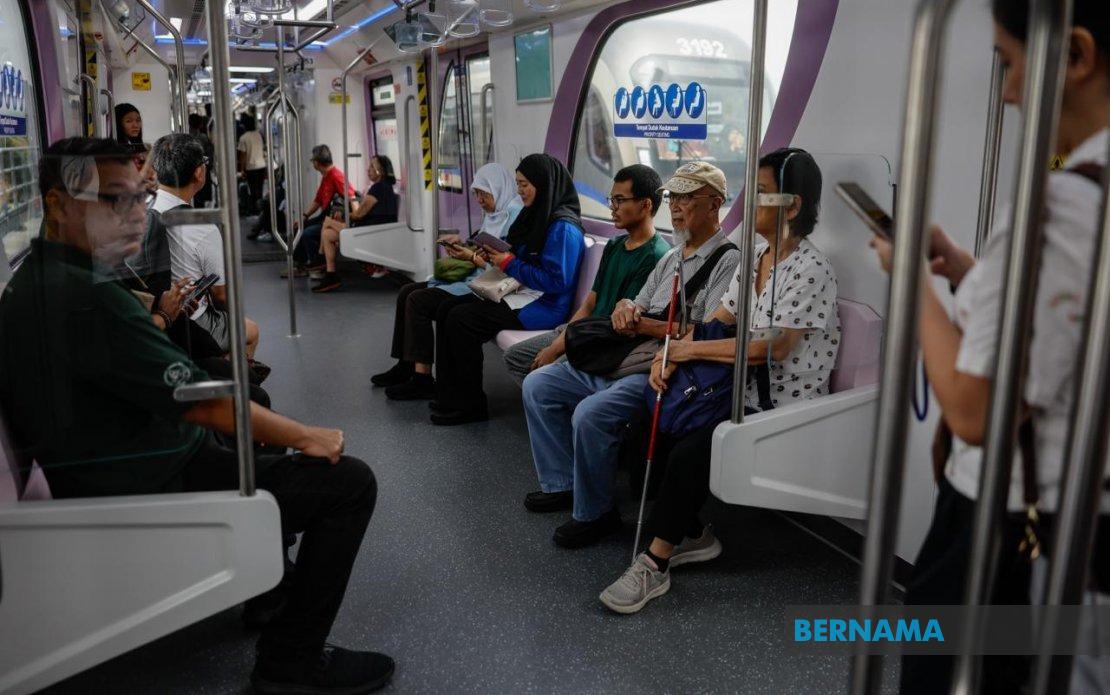
The Light Rail Transit 3 (LRT3) Shah Alam Line began operations to enthusiastic public reception, with early riders consistently reporting improved convenience and reduced commute times across the western corridor of the Klang Valley. The inaugural service, which commenced on 29 June, generated substantial goodwill from the cross-section of commuters who tested the new 53-kilometre network stretching from Kajang to Glenmarie 2, representing a significant addition to the region's public transport ecosystem and fulfilling a long-anticipated infrastructure project for residents of Shah Alam, Bandar Utama, and surrounding areas.
Beyond the initial enthusiasm, however, feedback from users revealed a more nuanced picture, with commuters balancing genuine satisfaction against constructive suggestions for operational refinement. The general consensus centred on three key strengths: the directness of the route eliminating troublesome interchanges, the perceived comfort of the modern rolling stock, and the acceleration of journey times for corridors previously dependent on congested road networks or more circuitous transit connections. For many daily commuters, particularly private sector workers navigating the Shah Alam-to-Bandar Utama corridor, the line represented a genuine breakthrough in accessibility to employment centres and commercial hubs.
Razlan Ibrahim, a 40-year-old visually impaired commuter, articulated both commendation and constructive critique during the service's opening day. His journey from Kajang to Glenmarie 2 yielded positive impressions regarding the line's foundational commitment to inclusive design, particularly the tactile pathway infrastructure evident at flagship stations such as Bandar Utama. The directional guiding systems proved sufficiently intuitive to facilitate independent mobility toward designated facilities including accessible toilets, prayer rooms for both male and female passengers, and lift access, demonstrating that deliberate design choices can significantly enhance the travel experience for persons with disabilities.
Despite these encouraging physical installations, Ibrahim identified a critical gap in the information architecture accessible to visually impaired users. The absence of comprehensive Braille signage at key facility locations created a substantive accessibility shortfall, forcing dependent users to rely on external assistance or transit staff to locate essential services with confidence. This discrepancy between physical accessibility—the provision of pathways and facilities—and information accessibility highlighted a frequently overlooked dimension of inclusive transport design. The enhancement of Braille signage throughout the station network represents a relatively low-cost intervention capable of delivering disproportionate benefits to vision-impaired commuters seeking autonomous navigation and equal dignity within the transit environment.
The RM16.63 billion capital investment underlying the LRT3 Shah Alam Line reflects the federal government's strategic commitment to modernising the nation's public transport infrastructure and reducing vehicular congestion within the Klang Valley. This substantial commitment positions the project as a cornerstone of the government's broader transportation development agenda, aligned with Malaysia's economic diversification strategy and urban sustainability objectives. The scale of financial commitment underscores the recognition that infrastructure deficits in the western corridor represented a material constraint on regional productivity and quality of life.
Prime Minister Datuk Seri Anwar Ibrahim's announcement of a one-month complimentary travel period extending through 31 July—encompassing both the LRT3 service and connecting feeder bus services operated by Prasarana Malaysia Berhad—represents a deliberate policy intervention designed to familiarise the travelling public with the service and reduce barriers to trial adoption. This promotional period functions both as a demand-stimulation measure and as a practical evaluation window, permitting diverse user cohorts to assess the line's suitability for regular commuting before incurring fare obligations. For the travelling public, the extended free period offers genuine financial respite whilst simultaneously generating valuable usage data to inform ongoing service refinement.
Samantha Fong, a 26-year-old private sector employee, exemplified the profile of commuters most likely to benefit from the new line's operational characteristics. Her experience captured the efficiency gains central to the service's value proposition: the elimination of transfer requirements and the time compression enabled by dedicated rail infrastructure operating independently of road congestion. Importantly, her feedback revealed a secondary consideration gaining salience among female commuters across Southeast Asia's public transport systems—the demand for women-only coaching facilities. This suggestion reflected genuine safety and comfort concerns that contemporary transit planners increasingly recognise as legitimate operational considerations, particularly in the context of peak-period crowding and late-evening travel.
Rainchie Lee's assessment similarly emphasised the convenience dimension, articulating particular value in the complimentary trial period's capacity to permit diverse user segments—including students and salaried workers—to conduct authentic cost-benefit evaluations of regular patronage. Her observation identified an important information challenge confronting new transit operators: the extent to which casual awareness translates into sustained behavioural adoption. The free-fare promotional window functions as both marketing stimulus and genuine trial opportunity, permitting individuals who might otherwise hesitate to test unfamiliar infrastructure pathways to develop informed judgements regarding integration into daily commuting routines.
The feedback trajectory evident from opening-day experiences suggests that the LRT3 Shah Alam Line has cleared a fundamental threshold of operational competence whilst simultaneously identifying specific enhancement priorities that differentiate genuinely inclusive service design from merely accessible infrastructure. The complementary observations regarding women-only coaches and enhanced Braille signage reflect thoughtful consideration of real commuter needs rather than luxury amenities, indicating that the travelling public possesses clear frameworks for evaluating service quality against authentic operational requirements.
The integration of the LRT3 Shah Alam Line into the broader Klang Valley transit network represents an inflection point in the region's transportation landscape, analogous to previous expansions of the LRT and MRT systems that progressively reconfigured commuting patterns and economic geography across the peninsula. Early indications suggest that this expansion will generate measurable reductions in journey times and vehicular congestion whilst establishing new accessibility patterns for workers, students, and commercial participants throughout the corridor. The public enthusiasm evident on opening day suggests genuine demand for this service quality level.
Looking forward, the constructive nature of commuter feedback—directed toward specific enhancements rather than fundamental service critiques—indicates that ongoing engagement with user communities can productively inform continuous improvement initiatives. The combination of operational success and identified refinement opportunities positions the LRT3 Shah Alam Line for progressive maturation as a critical regional transit corridor, contingent upon management responsiveness to accessibility and comfort enhancement opportunities that emerging user experience will continue to reveal.

