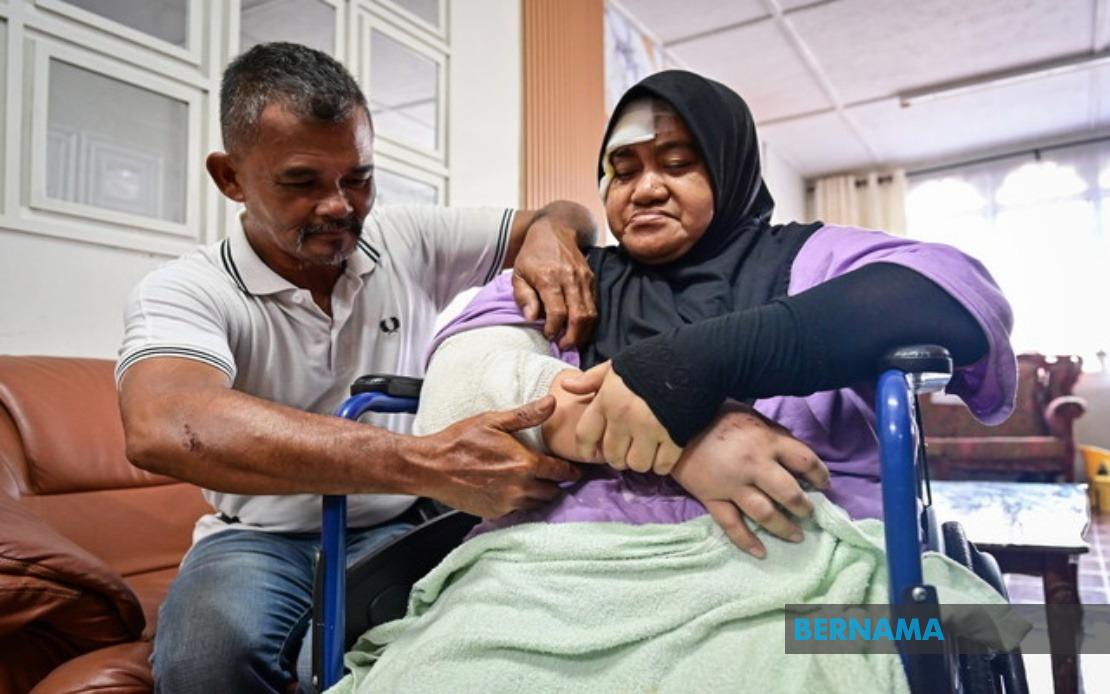
A motor vehicle accident involving a herd of wild elephants on the East Coast Expressway 2 (LPT2) near Chukai has rekindled concerns about the adequacy of wildlife containment measures protecting motorists along the major transportation corridor. The incident, which occurred at Kilometre 274.6 of the expressway on a Tuesday evening, left the vehicle's occupants injured and has triggered a broader examination of safety protocols at Malaysia's critical transport infrastructure.
Abdul Wahid Ismail, a 55-year-old lorry driver from Kampung Pasir Gajah, was operating his Toyota Estima multi-purpose vehicle when it struck a group of elephants that had breached the highway's perimeter defences near the Cheneh Toll Plaza exit. The collision happened at 10.20 pm, a time when reduced visibility compounded the danger posed by the unexpected presence of large animals on the roadway. His wife, Fauziah Muda, 52, sustained a fractured right arm from the impact, while the vehicle itself incurred substantial damage that has since rendered it inoperable.
The sudden emergence of the elephant herd left Abdul Wahid with insufficient time to react or manoeuvre his vehicle to safety, he explained to reporters at his residence. The unpredictability of encountering large wild animals at highway speeds underscores a critical vulnerability in the current infrastructure design. For drivers traversing the expressway during night hours, such encounters present an extraordinarily hazardous situation with potentially catastrophic consequences. Abdul Wahid's experience represents not an isolated incident but rather a symptom of systemic gaps in wildlife management along transportation networks that cut through or near natural habitats.
The injured driver has articulated frustration with the expressway's existing protective infrastructure, arguing that the safety measures in place have manifestly failed in their primary objective of preventing wildlife from accessing the carriageway. He contends that the fencing and other barriers designed to exclude animals have proven inadequate, leaving motorists vulnerable to collisions that could easily prove fatal at highway speeds. This assessment carries particular weight given his direct experience and the physical injuries sustained by his family as a result of the breach.
Works Minister Datuk Seri Alexander Nanta Linggi responded swiftly to the incident by issuing directives to the LPT2 concessionaire to undertake immediate remedial action. The minister's intervention included instructions to repair damaged sections of the safety fencing and to conduct a comprehensive review of long-term strategies aimed at enhancing motorist protection. This governmental response demonstrates official recognition that the current state of wildlife containment along the expressway requires urgent attention and substantial investment in improved physical and operational safeguards.
Abdul Wahid has thrown his support behind the minister's directive, emphasising the critical importance of preventive action before a more severe accident occurs with fatal consequences. He advocates for the priority repair of compromised fencing infrastructure and the implementation of strengthened measures designed to prevent recurrence of such dangerous incidents. His perspective, informed by direct victimisation in the collision, underscores the human stakes involved in infrastructure maintenance and wildlife management along major transport routes.
The incident raises important questions about the adequacy of planning and resource allocation for wildlife corridors and protection mechanisms. The LPT2 serves as a vital economic artery connecting the east coast region with other parts of Peninsular Malaysia, carrying substantial volumes of commercial and private traffic daily. The presence of wild elephant populations in areas adjacent to or intersecting with the expressway creates an ongoing tension between habitat preservation and transport safety that requires sophisticated management solutions.
The couple intends to pursue compensation from the LPT2 concessionaire in relation to the accident, citing the injuries sustained and vehicular damage as compensable harms flowing from the concessionaire's failure to maintain adequate protective barriers. This legal recourse potentially establishes precedent regarding the liability of highway operators for wildlife-related incidents, provided that causation can be linked to infrastructure deficiencies. The outcome of any compensation claim may influence industry standards and investment decisions regarding wildlife containment along Malaysian expressways.
For Malaysian motorists and the broader public, this incident highlights a dimension of transport safety that extends beyond traditional concerns such as road conditions and traffic management. The integration of highway infrastructure with wildlife habitats demands ongoing vigilance and adaptive management strategies. The LPT2 concessionaire faces pressure not only to repair immediate damage but to fundamentally reassess the effectiveness of existing containment measures and to identify technological and physical solutions that could reduce the likelihood of future breaches.
The elephant population distribution in Terengganu and adjacent regions reflects Malaysia's commitment to wildlife preservation, yet the coexistence imperative requires that road infrastructure be designed and maintained with sufficient robustness to protect both motorists and the animals themselves. A comprehensive solution would encompass upgraded fencing technology, potentially including wildlife detection and alert systems that could warn drivers of animal presence on the roadway, as well as habitat management practices that discourage elephants from approaching the expressway perimeter.
The incident also contextualises broader infrastructure maintenance challenges facing Malaysian expressway operators, where balancing routine maintenance, emergency repairs, and strategic upgrades within fiscal constraints remains perpetually difficult. The LPT2 concessionaire now faces heightened scrutiny regarding the state of its safety infrastructure and must demonstrate tangible commitment to resolving the issues exposed by this collision. Government oversight through the Works Ministry becomes essential to ensure that corrective measures are implemented thoroughly and that long-term solutions address the fundamental vulnerability revealed by the incident.

