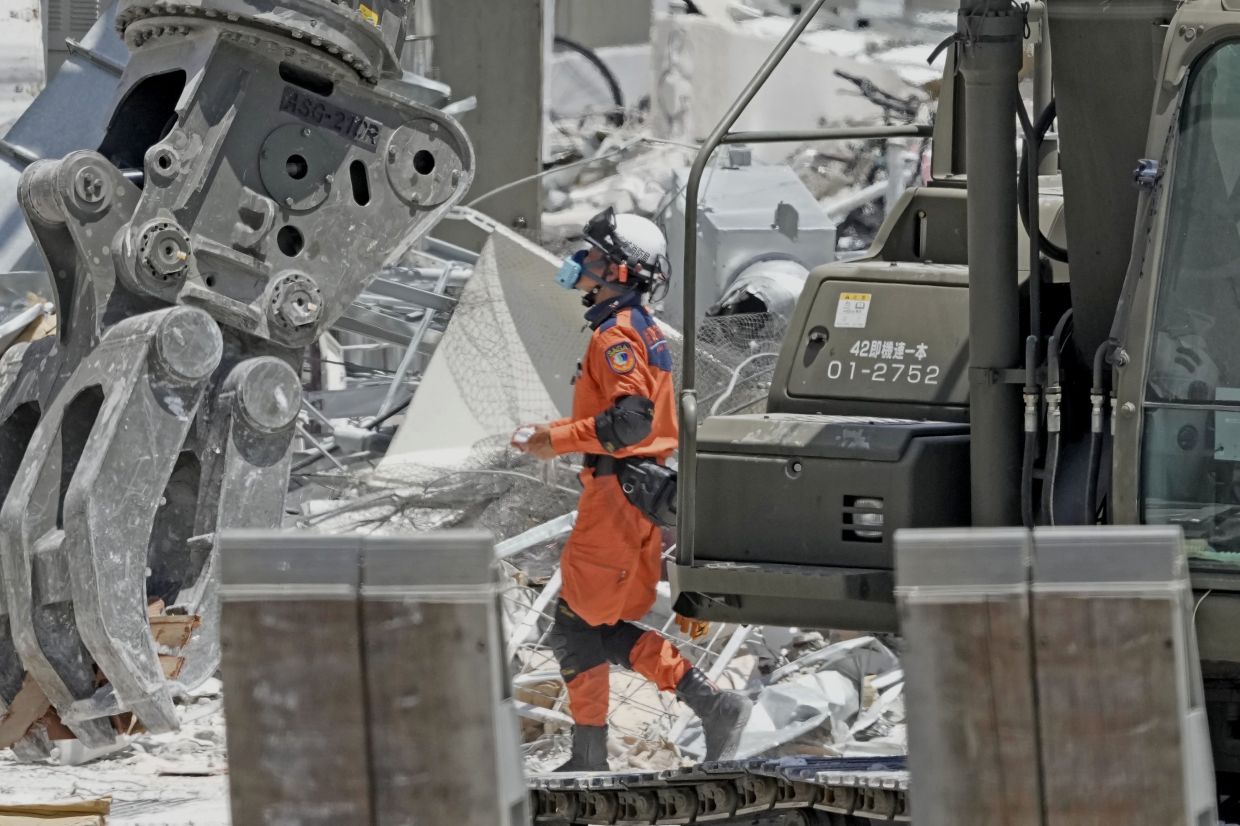
A catastrophic explosion at a major shopping complex in southwestern Japan appears to have stemmed from a leaking liquefied petroleum gas system, according to findings released by the country's Economy, Trade and Industry Ministry on August 5. The blast at Aeon Mall Kumamoto devastated the central section of the second floor on the mall's south wing, claiming three lives among shop employees and raising fresh concerns about industrial safety protocols in commercial facilities across the region.
The incident unfolded on July 28, roughly an hour and twenty minutes after a significant earthquake struck the Kumamoto Prefecture. The explosion occurred at approximately 5:50pm, suggesting that the seismic event may have triggered structural damage or displacement of the gas infrastructure, though investigators have not yet established the precise mechanism that caused the leak. The timing and sequence of events—earthquake followed by the blast—indicate a potential connection between the two disasters, with the initial tremor possibly compromising the integrity of the storage or distribution system.
The Kumamoto mall's operations relied extensively on liquefied petroleum gas for essential functions throughout the facility. Restaurants and food service establishments on the first floor's north section and a secondary food court positioned on the second floor's east side all depended on LPG for cooking operations. Additionally, the facility's air conditioning system utilised the same fuel source, meaning the gas network was integral to both the mall's commercial viability and climate control infrastructure. This widespread reliance on a single fuel system created multiple potential failure points across the sprawling complex.
The storage infrastructure that supplied this network was substantial in scale. A dedicated tank on the mall's grounds held approximately 9,367 kilograms of liquefied petroleum gas, with the fuel delivered via underground piping that branched into an extensive distribution network running through the building's floors and internal wall cavities. This hidden architecture meant that gas could accumulate in concealed spaces if leakage occurred, building pressure and concentration levels without immediate external visibility to building occupants or security personnel.
Investigators discovered that gas odours were detectible inside the mall during searches conducted by Kumamoto prefectural police and fire authorities, corroborating the hypothesis that LPG had escaped from its intended pathway. The presence of this characteristic smell provided tangible evidence that the explosive gas was present in the mall's atmosphere before ignition occurred, though the source and manner of its escape remained under active investigation at the time of the ministry's preliminary conclusions.
What distinguished this incident from a simple tank failure was the status of the main LPG storage container. The ministry found that the quantity of gas remaining in the tank matched the typical levels expected during normal operations, suggesting that the bulk storage had remained structurally intact despite the earthquake. This observation shifted investigative focus toward the extensive piping network that distributed gas throughout the facility, where residual quantities could accumulate if distribution lines had cracked or fractured during seismic movement.
Sources familiar with the investigation proposed that gas trapped within the pipeline system—rather than the main tank itself—had escaped into the mall's interior spaces, accumulated to hazardous concentrations, and subsequently detonated when exposed to an ignition source. This scenario underscores how modern commercial complexes, despite their apparent solidity, contain hidden vulnerabilities within mechanical and utility systems that may not withstand significant ground movement. The pipes threading through walls and between floors would have been subjected to the same lateral stresses that damaged other building components.
The explosion's intensity and specificity—devastating primarily the central area of the south wing's second floor—suggests that the gas concentration was highest in this particular zone, either because the pipeline ruptures were localised to this region or because the building's structural configuration trapped the leaking gas more effectively in this space. The targeting of a central area rather than uniform damage throughout the facility supports the theory that the gas leak and accumulation followed the path of greatest structural vulnerability.
For Malaysia and other Southeast Asian nations with similar climate, commercial development patterns, and earthquake vulnerability, the Kumamoto incident offers important lessons regarding utility system resilience. Shopping malls and hospitality complexes across the region frequently employ LPG systems for cooking and heating applications, often in older buildings not specifically engineered for seismic resilience. The incident demonstrates that even in a technologically advanced nation like Japan, with rigorous safety standards, gas utility systems can fail catastrophically when subjected to unexpected stresses.
The investigation's ongoing status means that complete answers about preventive measures remain pending. However, the preliminary findings emphasise the critical need for regular inspection of hidden utility infrastructure, particularly in buildings located in seismically active zones. Piping systems that run unseen through walls and floor cavities represent an often-overlooked maintenance challenge, as their condition cannot be easily verified through visual inspection. The event raises questions about whether current building codes adequately address the vulnerability of these concealed systems to earthquake-induced displacement and stress.
The three fatalities—employees of retail establishments within the mall—highlight how infrastructure failures in commercial spaces directly endanger workers who may have minimal awareness of the technical hazards present in their employment environment. Most shop workers would not be trained to recognise the significance of unusual odours or structural sounds that might indicate incipient gas system failure, leaving them entirely dependent on building management and safety systems to maintain hazard-free conditions.
As Japan continues its investigation into the root causes of the pipeline failure and the conditions that allowed gas to accumulate undetected, regional building authorities and facility managers should reassess their own maintenance protocols and emergency response procedures. The incident serves as a sobering reminder that catastrophic industrial accidents often result not from single failures but from a convergence of circumstances: the earthquake's stress on the infrastructure, the subsequent gas leak, accumulation in a confined space, and an ignition source whose identity has not yet been revealed. Understanding and preventing such cascading failures requires systematic examination of how critical systems interact during emergencies.

