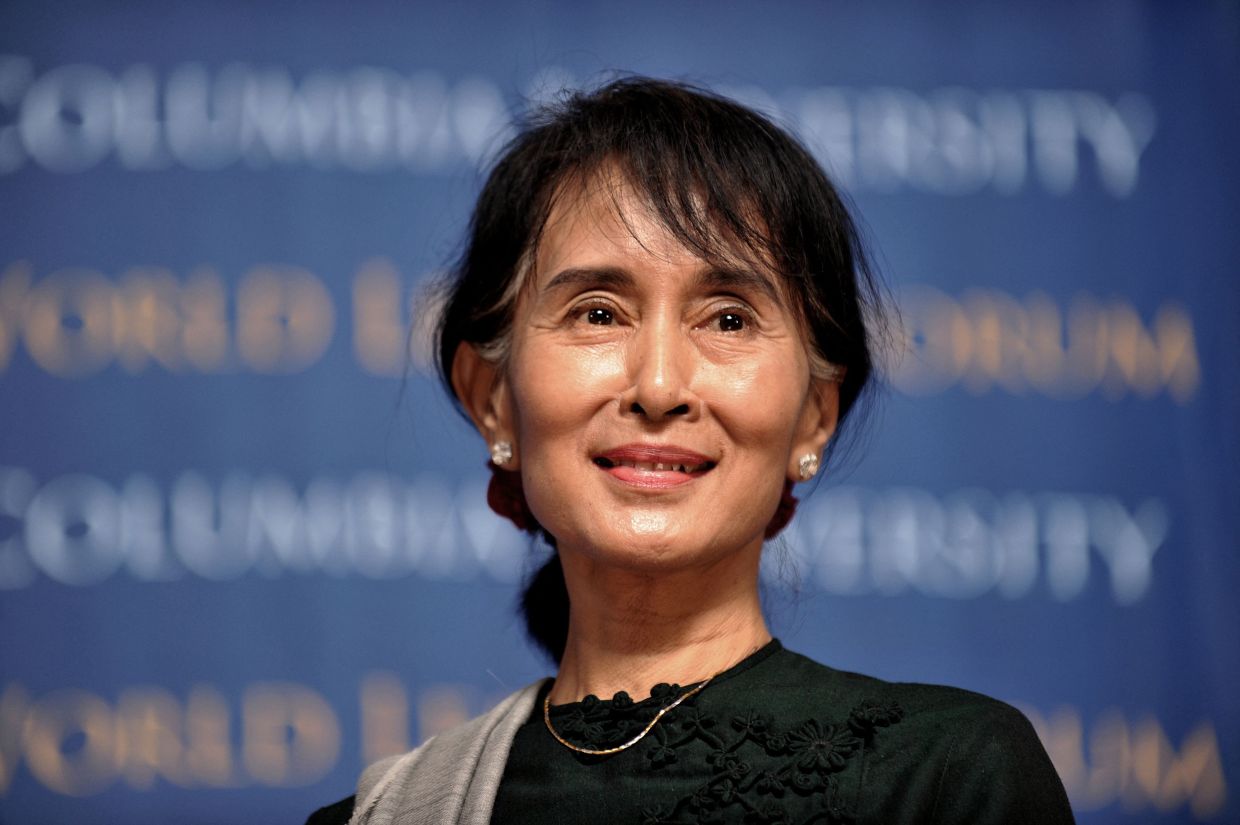
Aung San Suu Kyi's precise whereabouts in Myanmar's capital remain shrouded in deliberate obscurity, presenting a striking metaphor for the opacity that defines Naypyidaw itself. Though junta chief Min Aung Hlaing announced in April that the deposed leader had been transferred from prison to house arrest, the junta has furnished virtually no details about where exactly she is being held. Even those tasked with administering the capital appear genuinely uncertain, raising questions about whether the distinction between imprisonment and house arrest carries any meaningful difference in a metropolis engineered specifically to conceal power's inner workings.
Naypyidaw itself represents a peculiar urban experiment—one that serves the interests of authoritarian control above all else. Established as the capital in 2005 by Than Shwe, a previous military ruler, the city sprawls across an area nine times larger than New York yet houses barely one million people. Its vast emptiness is by design. Wide 20-lane highways cut through jungle and rice paddies, connecting anonymous government compounds that reveal little to outsiders or even to many insiders. Urban theorists observe that this deliberate geographic dispersal reflects the paranoia of successive military governments fearful of popular uprisings and foreign intervention. Unlike traditional capitals where power congregates visibly, Naypyidaw distributes and obscures it across a landscape so deliberately confusing that even residents struggle to navigate.
The architecture of control extends beyond mere geography. The parliament campus alone sprawls across 800 acres, one of the world's largest despite Myanmar's entrenched history of authoritarian governance. Mobile internet jammers disrupt navigation applications, leaving residents dependent on institutional knowledge that newcomers lack. Armies of gardeners manicure vast stretches of empty roadside, often outnumbering the vehicles and pedestrians that traverse them. As Columbia University architect Galen Pardee observes, inhabiting Naypyidaw constitutes its own form of incarceration—a perverse inversion of what urban planning should achieve. The city prioritises political objectives over basic functionality, creating an environment that disorients and controls simultaneously.
This atmosphere of deliberate confusion extends directly to Suu Kyi's detention. Security officials from two separate police jurisdictions conceded that when her house arrest was officially announced, she had been relocated to areas explicitly designated as off-limits even to them. One source stated bluntly that even military generals lack access to her location information. Such compartmentalisation suggests a calculated strategy to ensure that knowledge of her whereabouts remains concentrated in the hands of those Min Aung Hlaing trusts most completely. The absence of transparency extends so thoroughly that USDP party spokesman Thein Tun Oo, a Member of Parliament from the junta-backed party that secured electoral victory, admitted he has no idea where Suu Kyi is being held.
For ordinary Naypyidaw residents, the city's labyrinthine layout compounds the invisibility of high-profile detainees. A 25-year-old anonymous resident, speaking cautiously for security reasons, described becoming perpetually lost within the capital's seemingly identical compounds and highways. The repetitive architecture and overwhelming scale work against orientation, leaving residents confused about their own positions within the city, much less that of a restricted political prisoner. This disjuncture between knowledge and physical location becomes a tool of state power, rendering disappearance possible even within an urban space rather than requiring remote detention facilities.
The move to house arrest, announced with considerable fanfare, warrants closer scrutiny. Min Aung Hlaing presented the relocation as an act of clemency—ostensible evidence of his transition from military ruler to civilian president following elections held under strictly controlled conditions. Critics contend this narrative fundamentally misrepresents the situation. At 81 years old, Suu Kyi remains effectively imprisoned, stripped of meaningful freedom despite the technical distinction from formal incarceration. Her son, Kim Aris, speaking from London, rejected the government's characterisation, arguing that house arrest within an undisclosed location in a city designed for secrecy constitutes merely another iteration of the captivity she has endured for years. The substance of her confinement has not materially changed.
Suu Kyi's path to this predicament illuminates the fragility of Myanmar's democratic experiment. The Nobel Peace Prize laureate returned to Myanmar in 1988 after decades abroad to champion democratic reform. Her leadership of the pro-democracy movement earned her fifteen years of house arrest in her Yangon family mansion, which transformed into a symbolic destination for pro-democracy activists. After the military eventually permitted a gradual transition to civilian rule, Suu Kyi's party won elections and she assumed leadership. Min Aung Hlaing's 2021 coup reversed this trajectory, triggering the emergence of armed resistance and civil conflict that persists throughout the country.
The junta's subsequent actions have systematised the erasure of Suu Kyi from public consciousness. She has not appeared publicly since her detention began, and at least one villa where she previously resided has been demolished entirely. The courts have convicted her on charges that international human rights organisations dismiss as fabricated pretexts for political imprisonment. Her party, which dominated previous elections, was barred from contesting the rigged January polls that granted the pro-military USDP an overwhelming victory through restricted participation. The parliament building, which still contains old magazines praising her era, now echoes to declarations from government-aligned parliamentarians that her time has conclusively passed.
Naypyidaw's physical reality reflects and reinforces these political aims. The city was conceived not as a liveable urban centre but as an instrument of state authority—a place where movement can be controlled, information compartmentalised, and potentially troublesome elements neutralised through isolation and disorientation. For Suu Kyi, the distinction between the old prison and her current house arrest dissolves into irrelevance. She inhabits a form of captivity perfectly matched to her surroundings: a secret detention within a secret city, comprehensible only to those invested in maintaining the system that confines her.
The broader implications extend beyond her individual circumstances. Naypyidaw's design principles—built-in opacity, security-first architecture, and deliberate illegibility—represent a template for authoritarian control that other governments have begun studying. The city demonstrates that effective suppression of dissent and concealment of power need not rely exclusively on violence; it can be engineered into urban planning itself. For Myanmar's population, particularly those residing in or passing through the capital, the city remains profoundly alien—a place where even residents lose themselves, where political prisoners vanish into bureaucratic voids, and where the machinery of state operates beyond meaningful scrutiny or accountability.

