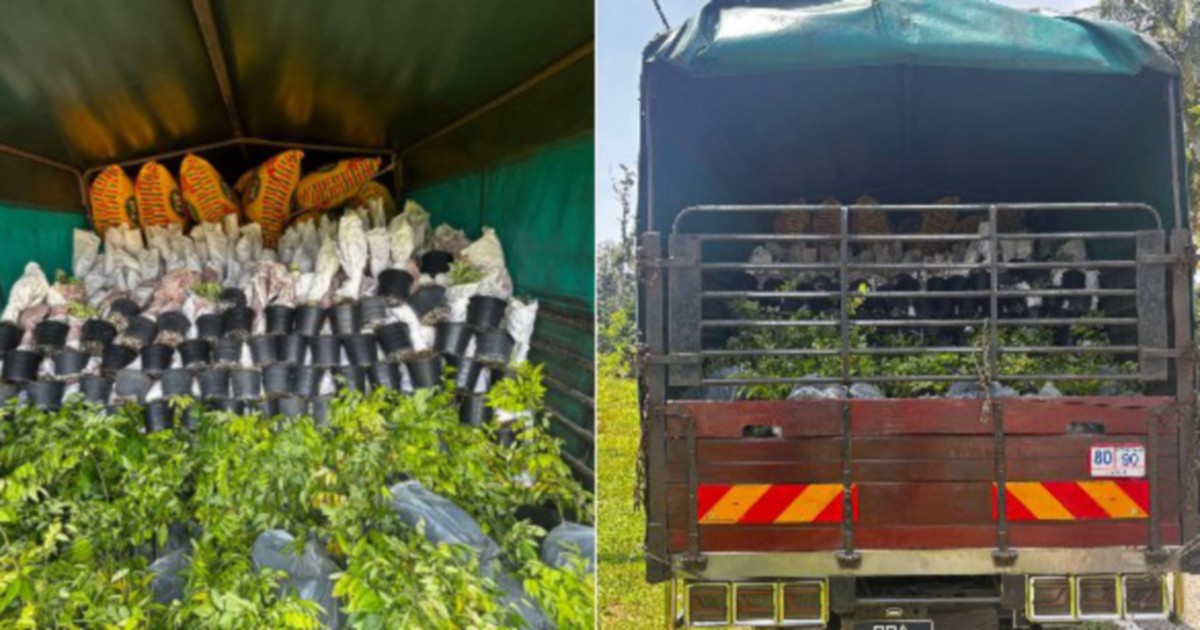
Enforcement authorities at Rantau Panjang have apprehended a lorry driver in connection with the seizure of approximately 6,000 ornamental plant saplings estimated to be worth RM200,000. The discovery, made at Kampung Padang Licin, represents a significant intercept in what officials believe was an attempt to smuggle horticultural stock across the Malaysian border from Thailand. The consignment was intercepted during routine inspections, underscoring ongoing efforts by authorities to combat cross-border smuggling of flora and fauna.
The ornamental plant trade, though seemingly innocuous on the surface, has become a substantial concern for Malaysian regulatory agencies. These saplings, destined for landscaping, nursery supply, or private collection markets, represent considerable commercial value. The interception highlights how valuable plant material moves through illicit channels, often circumventing phytosanitary protocols designed to protect Malaysia's agricultural interests and biosecurity. The quantities involved suggest this was not a small-scale personal import but rather an organised commercial operation targeting the domestic horticultural market.
Cross-border horticultural smuggling operates within a complex ecosystem of enforcement challenges. Unlike contraband drugs or wildlife trafficking, which receive heightened public and media attention, illegal plant imports often slip through the cracks of oversight systems. Transporters exploit the lower perceived risk relative to other illicit commodities, making the trade attractive to smugglers seeking quick profits with reduced penalties. The trade corridor between Thailand and Malaysia's northern states remains particularly active, given geographic proximity and the established agricultural networks spanning both nations.
Thailand's ornamental plant industry is substantial and well-developed, producing numerous exotic and commercially desirable species at competitive prices. Malaysian demand for decorative plants, tropical specimens, and rare botanical varieties has created incentive structures for smuggling operations. Rather than navigate legitimate import procedures—which require documentation, quarantine certification, and phytosanitary clearance—unscrupulous traders opt for clandestine routes. This not only deprives the government of import duties and tax revenue but also circumvents crucial biosecurity checks designed to prevent the introduction of invasive species, pests, and plant diseases.
The apprehension at Rantau Panjang demonstrates that enforcement mechanisms at border crossings remain alert to these operations, though the sheer volume intercepted suggests significant quantities may escape detection. The lorry driver's detention reflects a strategy of pursuing persons lower in the smuggling chain, though such operations typically involve networks of suppliers, transporters, financiers, and distributors. Disrupting any link in this supply chain can reduce overall operational efficiency and deter participation, though the financial rewards often justify continued risk-taking by those involved.
Malaysia's ornamental plant sector represents an important component of domestic horticulture, employing thousands across nurseries, landscape design firms, and retail outlets. Legitimate dealers face unfair competition from smuggled goods undercutting prices through avoided regulatory and transportation costs. This distortion impacts the viability of law-abiding businesses and undermines investment in domestic cultivation. The seizure thus protects not only Malaysia's biosecurity interests but also the economic interests of legitimate commercial operators within the sector.
Phytosanitary enforcement requires sustained coordination between multiple agencies including Customs, the Department of Quarantine and Inspection Services, local authorities, and border agencies. The successful detection at Kampung Padang Licin reflects effective inter-agency cooperation, though consistency of enforcement across the extensive border region remains challenging given the volume of legitimate cross-border commerce. The northern border with Thailand handles hundreds of vehicles daily, making systematic inspection of all consignments logistically demanding and economically prohibitive.
The RM200,000 valuation underscores the commercial significance of this particular shipment. Rare ornamental plants, particularly exotics and specimens with specific horticultural characteristics, command premium prices in Malaysian markets. This high value-to-weight ratio makes the trade economically rational for smugglers despite enforcement risks. The scale involved—6,000 saplings—indicates sophisticated logistical planning and suggests established distribution networks poised to receive and distribute the plants upon arrival.
Biosecurity considerations extend beyond simple protection of domestic plant industries. Unvetted botanical imports pose risks of introducing pests, pathogens, or invasive species capable of damaging Malaysia's agricultural productivity, natural ecosystems, and environmental balance. Ornamental plants, once in cultivation or discarded, can escape cultivation and establish feral populations in favorable climates. Southeast Asia's tropical environment provides ideal conditions for rapid establishment of introduced species, making rigorous phytosanitary protocols essential rather than merely bureaucratic formalities.
The investigation into this case will likely reveal broader network structures, supply sources in Thailand, intended destinations, and distribution channels within Malaysia. Intelligence gathered from such seizures helps authorities map smuggling operations and identify patterns useful for future prevention. The detention serves as a deterrent signal to both potential smugglers and corrupt officials who might facilitate such operations. However, fundamental mitigation of the trade requires addressing underlying factors including price differentials, demand for exotic specimens, and the comparative ease of horticultural smuggling relative to other criminal enterprises.
Looking forward, enhanced documentation requirements, mandatory certification standards aligned with international phytosanitary agreements, and technological solutions such as barcode tracking systems could improve detection rates. Regional cooperation frameworks with Thailand, Laos, and other source countries could establish joint enforcement protocols and intelligence sharing mechanisms. Investment in digital systems and personnel training would strengthen capacity at border checkpoints. Until such comprehensive measures are implemented, interdictions like the Rantau Panjang seizure will remain episodic victories against a persistent smuggling problem.

